"Increase in Jeon-Wolse Housing Sales Volume Impact"
Highest Population Movement Among People in Their 20s
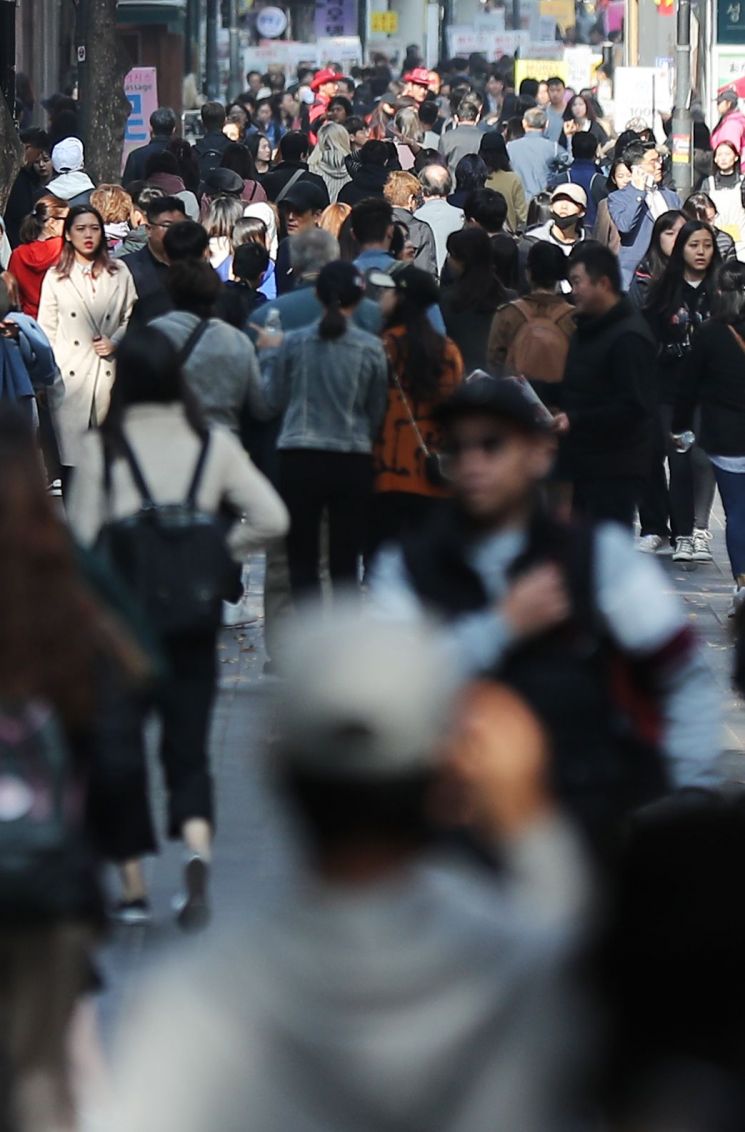
[Asia Economy Reporter Jang Sehee] The number of domestic movers last month was 646,000, showing a 4.6% increase compared to a year ago. This is analyzed to be due to an increase in housing sales.
According to the 'December Domestic Population Movement' data released by Statistics Korea on the 30th, the number of movers last month was 646,000, an increase of 28,000 people (4.6%) compared to the same month last year.
Kim Jin, head of the Population Trends Division at Statistics Korea, explained, "The increase in population movement is due to the rise in sales transactions of jeonse and monthly rental housing," adding, "Especially, the domestic population movement among people in their 20s was high."
Among all movers, 65.4% moved within the same city or province, while 34.6% moved outside their city or province. These figures represent increases of 3.3% and 7.2% respectively compared to a year ago.
The 'population movement rate,' which indicates the number of movers per 100 people, was 14.8%, up 0.6 percentage points from a year ago.
Looking at net migration (inflow minus outflow) by city/province, six regions including Gyeonggi (10,010 people), Jeonnam (3,772 people), and Sejong (1,711 people) experienced net inflow, while 11 regions including Seoul (-3,986 people), Daegu (-3,469 people), and Gwangju (-2,381 people) experienced net outflow.
The number of movers in the fourth quarter of last year was 1,806,000, a decrease of 64,000 people (3.4%) compared to the same period a year ago. The movement rate was 14.0%, down 0.5 percentage points from a year ago.
By city/province, seven regions including Gyeonggi (26,581 people), Sejong (6,154 people), and Jeonnam (4,503 people) had net inflow, while 10 regions including Seoul (-13,754 people), Daegu (-7,157 people), and Busan (-6,289 people) had net outflow.
By age group in the fourth quarter of this year, the number of movers was highest among those in their 20s (383,000 people), followed by those in their 30s (379,000 people).
The movement rates were highest for those in their 20s (22.4%) and 30s (21.3%). Compared to a year ago, the movement rate decreased in all age groups except for those in their 20s.
© The Asia Business Daily(www.asiae.co.kr). All rights reserved.

















