Expectations for Korea-China Relations Recovery → Wuhan Pneumonia Setback
Domestic Confirmed Cases Increase to 2
Tourism and Distribution Industries Fear MERS and SARS
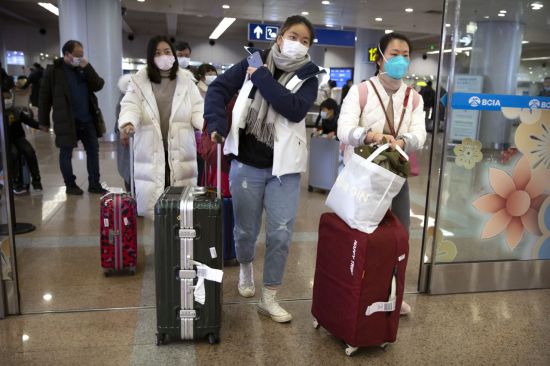
[Asia Economy Reporter Cha Min-young] The domestic tourism and distribution industries are experiencing mixed fortunes at the beginning of the year due to variables related to China. This is because the so-called 'Wuhan pneumonia' coronavirus is spreading worldwide even before expectations for the restoration of Korea-China relations have fully materialized.
As of the 24th, the number of confirmed coronavirus cases originating from Wuhan City, Hubei Province, China, has risen to 830, with 25 deaths. Confirmed cases have been reported not only in China but also in Hong Kong, Taiwan, Singapore, and the United States. In South Korea, the number of confirmed cases has increased to two, with one 35-year-old Chinese woman and one 55-year-old Korean man who worked in Wuhan City testing positive.
The new confirmed patient, who worked in Wuhan City, Hubei Province, visited a local medical institution on the 10th after experiencing symptoms of a sore throat. While returning to Gimpo Airport on the evening of the 22nd, traveling from Wuhan via Shanghai, the patient was found to have a fever and sore throat during quarantine and was placed under active monitoring. The health center's screening test confirmed the diagnosis. The Korea Centers for Disease Control and Prevention is conducting an in-depth epidemiological investigation of this patient and will disclose the results once the investigation is complete.
The World Health Organization (WHO) held an emergency committee meeting on the 23rd regarding the novel coronavirus and concluded that "it is still too early to declare an international public health emergency," but urged China to provide transparent information and take proactive quarantine measures.
Concerns are especially growing as the Chinese Lunar New Year, a period of massive population movement, approaches. During the Lunar New Year, families spread across China simultaneously return to their hometowns. According to Chinese media, the floating population during the 40 days before and after the Lunar New Year holiday is estimated to be about 3 billion people. Major metropolitan cities such as Beijing and Shanghai are considered high-risk areas.
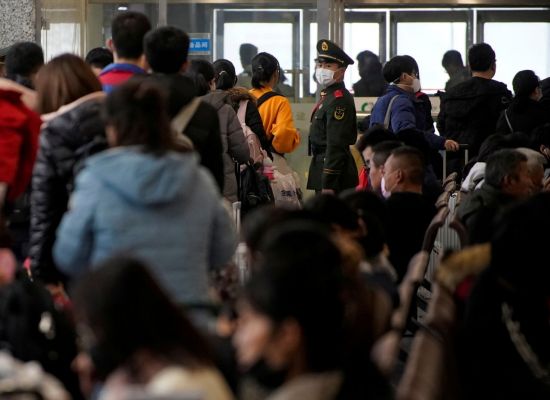
Consequently, concerns have also increased within the domestic tourism and distribution sectors. Expectations for improved Korea-China relations had grown recently, especially with Chinese President Xi Jinping's possible visit to South Korea in March, so the disappointment is significant. Group tourists, considered a barometer of relations, had steadily arrived in sequence: about 3,000 from Shanghai Weina Cosmetics in December, about 5,000 from health food and auxiliary equipment manufacturer Yiyongtang in January, approximately 490 middle and high school students from Henan Province, and 670 middle and high school students from Jiangsu and Henan Provinces.
In the past, inbound tourism demand both domestically and internationally sharply declined whenever outbreaks of Middle East Respiratory Syndrome (MERS), Severe Acute Respiratory Syndrome (SARS), or Ebola virus occurred. According to the Korea Culture and Tourism Institute's report titled "Impact and Measures of the Tourism Industry Due to the MERS Incident," the number of foreign tourists showed an 11.6% growth rate cumulatively from January to April 2015, but sharply dropped after the first MERS case was confirmed in May of that year. In June and July, the year-on-year decline rates were -41% and -53.5%, respectively.
Distribution channels such as duty-free shops, department stores, and marts, as well as the food and beverage, fashion, and beauty industries, were affected. Especially in domestic duty-free shops, where expectations for Korea-China relations had increased since the end of last year, general tourism demand increased from December last year to January this year due to the year-end and Lunar New Year effects, in addition to the so-called Daigou (Chinese personal shoppers). Duty-free sales in December last year surged 42.9% to 2.2848 trillion won compared to 1.5985 trillion won the previous year. November recorded the highest monthly sales ever. There are even forecasts that duty-free sales this year will surpass the record high of 25 trillion won in 2019.
Researcher Son Hyo-joo of Hanwha Investment & Securities stated in a report, "Since the novel coronavirus belongs to the virus group that causes respiratory diseases such as SARS and MERS, it is clear that this is a short-term negative factor rather than an uncertainty," adding, "Expectations for an increase in Chinese tourists visiting Korea, which existed in the stock market recently, have suddenly turned into concerns, so the impact on Chinese consumer goods companies should be examined." Researcher Han Yoo-jung of Daishin Securities also assessed, "With the Chinese health authorities acknowledging human-to-human transmission of the novel coronavirus on the 20th, just before China's biggest holiday, concerns about its spread have intensified, making it highly likely that consumer sentiment will shrink."
© The Asia Business Daily(www.asiae.co.kr). All rights reserved.
![Clutching a Stolen Dior Bag, Saying "I Hate Being Poor but Real"... The Grotesque Con of a "Human Knockoff" [Slate]](https://cwcontent.asiae.co.kr/asiaresize/183/2026021902243444107_1771435474.jpg)











