Preparing Holiday Food Is Virtually Hard Labor
7 out of 10 Married Women Feel Stressed
Ordering Food from Marts or Online Resolves Conflicts
Some Criticize It as 'Lacking Sincerity'
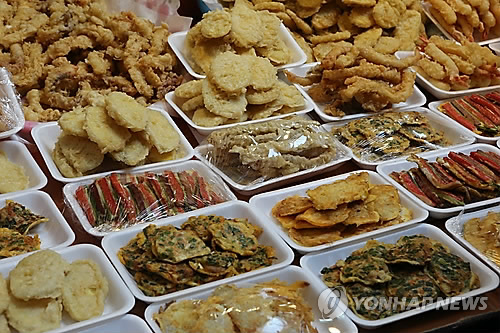 Finished holiday foods sold as complete products. Various jeon (Korean pancakes), donggeurangttaeng (meat patties), and more stand out.
 [Image source=Yonhap News]
[Asia Economy Reporter Han Seung-gon] "This year, I plan to just order holiday food. My whole family agrees."
Housewife A (35) prepared all the Lunar New Year holiday food by purchasing from a nearby mart or ordering online. Even her mother-in-law said it was better to prepare this way rather than endure the stress of complicated food preparation.
A said, "There used to be many conflicts over food preparation during the holidays, but the ordered food is fine, and the whole family is satisfied."
As more generations experience conflicts over food preparation during holidays, the number of households buying ready-made holiday food from marts is increasing. However, some criticize that food bought outside cannot be considered holiday food. They argue that food represents sincerity, and simply buying it from a mart is not truly food.
Housewife B in her 30s, who said she buys ready-made holiday food from marts, raised her voice, saying, "Above all, for women, holidays are just working days. The intensity of labor is too severe." She added, "Holiday food is necessary, and ultimately, buying it from marts is the most rational choice."
Female office worker C in her 20s also said, "My mother always struggled during the holidays and often had quarrels with relatives. Seeing that made me not want to prepare food anymore," adding, "Nowadays, marts also have well-prepared food."
Reflecting this trend, according to the distribution industry, sales of foods mainly eaten during holidays such as Tteokgalbi (grilled short rib patties) and Wanja (meatballs) are increasing. In the recent week (January 15?21), sales of Donggeurangttaeng (Korean meat patties), Wanja, and Jeon (Korean pancakes) on Gmarket increased by 71% compared to just before last year's Lunar New Year (January 26?February 1).
Tteokgalbi and seasoned vegetables (namul) also showed increases of 55% and 35%, respectively, and during the same period, sales of Wanja, Jeon, and Tteokgalbi on Auction rose by 207% and 110%, respectively.
Also, according to E-Mart, sales of ready-to-eat ritual food products steadily increased during the Lunar New Year period. Last year, sales of ready-to-eat ritual food products during the Lunar New Year reached 1.33 billion KRW, an 18% increase from the previous year. This year, a 20% increase is expected.
The number of households enjoying fully cooked spicy food delivered during the Lunar New Year is also increasing. According to Yogiyo, the number of orders for spicy food during the Lunar New Year from 2017 to 2019 doubled each year.
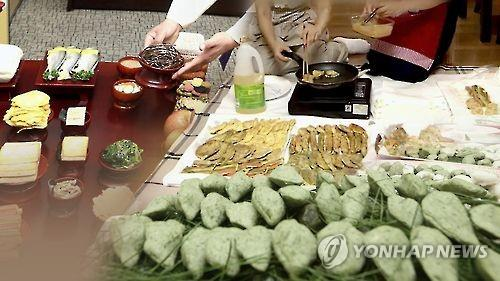
However, there are also criticisms that spending the holiday with mart-bought food seems insincere. Housewife D in her 50s emphasized, "It's not just food; it's holiday food," adding, "Though it's hard work, preparing everything by hand is true holiday food."
Housewife E in her 50s, who said she goes to the eldest sibling's house a day or two before the holiday starts, also said, "It's not something we prepare every day but only a few times a year, so setting the table with food bought from marts doesn't seem right," expressing concern, "I wonder if it will suit the family's taste."
Given these circumstances, holiday stress and various conflicts are occurring. Six out of ten adults complain of stress related to the holidays, with married women experiencing particularly severe stress.
According to a survey by Saramin, a job matching platform, of 3,507 adults on whether they experience stress during the Lunar New Year holiday, 58.3% answered "Yes."
Looking at stress by gender and marital status, 7 out of 10 married women (70.9%) reported experiencing stress. This was higher than unmarried women (59%), married men (53.6%), and unmarried men (52.4%).
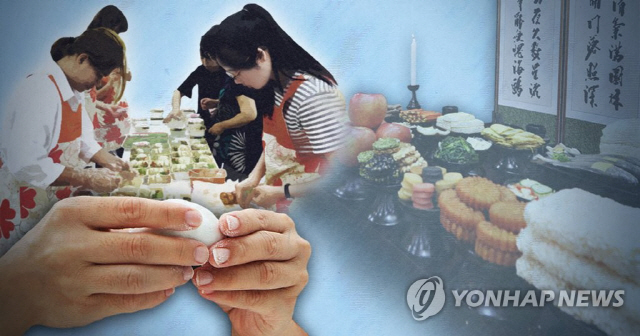
Among married people, the reasons for stress differed by gender. Married women cited "worrying about many expenses such as pocket money and gifts" (59.7%), "difficulty preparing ritual food" (42.2%), and "discomfort with in-laws" (36.8%) as major burdens related to economic and household labor factors. On the other hand, married men overwhelmingly cited "feeling sorry to parents" at 64%.
In summary, married women experience extreme stress during holidays due to food preparation and other tasks, while men or those not involved in food preparation generally do not experience such stress.
The people causing stress also differed by gender among married individuals. Married women most often cited "parents-in-law and in-law family members" (68.4%), followed by "spouse" (21.2%), "parents" (14.2%), and "relatives" (6.8%). In contrast, men cited "spouse" (29.2%), "parents" (27.6%), "siblings" (18.9%), "relatives" (18.6%), and "wife's parents and family" (15.8%).
A housewife in her 30s emphasized that the purchase of holiday food will inevitably increase in the future. She said, "From women's perspective, holiday stress and labor intensity are very serious," adding, "The background for buying food is related to this."
© The Asia Business Daily(www.asiae.co.kr). All rights reserved.



















