To Maintain Learning Rhythm, Use It for 1-2 Hours Daily
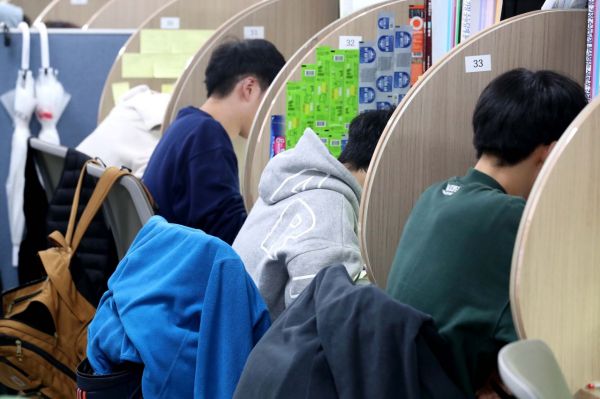
[Asia Economy Reporter Jo In-kyung] The Lunar New Year holiday may be the last chance for high school seniors to enjoy some leisure before entering full-fledged exam preparation. However, if their body and mind become too relaxed and their study rhythm breaks down, it takes a lot of time to recover. While it is not advisable to set an overly ambitious study plan, dedicating at least 1 to 2 hours a day for separate study time can bring many benefits.
We spoke with Woo Yeon-cheol, head of the Jinhaksa Admission Strategy Research Institute, about how to study efficiently during the Lunar New Year holiday.
◆ Problem-solving and online lectures are more efficient than just reviewing concepts = Studying methods vary depending on the time and situation. Setting a goal to calmly sit for long hours and review concepts in a noisy atmosphere is realistically difficult to achieve during the holiday. Instead, solving problems or watching online lectures, which can be done without much pressure even in a lively environment, may be more efficient.
However, rather than trying to finish multiple units or subjects at once, it is better to set a goal to complete a single workbook for a weak subject in a manageable amount. For example, solving problems from a workbook on statistical estimation in math or modern literature in Korean, or reviewing some lacking content, is recommended.
If problem-solving feels burdensome, studying through online lectures is recommended. Especially in social studies or science inquiry areas, learning via online lectures is not much more difficult than other areas, making it ideal to utilize the holiday period. Watching 3 to 4 lectures a day, totaling 12 to 16 lectures during the holiday, can easily cover 1 to 2 units.
Studying with such specific goals increases students’ sense of achievement and provides momentum for studying after the holiday.
◆ Maintain study rhythm even during rest time = Even students who usually maintain their lifestyle according to their study plans may have their study rhythm disrupted during the holiday due to visiting relatives and other surrounding circumstances beyond their control. When the body rhythm, accustomed to the usual lifestyle, is shaken by irregular activities and rest, fatigue tends to accumulate after the holiday ends.
Therefore, during the holiday, rather than taking long naps or watching TV for extended periods, it is advisable to secure at least 1 to 2 hours of study time separately to maintain the study rhythm.
◆ Clear your mind during travel time = When traveling with family, some try to use spare time by watching video lectures in the car. However, bowing your head and maintaining an uncomfortable posture in a moving vehicle can tire the body and dull the mind. Instead, having natural conversations with family on various topics or looking at the surrounding nature to clear the mind can improve study efficiency. If you still want to study during travel, it is better to use short listening tests or similar materials that can be completed quickly.
Woo advised, "Rather than setting too many plans that are difficult to carry out during the holiday or simply resting excessively, it is important to set achievable study goals and continuously maintain the study rhythm."
© The Asia Business Daily(www.asiae.co.kr). All rights reserved.

















