Two Years Since Socar's Entry, Secures 500,000 Members ... Fleet Exceeds 2,000 Vehicles Early This Month
Customer-tailored Rental and Return Services Prove Effective
Socar Zones Expanded from Around 120 to Over 1,000 Locations
Strategic Partnerships with Local Companies Active, Including Gas Station Pickup and Introduction of Electric Vehicles
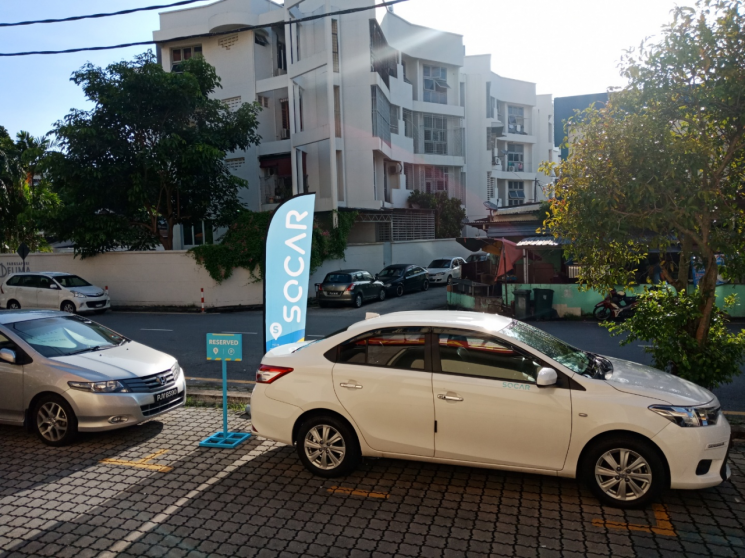
[Asia Economy Kuala Lumpur, Hong Seong-ah, Correspondent] Car-sharing company Socar has secured 500,000 members within two years of entering Malaysia. Analysts attribute this success to customer-tailored services that meet customer needs ranging from hourly to monthly rentals, and allow customers to rent vehicles in the city and return them at major hubs such as airports.
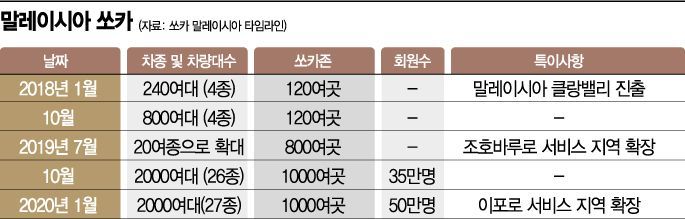
According to local media including Malaysia Reserve on the 21st (local time), Socar Mobility Malaysia (hereafter Socar Malaysia) surpassed 500,000 members by the end of last year, and its fleet exceeded 2,000 vehicles earlier this month. Leon Phung, CEO of Socar Malaysia, explained in a recent media interview, "Since starting operations in 2018, demand for Socar's car-sharing has surged."
Socar Malaysia launched its service on January 23, 2018, in the Klang Valley near Kuala Lumpur, based on around 240 vehicles and approximately 120 Socar Zones. Socar Zones refer to car-sharing hubs. At that time, the fleet consisted of only four models, including the Perodua Axia, known as Malaysia's national car, and Honda vehicles. However, by July last year, a year and a half later, the service expanded its vehicle lineup to 20 models and increased Socar Zones to 800 locations including Penang and Johor Bahru. Currently, Socar Zones number over 1,000.
Socar's growth is considered remarkable in Malaysia's car-sharing market. Although a latecomer, it is gradually expanding its business by targeting customers differently from local companies. CEO Phung said, "All customers need to do is download the Socar app, log in with their email, and take verification photos of their driver's license and location," adding, "No car keys are needed, just a mobile phone."
Socar's greatest strength is offering various vehicle types at diverse prices, from hourly to monthly rentals. Recently, it launched the Socar To You service in select areas such as Mont Kiara, Bukit Bintang, and Bangsar, delivering vehicles directly to customers' doorsteps. It is also possible to rent a vehicle in Kuala Lumpur and return it in desired locations like Penang or Johor Bahru. Services linking major hubs such as Kuala Lumpur International Airport with Socar Zones have also attracted attention. According to local media, the main consumers in Malaysia's car-sharing market are millennials, with high usage rates among people in their 20s.
Socar is also pursuing strategic partnerships. It has partnered with Malaysia's state-owned energy company Petronas to enable vehicle pickup and return at over 50 Petronas gas stations, and formed an alliance with Grab, the largest car-sharing service in the ASEAN region. As a result, customers using Socar via GrabPay receive Grab points, and discounts are offered to Citibank cardholders. As part of an environmental campaign, since last month Socar has introduced the Renault Zoe electric vehicle as a new service vehicle in partnership with Malaysia's electricity company Tenaga Nasional.
Malaysia's car-sharing business is expected to become more active thanks to the government's proactive policies. Recently, the Malaysian government announced a National Automotive Policy aimed at fuel savings, carbon emission reduction, and automotive industry development. To this end, it plans to support new models such as shared taxis and car-sharing markets that shift vehicle ownership to service models in the MaaS (Mobility as a Service) sector. The car-sharing market is viewed positively as it reduces the need for vehicle ownership while addressing environmental pollution issues.
Malaysia is considered to have significant potential demand for car-sharing. According to a 2017 report by the Malaysian Automotive Association (MAA), the number of vehicles per person is only 0.88, indicating high demand for car-sharing. Socar plans to expand its market to East Malaysia, including Kota Kinabalu, which has many tourists but lacks transportation infrastructure.
© The Asia Business Daily(www.asiae.co.kr). All rights reserved.


















