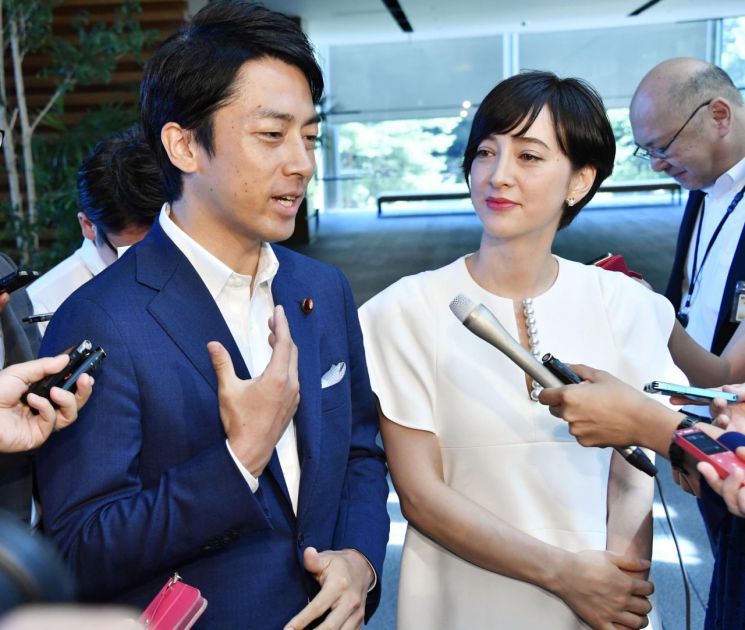
[Asia Economy Reporter Hyunwoo Lee] Shinjiro Koizumi, Japan's Minister of the Environment, son of former Prime Minister Junichiro Koizumi and a potential candidate for the next prime minister, has taken two weeks of paternity leave following the birth of his first child. This move is seen as part of the Japanese government's efforts to establish a culture of paternity leave among men in response to declining birth rates, but controversy is expected as no senior male official has previously taken paternity leave.
According to local Japanese media such as NHK, on the 17th, Minister Koizumi announced that his first son was born to his wife, announcer Christel Takigawa, and that he would take two weeks of paternity leave. Minister Koizumi is the second son of former Prime Minister Junichiro Koizumi, who served from 2001 to 2006 and groomed current Prime Minister Shinzo Abe as his successor.
Minister Koizumi had previously stated that he would take two weeks of paternity leave immediately after the birth of his first child. He arranged about two weeks off by combining leave, reduced working hours, and remote work. During his paternity leave, he plans to receive reports via video conferences and emails, and except for important duties such as the regular Diet session convening on the 20th, cabinet meetings, and crisis management, the deputy minister will handle other tasks.
In Japan, controversy is expected as no senior male cabinet official has taken paternity leave before. Minister Koizumi is also a current member of the House of Representatives. Aware of the controversy, he said in an interview with NHK, "As the first minister to take paternity leave, there will be criticism due to the unprecedented nature," adding, "I will accept both pros and cons, prioritize official duties, ensure thorough crisis management, and secure time for childcare." His unusual paternity leave is interpreted as part of the Japanese government's policy to establish a mandatory paternity leave culture for men as a measure against the declining birthrate.
© The Asia Business Daily(www.asiae.co.kr). All rights reserved.

















