Conflict Over 'Garbage Disposal Unit' in Residential Homes
Some Unconscientious Residents Drain 100% of Ground Waste by Count
Lower Units Suffer from Backflow and Odor Without Understanding Cause
Experts Warn "Environmental Pollution May Worsen"
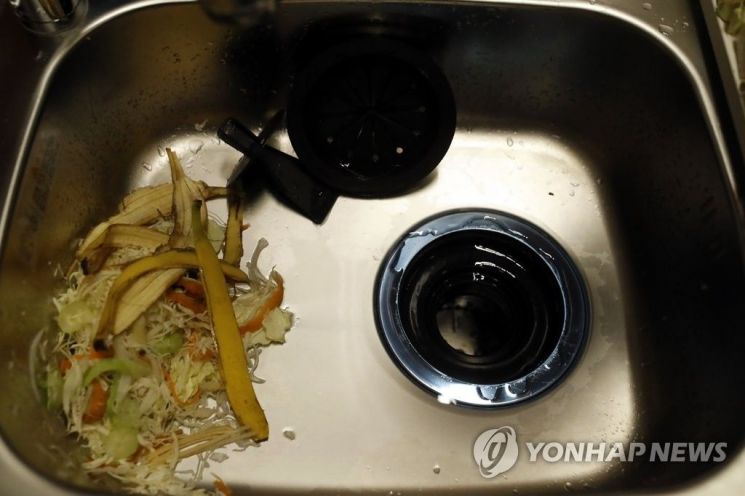
[Asia Economy Reporter Han Seung-gon] "Why should the food waste and filth from someone else's house flow down to our kitchen sink?"
Recently, a 30-something office worker, Mr. A, had a big argument with his upstairs neighbor. Due to the misuse of the upstairs neighbor's 'disposer' (food waste disposer), a clogging occurred in the sewage pipe, and eventually, filth overflowed along the pipes and spilled onto the kitchen floor of Mr. A's home.
Mr. A protested, saying, "The problem is the food waste disposer used by the upstairs neighbor," but the upstairs owner, Mr. B, rebutted, "The disposer machine is being used according to regulations." Unable to secure evidence of misuse, Mr. A had no choice but to return home.
As disposers, which function as kitchen waste grinders, gain popularity in households, conflicts among neighbors surrounding their use are emerging.
According to current law, waste discharge using disposers must grind only 20% of the waste and send it down the drain, while 80% must be filtered and recovered through a secondary processor.
Violations result in a fine of 20 million KRW for companies and a penalty of 1 million KRW for households.
However, some households use substandard disposers or illegally modify the machines to discharge 100%, not less than 20%.
Because of this, downstairs neighbors suffer from unexplained sewage repairs or unbearable odors without knowing the cause.
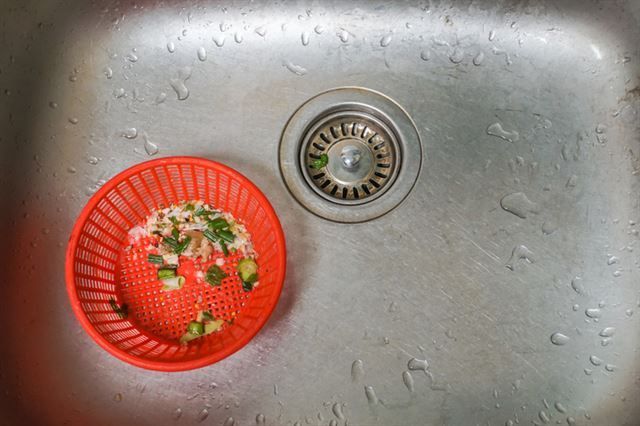
Disposer use was originally prohibited due to concerns about water pollution. However, following an amendment to the Environmental Act in October 2012, disposer use became permissible under conditions such as discharging less than 20%, gaining popularity mainly among households.
According to the Ministry of Environment in December last year, the sales volume of kitchen food waste disposers from January to August 2019 was 23,798 units, more than three times the annual sales volume of 7,748 units in 2018.
The Ministry of Environment has identified that from 2013, when disposers were temporarily permitted, to 2018, a total of 39,408 disposers were installed nationwide over five years.
Also, according to Lotte Home Shopping, sales of home convenience appliances including food waste processors increased by 46% from January last year to mid-last month. According to the National Assembly, 7,748 food waste processors were sold nationwide last year, and 27,938 units were sold by September this year.
The problem lies in the use of illegal products rather than certified ones. Substandard disposers usually attach a collection container to existing waste grinders and then obtain certification. Although they appear legally certified on the surface, they inevitably cause problems in terms of food waste grinding functionality.
Additionally, some users discharge all the ground food waste residue into the sewage for convenience. When disposer installation technicians visit, they request not to install or to modify the secondary processor with a filter screen.
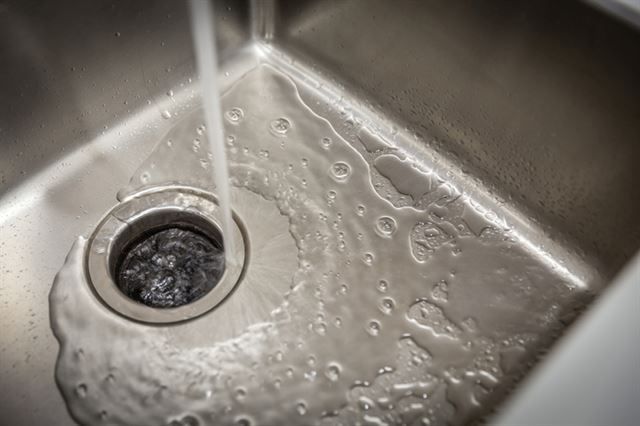
In October 2015, in Busan, four companies selling illegally modified waste grinders and two users were caught, resulting in criminal charges and fines.
Also, in December last year, a post on an online community caused a stir, reporting that sewage overflowed from the kitchen sink of a first-floor apartment that had been occupied for one year, flooding the living room for three days.
According to the poster, the cause of the sewage was a resident on the third floor. Spilled rice was put into the food waste disposer and flushed, blocking the apartment drainage.
The victim, who had to handle sewage from 25 floors day and night for three days, lamented that the perpetrator, who expressed willingness to handle insurance, said, "There is no compensation for personal damages."
The problem is the effectiveness of crackdowns. Since these products are used in private spaces such as homes, enforcement and follow-up management are practically impossible. This is why conflicts among neighbors over disposer use never cease.
For this reason, a revised bill on the use of kitchen disposers was submitted again in the 20th National Assembly but was not properly discussed in the Environment and Labor Committee. This was due to ongoing confusion with manufacturers, sellers, consumer groups, and environmental organizations each voicing different opinions.
Experts pointed out that disposer use could exacerbate environmental pollution and that the decision to permit their use should be made cautiously.
Professor Bae Jae-geun of the Department of Environmental Engineering at Seoul National University of Science and Technology stated at a forum titled "What is the problem with kitchen waste grinders?" co-hosted by the Ministry of Environment at the National Assembly Members' Office Building in September last year, "Using grinders can cause sewage pipes to clog due to food waste, leading to odors, and maintaining and managing the pipes requires enormous costs and efforts."
© The Asia Business Daily(www.asiae.co.kr). All rights reserved.
![Clutching a Stolen Dior Bag, Saying "I Hate Being Poor but Real"... The Grotesque Con of a "Human Knockoff" [Slate]](https://cwcontent.asiae.co.kr/asiaresize/183/2026021902243444107_1771435474.jpg)


















