Expansion of 'Untact' Services for Purchasing Goods Without Meeting People
Contactless Services Like Delivery Apps Gain Popularity
Experts Say "People in Their 20s and 30s Tend to Find Human Relationships Difficult and Uncomfortable"
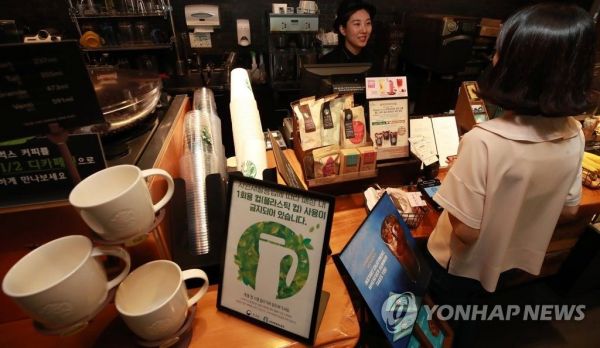 Recently, as 'Untact' services have been spreading, it has been found that there are more young people in their 20s and 30s who cannot place face-to-face orders. Photo by Yonhap News
[Asia Economy reporters Seunggon Han and intern Suwan Kim] "I can barely make eye contact with the staff when ordering at a cafe."
Office worker A (25) said that face-to-face ordering at cafes and restaurants is very difficult for them.
A said, "I tend to keep thinking about what to say before ordering at a cafe. When I go to a restaurant or cafe with friends, I always ask them to order the menu for me," adding, "I want to change this tendency, but it's not easy."
They continued, "I think the fear of meeting someone for the first time has influenced this. When I order awkwardly, I'm afraid of the person's gaze, so I write a script in advance or think about what to say," they added.
Recently, as 'Untact' services have spread, it has been found that many young people in their 20s and 30s have difficulty with face-to-face ordering. They cited the reduction in human contact due to digitalization as the cause.
Untact is a newly coined term combining the negative prefix 'un' and 'contact,' meaning to purchase goods or receive services without meeting people directly.
According to a report released last year by Hana Financial Management Research Institute, the causes of the spread of Untact culture include △ the influence of 'Alone culture' △ increase in single-person households △ demographic changes due to rising age at first marriage △ youth unemployment rate. The report also predicted that Untact services would continue to grow as consumer psychology changes.
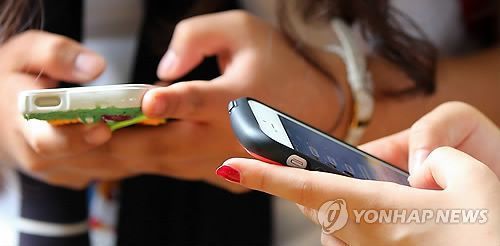 The millennial generation (born from the early 1980s to the early 2000s), who are familiar with the internet and social media, were found to have fewer opportunities for conversation and contact with others compared to other generations. Photo by Yonhap News
Among them, the millennial generation (born from the early 1980s to the early 2000s), who are familiar with the internet and SNS, were found to have fewer opportunities for conversation and contact with others compared to other generations. This phenomenon is due to increased use of mobile devices and social network services (SNS).
According to the 'Media Usage of Millennials and Generation Z' report published by the Korea Information Society Development Institute in February last year, an analysis of the 2018 Korea Media Panel Survey raw data showed that the proportion of mobile device usage time in total media device usage time was the highest among all generations for millennials.
Also, the average daily SNS usage time was 43 minutes, the longest among all generations. The generation with the highest proportion of SNS users was millennials, with 8 out of 10 using SNS. Notably, unlike other generations, millennials had the highest mobile usage time at 44%.
University student B (23) said, "Actually, it's hard to face people directly," adding, "Ordering through a kiosk is more comfortable and gives a sense of security than speaking face-to-face." They continued, "I think it's because I haven't had much direct conversation with people other than family or friends."
Office worker C (27) said, "I've seen many people around me who find it difficult to order directly. Usually, they forget the menu or, in severe cases, their voice or hands tremble," adding, "People these days are so familiar with digital devices that they seem to have difficulty communicating directly with others. Also, since they often communicate via text or email, they have few opportunities to talk with others."
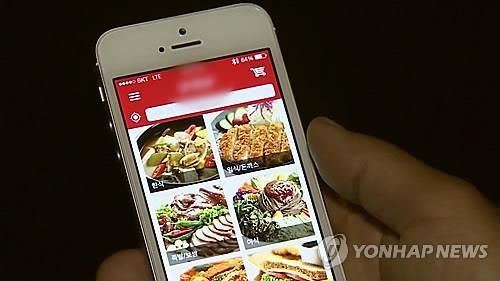 Non-face-to-face services such as delivery apps and mobile shopping apps have been shown to be popular.
 Photo by Yonhap News
Given this situation, non-face-to-face services such as delivery apps and mobile shopping apps are spreading.
According to the 'November 2019 Online Shopping Trends' announced by Statistics Korea on the 2nd, due to the development of delivery services, food services including delivery orders increased by 100.3% compared to a year ago, totaling 1.0242 trillion won.
Also, online shopping transaction amount in November last year was 12.7576 trillion won, an increase of 20.2% (2.1462 trillion won) compared to the same month the previous year. This was mainly due to a significant increase in mobile transactions.
Experts analyzed that the reason young people find face-to-face communication difficult is that more people feel comfortable being alone.
Researcher Heesoo Lim from the 20s Research Institute at University Tomorrow said on YTN Radio's 'Choi Youngil's News! Direct Confrontation,' "People in their 20s find face-to-face communication difficult. They even feel uncomfortable with phone calls and instead use KakaoTalk or SNS. Recently, delivery apps and proxy services are becoming popular," adding, "They tend to find human relationships difficult and uncomfortable. Some even think human relationships are bothersome or unnecessary."
Researcher Lim continued, "They simply do not feel a strong need for the act of meeting people, making friends, and building relationships. Therefore, the number of people in their 20s who feel more comfortable being alone is increasing."
© The Asia Business Daily(www.asiae.co.kr). All rights reserved.



















