Porter vs Bongo, Nearly Equal in Price and Specifications
Porter and Bongo Dominate Over 80% of Domestic Small Truck Market
Attention on Whether Market Position Will Be Maintained Amid Electric Vehicle Transition
[Asia Economy Reporter Suyeon Woo] The era of electric vehicles has arrived in the small truck market, which has become the 'people's transportation' favored by self-employed workers. As Hyundai Kia Motors consecutively launched the Porter and Bongo electric vehicles, the eco-friendly car trend has begun to blow through the small truck market that values practicality.
According to the industry on the 8th, the Hyundai Porter2 Electric (EV), released at the end of last year, received over 3,000 pre-orders within a month. The Kia Bongo3 EV, launched on the 6th of this month, began full-scale sales without pre-orders.
The domestic 1-ton class diesel small truck market is virtually divided between Porter and Bongo. As of 2018, in the small truck market with an annual volume of 190,000 units, Porter (97,995 units) and Bongo (59,254 units) accounted for 82% of total sales. As of last year, Porter and Bongo continued to enjoy steady popularity with sales exceeding 150,000 units.
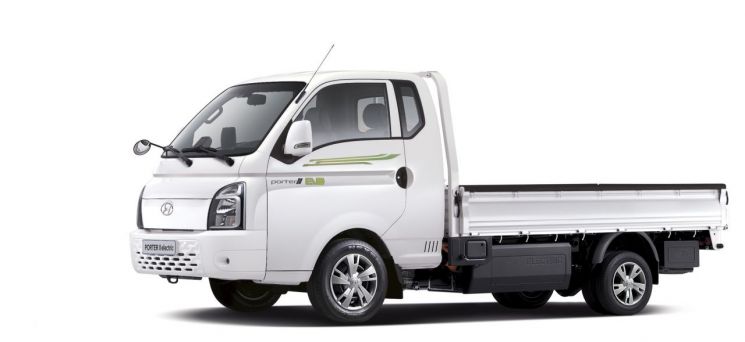
The two recently released electric small trucks do not differ significantly in specifications or performance. Both models are equipped with a 135 kW motor and a 58.8 kWh battery, capable of driving 211 km on a single full charge. The motor's maximum output is 184 horsepower, and the maximum torque is 40.3 kgf·m, demonstrating climbing ability superior to diesel engines.
Advanced technology that detects the load weight in real-time to guide driving range has been applied, and a regenerative braking system that charges the battery using energy generated during braking is equipped. Various safety features such as forward collision avoidance assist, lane departure prevention assist, and driver attention warning, as well as convenience features like electric power steering, push-button start system, and electronic parking brake, have been significantly enhanced.
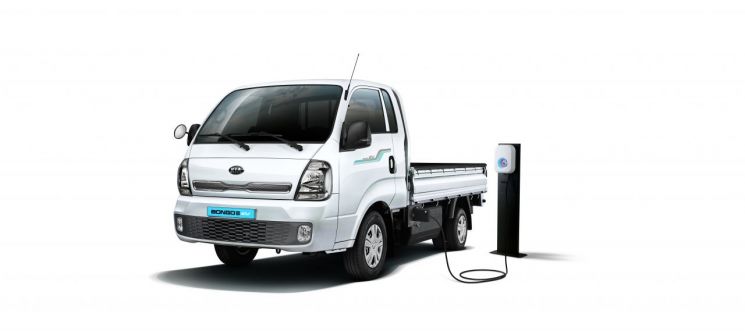
If one were to find differences between the two models, it would be in price and exterior design. The design preserves each brand's identity by inheriting the existing Porter and Bongo designs. Based on the lowest trim, Hyundai Porter Smart Special is priced at 40.6 million KRW, and Kia Bongo's GL trim is 40.5 million KRW, making the Bongo about 100,000 KRW cheaper. With cargo electric vehicle subsidies (national subsidy of 18 million KRW and local government subsidies) and various tax benefits, the purchase price can be in the mid-to-high 10 million KRW range.
Kia Bongo, which was launched relatively later, set its entry price 100,000 KRW lower to secure price competitiveness, but considering the varying subsidies and tax benefits by local governments, there appears to be little actual price difference.
This year, the eco-friendly small commercial vehicle market is expected to become more competitive with the launch of Porter and Bongo electric vehicles, along with the entry of Chinese electric vehicles. Shinwon CK Motors, which imports Dongfeng Sokon vehicles, a subsidiary of China's Dongfeng Motor, has announced plans to launch a 1-ton class small electric truck this year, and China's Geely Automobile is also preparing to launch small electric trucks domestically in partnership with Korean companies such as POSCO International and HT Engineering.
© The Asia Business Daily(www.asiae.co.kr). All rights reserved.

![Clutching a Stolen Dior Bag, Saying "I Hate Being Poor but Real"... The Grotesque Con of a "Human Knockoff" [Slate]](https://cwcontent.asiae.co.kr/asiaresize/183/2026021902243444107_1771435474.jpg)
















