Iran's Economic Collapse and Sharp Rise in Oil Prices Could Lower Growth by 0.5%p
Closure of the Strait of Hormuz Could Push Oil Prices Up to $150
OECD Member Countries' Inflation Rate Could Rise to 3.5~4.0%
Concerns Raised Over Stagflation with Rising Prices Amid Economic Recession
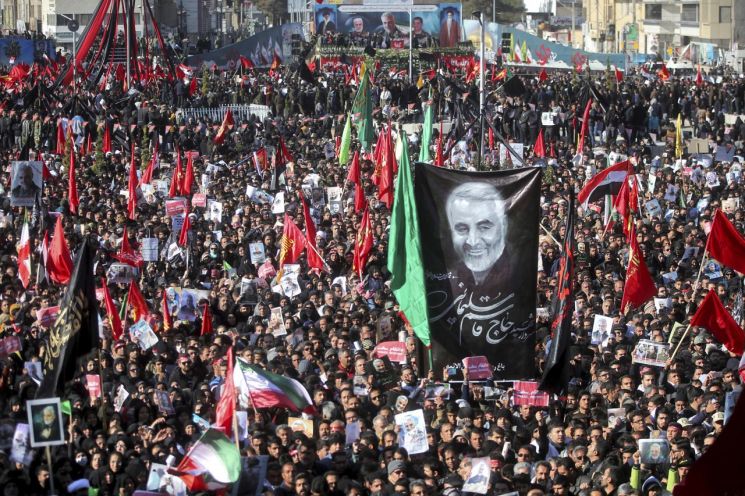
[Asia Economy Reporter Sim Nayoung] A report has emerged stating that if a full-scale war breaks out between the United States and Iran, the global economic growth rate could decrease by 0.5 percentage points. This scenario assumes the collapse of Iran's economy and a sharp rise in oil prices due to the war.
On the 8th, the UK-based economic research institute Capital Economics released a report titled "The Death of Soleimani and the Threat of War Between the US and Iran," which analyzed, "Iran's supreme leader has promised 'severe revenge' for Soleimani's death," and "this could be carried out through numerous channels, including attacks on the US embassy in the region, attacks on neighboring US allies, and attacks on US military facilities in the Gulf." On the same day, Iran began retaliation by launching dozens of missiles at US military bases in Iraq where US troops are stationed.
The report estimated that the collapse of Iran's economy alone would reduce global economic growth by 0.3 percentage points, a figure comparable to the estimated damage from the US-China trade war. More significant than Iran's economic collapse is the surge in oil prices. The report pointed out, "If Iran blocks the Strait of Hormuz, Brent crude oil from the North Sea could soar to $150 per barrel," adding, "the surge in oil prices could push inflation rates in OECD member countries up to 3.5~4.0%."
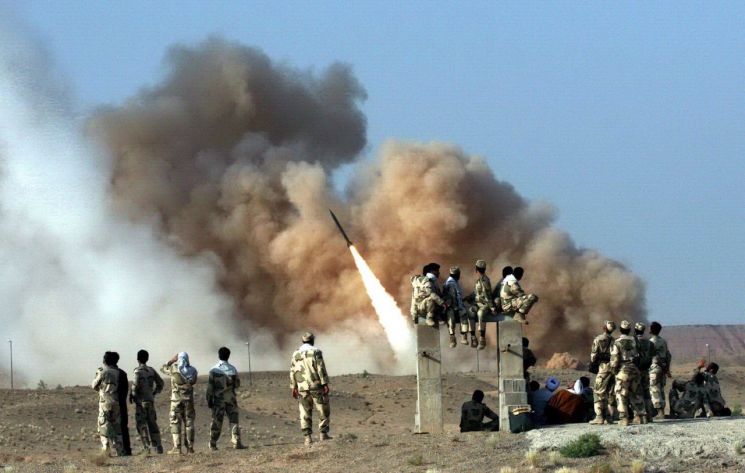
The original scenario predicted by domestic and international economic organizations was that the global economy would hit bottom early this year and then recover. However, concerns dominate that the variables between the US and Iran will freeze the recovery. At the annual meeting of the American Economic Association held on the 4th, world-renowned scholars identified limited economic stimulus capacity, ongoing US-China hegemonic competition, and geopolitical risks in Iran as the three major risks to the global economy.
The International Finance Center, in its report "Review of Overseas Perspectives on Recent Middle East Instability," predicted, "Based on three past instances when the US economy entered a recession following a sharp rise in oil prices, if oil prices rise to $70~80 per barrel, the stock market could turn bearish and a recession could be triggered," adding, "This would also burden Europe and Asia, which heavily depend on oil imports, causing the global economy to show an 'unstable recovery on thin ice.'"
Based on these negative forecasts, concerns about stagflation have also emerged. Stagflation refers to a state of 'low growth and high inflation,' where economic activity is stagnant but prices continue to rise. An economic expert who requested anonymity said, "If oil prices rise sharply, consumer price inflation will be immediately affected," adding, "If the conflict between the US and Iran intensifies, stagflation?where prices rise while the economy, including South Korea's, contracts?could become a new headache for the world."
© The Asia Business Daily(www.asiae.co.kr). All rights reserved.


















