590,000 Insomnia Patients Increase by 30% in 5 Years
Three Main Causes: Psychophysiological Insomnia, Sleep Apnea Syndrome, Restless Legs Syndrome
Chronic Insomnia Defined as Occurring 3 Times a Week for Over 3 Months
Risks Include Ego Breakdown, Immune System Decline, Dementia
 Photo by Getty Images Bank
[Asia Economy Reporter Choi Daeyeol] Jeff Bezos and Ma Yun. They are the founders and leaders of globally successful IT companies Amazon and Alibaba. They share another common trait: they both got enough sleep. Bezos made "8 hours of sleep" a key principle of his life, and Ma Yun reportedly slept well when stressed or tired and started fresh after waking up. The refreshing feeling after a good night's sleep is hard to express in such rigid words.
In brief, experts point out that sleep, which takes up one-third of life, is important for the remaining two-thirds. Professor Kim Seokhyun of Hanyang University Department of Psychiatry explained, "Sleep not only restores health but also maintains homeostasis by regulating internal body temperature and chemical balance, plays a critical role in normal temperature regulation and energy conservation." He added, "Lack of sleep can cause ego breakdown, hallucinations, and delusions, and animal experiments have shown skin damage, increased food intake, weight loss, decreased body temperature, and death."
Insomnia Patients Up 30% in 5 Years
Most people know sleep is important, but not many get enough restful sleep. According to the Health Insurance Review & Assessment Service, the number of patients treated for insomnia in South Korea rose from 461,790 in 2014 to 597,529 in 2018, an increase of nearly 30%. Many suffer from absolute lack of time due to study or work, and a significant number experience markedly poor sleep quality due to environmental or physical health reasons. This is known as sleep disorders.
Besides primary insomnia, which is common, representative symptoms include narcolepsy, characterized by sudden uncontrollable sleep attacks, and obstructive sleep apnea syndrome accompanied by snoring. In children, sudden waking and crying or screaming during sleep is a type of sleep disorder called night terrors.
Insomnia refers to difficulty falling asleep, frequent awakenings, or waking too early and being unable to return to sleep. It is accompanied by daytime drowsiness, memory decline, reduced concentration, and lethargy. If insomnia occurs three or more times a week for over three months, it is considered chronic insomnia. Professor Joo Eun-yeon of Samsung Seoul Hospital Neurology explained, "In middle-aged and older adults, insomnia without a specific cause is mainly due to three reasons: psychophysiological insomnia where the brain becomes sensitive and has difficulty falling asleep, sleep apnea disorder caused by snoring and apnea leading to frequent awakenings, and insomnia caused by restless legs syndrome or leg twitching."
Avoid Using Smartphones Briefly During Sleep
LED Light Stimulates Optic Nerve
Suppresses Sleep-Inducing Hormone 'Melatonin'
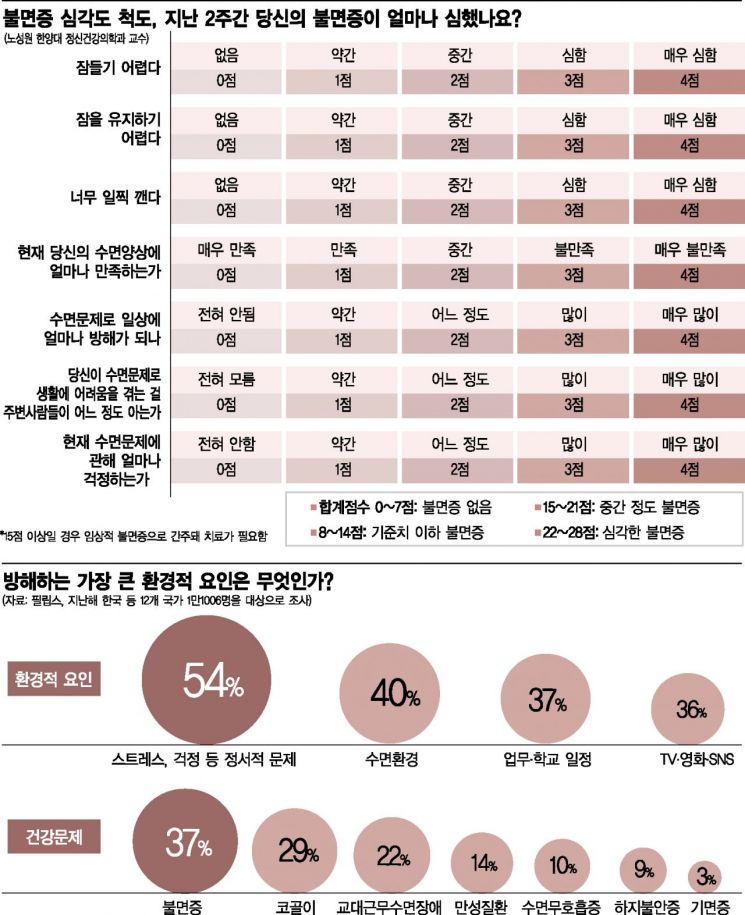
It is generally said that sleep decreases with age, but the sharp increase in insomnia patients in recent years is influenced by an aging society. Considering that insomnia patients are steadily increasing among adolescents, young adults, and even children, experts believe environmental factors also play a significant role. Many underestimate it, but sleep deprivation caused by insomnia itself poses a threat to our health.
Professor Noh Sungwon of Hanyang University Department of Psychiatry said, "About 10% of insomnia patients suffer from chronic insomnia lasting from a few months to several decades," adding, "It lowers immunity, increasing the risk of infectious diseases and cancer, damages brain areas responsible for memory, reduces memory, and raises the likelihood of dementia."
Even the minor act of waking up at dawn and looking at a smartphone disrupts sleep. Light stimulates the optic nerve even in very small amounts, reducing melatonin secretion. Melatonin is a sleep-inducing hormone secreted by the pineal gland in the brain, spreading into the bloodstream 2-3 hours before sleep and maintaining a high concentration during sleep.
Its concentration rapidly decreases before sunrise, causing awakening. Some people take melatonin supplements to improve sleep, but evidence supporting its effectiveness for insomnia is insufficient. Professor Joo Eun-yeon said, "The LED light from smartphone screens enters the eyes and suppresses melatonin secretion, so it is better not to turn on smartphones even if you wake up during sleep."
Changing Lifestyle Habits Helps Sleep... Improve Habits Before Prescribing Sleeping Pills
Keep Regular Bedtime and Wake-up Time... Avoid Overeating, Coffee, and Smoking Before Sleep
Trying Too Hard to Sleep Is Also Harmful; Anxiety Disrupts Restful Sleep
Treatment for insomnia includes using sleep-inducing agents such as antihistamines found in cold medicine or prescribed sleeping pills. Many doctors also recommend non-pharmacological treatments. Since lifestyle habits or behaviors that unknowingly developed may contribute to sleep disorders, sleep hygiene rules are part of the treatment. These include keeping regular sleep and wake times, avoiding overeating before bed, writing down worries to look at in the morning, and avoiding stimulants like coffee, cigarettes, and carbonated drinks.
If you have insomnia, it is better to place alarms out of sight and avoid looking at the clock. Checking the time after waking up and calculating how long you have slept or will sleep can wake you up further. Excessive tossing and turning in bed should be avoided as it may train the brain to associate the bed with wakefulness rather than sleep. Professor Noh Sungwon explained, "If you worry about not sleeping and feel pressured, you actually have more difficulty falling asleep. Instructing insomnia patients to stay awake as long as possible reduces anxiety and helps them fall asleep more easily."
※Source: Professors Kim Seokhyun and Noh Sungwon, Department of Psychiatry, Hanyang University Hospital; Professor Joo Eun-yeon, Neurology, Samsung Seoul Hospital; Professors Jung Seokhoon and Lee Sangam, Sleep Disorder Clinic, Asan Medical Center
© The Asia Business Daily(www.asiae.co.kr). All rights reserved.

















