Young Adults Who Don't Share Job Success News with Others
No Concept of 'Lifetime Employment'... Even 'Toejunsaeng' Office Workers
Experts: "Consideration for Others and Differences in Workplace Perception"
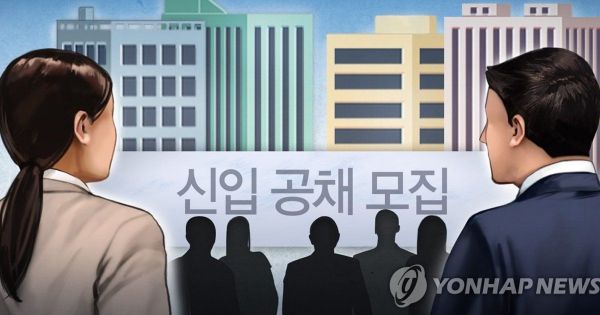
[Asia Economy Reporter Han Seung-gon, Intern Reporter Heo Mi-dam] "I can't tell my friends about my job news"
Kim Mo (27), who passed the public recruitment exam in the second half of last year, said, "I didn't feel the need to share my job news because I thought it could be a burden to my friends preparing for employment and might cause psychological pressure."
He added, "When I was preparing for a job, I heard about others' job news. Although I congratulated them outwardly, I felt anxious. Since my future was uncertain, it was hard to sincerely congratulate acquaintances. I think others felt the same, so I deliberately did not share my job news."
The number of young people who do not disclose their employment status to acquaintances or those around them is increasing. They do not want to burden friends or acquaintances who are still preparing for employment. Job seekers who have experienced relative deprivation from acquaintances' employment success are showing mutual consideration.
There are also 'Toejunsaeng' (employees preparing to resign) who, after entering a company with difficulty, are quickly preparing to move to another company. Experts analyze that the consideration for acquaintances who might feel deprived by the disclosure of employment news and the 'Toejunsaeng' phenomenon are related to the disappearance of the concept of a 'lifetime job.'
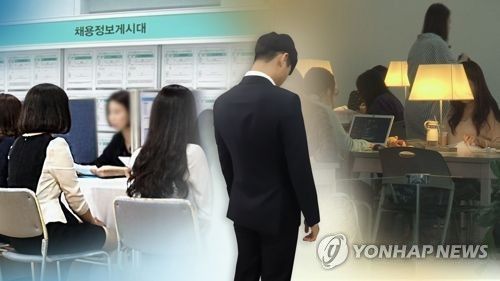
The number of young people who do not get a job immediately after graduating from college is increasing. According to the '2019 May Economic Activity Population Survey Youth Supplement' released by Statistics Korea in July last year, it takes an average of about 10.8 months for young people who have finished their studies to get their first job.
The number of long-term unemployed is also on the rise. The proportion of young people unemployed for more than a year is 44.1%, an increase of 1.1 percentage points compared to 2018. Those unemployed for more than three years also increased by 1.6 percentage points to 16.9% compared to 2018.
There are office workers who do not disclose their employment news amid severe employment difficulties. A first-year office worker A (26) said, "Except for a few very close friends, no one knows about my job news," and explained, "It wasn't that I wanted to keep it a secret, but I thought my job news might burden others."
He emphasized, "When I was also a job seeker, hearing about acquaintances' job news made me think, 'What have I been doing until now?' and 'I should have worked harder.' I don't want to cause this kind of stress to my acquaintances."
Some who are considering changing jobs also do not disclose their employment news. B (25), a three-month office worker who introduced himself as a 'Toejunsaeng,' said, "Because the employment situation is severe these days, I think it is advantageous to build experience at a small company and later apply to a large company," adding, "As long as I build experience related to my job, I am ready to resign anytime."
The number of office workers who voluntarily resign is also increasing. According to a 2018 survey on the status of 'Toejunsaeng' conducted by job portal JobKorea and part-time job portal Albamon targeting 282 office workers, 46.1% answered, "I am already mentally resigned and currently job hunting, and will resign immediately once I decide on a company to move to." Also, 37.6% answered that they had thought about wanting to resign.
Office worker C (25) said, "The place I work is not a 'lifetime job,' so I don't think I need to tell others. Also, since it is not the job I hoped for, I am even less willing to share it."
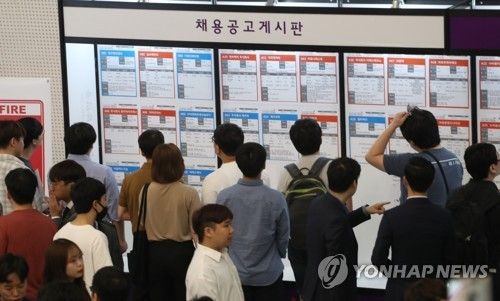 Job seekers looking at the job posting board. Photo by Yonhap News
Experts analyzed that the social phenomena of young people hiding their employment status and 'Toejunsaeng' stem from a kind of consideration and differences in how they perceive jobs.
Professor Kwak Geum-ju of the Department of Psychology at Seoul National University said, "The young people who are currently employed are a generation that experienced employment difficulties. They may have felt frustration when hearing about those who got jobs while they themselves were unemployed," and explained, "Young people who understand the pain of employment difficulties tend to delay sharing their job news because they do not want to cause psychological stress to acquaintances."
Regarding the 'Toejunsaeng' phenomenon, she said, "Sometimes people do not disclose their employment news because they are considering the possibility of changing jobs," and analyzed, "As the concept of a 'lifetime job' disappears, more people are willing to change jobs anytime even after getting employed. Also, since there is no guarantee that they will stay at the desired job, they may choose not to share their employment news with those around them."
© The Asia Business Daily(www.asiae.co.kr). All rights reserved.


















