"South Korea Tilts Strategically Toward the U.S.; Nuclear Submarine Move Unexpected"
Medeiros: "South Korea and Japan Have No Alternative to the U.S."
Victor Cha, Korea Chair at the Center for Strategic and International Studies (CSIS), stated on November 6 (local time) that China may once again use pressure tactics regarding South Korea's push to develop nuclear-powered submarines, similar to when it previously imposed sanctions on a Hanwha Ocean subsidiary during past U.S.-South Korea shipbuilding cooperation.
Cha, an expert on U.S.-Korea relations, said on a CSIS podcast that President Lee Jaemyung, representing a progressive party, has shown a strategic tilt toward the United States. He added, "I would not be surprised if China later takes action in response to the nuclear-powered submarine issue."
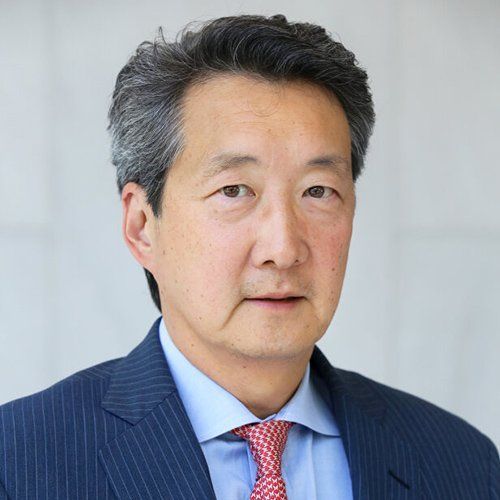
He described the U.S. decision to approve South Korea's development of nuclear-powered submarines as "very unexpected," adding, "I don't think Xi Jinping (President of China) anticipated it at all. Because it was so unexpected, President Xi was unable to respond at the time."
He further predicted that, just as China imposed sanctions on five U.S. subsidiaries of Hanwha Ocean on October 14 in response to the U.S.-South Korea shipbuilding cooperation project "Make American Shipbuilding Great Again" (MASGA), China could again turn to sanctions in response to U.S.-South Korea cooperation on nuclear-powered submarines. Cha explained, "He has already responded to U.S.-South Korea shipbuilding cooperation by sanctioning Hanwha Ocean's U.S. companies," adding, "So it would not be surprising if China takes further economic coercive measures against South Korea in the future."
On October 30, immediately following the U.S.-South Korea summit held during the 2025 Asia-Pacific Economic Cooperation (APEC) summit, U.S. President Donald Trump announced via his social media platform, Truth Social, that "approval has been granted for South Korea to build nuclear-powered submarines."
In response, the Chinese Ministry of Foreign Affairs issued a statement expressing its hope that "the United States and South Korea will faithfully fulfill their nonproliferation obligations," while Chinese state media raised criticism, arguing that the decision "could heighten regional tensions."
Cha noted that South Korea and Japan have accepted President Trump's demands in trade and security in order to maintain their alliances with the United States, questioning, "I wonder how long they will continue to do so. At what point will they say, 'We will switch to Plan B (an alternative)?'"
Evan Medeiros, a professor at Georgetown University who oversaw China policy at the White House National Security Council (NSC) during the Obama administration, responded to this question by saying that Japan, South Korea, and Australia-America's key allies in Asia-"in reality, have no Plan B to replace the United States." He explained that all of these countries rely on their alliances with the U.S. for security, and since Asia lacks a multilateral security framework like NATO in Europe, they have no choice but to maintain their alliances with the U.S. to counter regional threats such as China.
He added that South Korea and Japan, in order to access U.S. technology and capital in areas such as artificial intelligence (AI) and semiconductors, also have no choice but to maintain their relationships with the United States.
However, Professor Medeiros emphasized that the absence of a Plan B applies only to South Korea, Japan, and Australia, adding, "It would be a misjudgment to assume that this structure also applies to other Asian allies such as the Philippines and Thailand."
© The Asia Business Daily(www.asiae.co.kr). All rights reserved.












