Higher Admission Fees for Non-Residents at Himeji Castle and Odawara Castle
Differentiated Pricing Also Considered for Public Transportation and National Museums
As the number of foreign tourists visiting Japan reached an all-time high last year, an increasing number of local governments are implementing dual pricing systems.
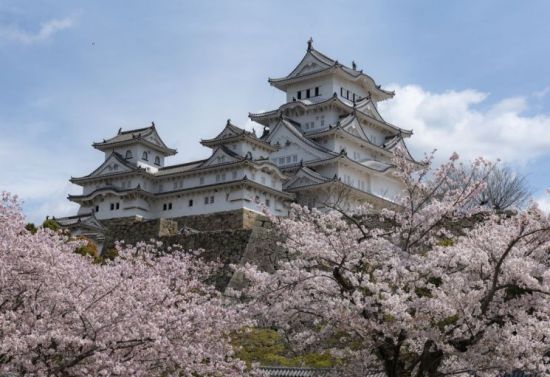
On March 2, Japanese media outlets including the Asahi Shimbun reported that Himeji City in Hyogo Prefecture, western Honshu, introduced a dual admission pricing system for Himeji Castle, a UNESCO World Heritage Site. Residents of Himeji City continue to pay the original admission fee of 1,000 yen (approximately 9,300 won), while non-resident visitors are now charged 2,500 yen (approximately 23,000 won). Initially, the city considered increasing the fee specifically for foreigners, but decided to apply the higher rate to all "non-citizens" instead. However, Himeji City has decided not to charge admission for children and youth under the age of 18, regardless of residency. Previously, the admission fee for those under 18 was 300 yen (approximately 2,800 won).
The main keep of Odawara Castle, located in Odawara City, Kanagawa Prefecture, also introduced a dual pricing system starting March 1. The standard adult admission fee, which used to be 510 yen (approximately 4,750 won), has now been changed to 500 yen (approximately 4,650 won) for city residents and 1,000 yen for non-residents.
The Agency for Cultural Affairs of Japan plans to instruct national museum and art museum corporations to consider implementing differentiated fees for foreign tourists. A total of 11 national museums and art museums, including those in Tokyo, Kyoto, and Nara, are subject to this review. Of these, eight institutions cover more than half of their operating income with government subsidies, and with rising costs related to services for foreign visitors, such as multilingual audio guides, the need to improve their revenue structure has become apparent. Last year, 42,683,600 foreign visitors came to Japan, a 15.8% increase compared to the previous record set in 2024, marking a new all-time high.
Kyoto, a leading tourist destination, is also seeking to introduce differentiated fares for public transportation. Koji Matsui, the mayor of Kyoto, announced at a city council plenary session that city bus fares will be divided between residents and non-residents. The current base fare is 230 yen (approximately 2,140 won), but the city is considering lowering it to 200 yen (approximately 1,860 won) for residents and raising it to 350 to 400 yen (approximately 3,260 to 3,720 won) for non-residents. This means non-residents would pay about twice as much as residents.
Kyoto City is consulting with the Ministry of Land, Infrastructure, Transport and Tourism, and aims to implement the changes as early as April next year. Mayor Matsui explained that this is "a measure to create a sustainable city."
The dual pricing system imposes higher fees on foreigners or non-residents in order to mitigate overtourism and reduce the fiscal burden. Not only Japan, but also some popular overseas destinations such as the Pyramids in Egypt and the Taj Mahal in India already operate dual pricing systems. The Louvre Museum in France has also announced plans to increase admission fees for non-EU tourists.
© The Asia Business Daily(www.asiae.co.kr). All rights reserved.












