Foreign Media Cite Wall Street Expert: "Oil Prices Could Fall in the Coming Months"
"Growth Trend Unlikely to Be Affected Even If a Correction Occurs"
As the United States launched a military operation against Iran, there are projections that, if the attack concludes swiftly, it could actually have a positive impact on the global economy and stock markets.
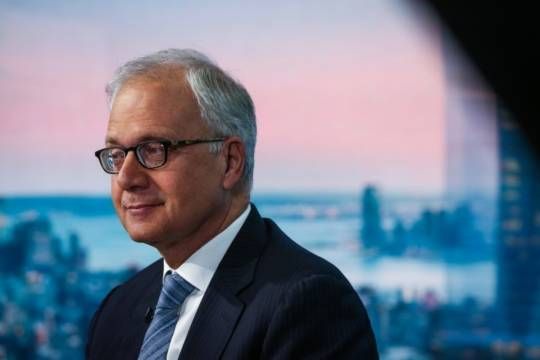
On March 1 (local time), international media including CNBC reported that Ed Yardeni, President of Yardeni Research, offered this analysis. Known as a leading Wall Street bull, Yardeni is credited with coining the term "Bond Vigilantes."
He stated, "With this U.S. attack, the Iranian Navy has been effectively neutralized, which has significantly reduced the threat of a blockade in the Strait of Hormuz." He added, "This could substantially lower geopolitical risks in the Middle East after the end of the conflict, which is potentially positive for the economy and investment." Yardeni explained that if oil prices fall following a ceasefire, both U.S. inflation and gasoline prices would decrease, which would lead to increased consumer spending and have a positive effect on the global economy and stock markets.
He particularly interpreted that the primary reason why there has not been an official blockade of the Strait of Hormuz so far is likely because the U.S. and Israel have neutralized the Iranian Navy. Yardeni analyzed, "There is little chance that the two countries have damaged Iran's oil production or export facilities," and said, "If the conflict remains short-term, oil prices are highly likely to fall within the next few months." He also predicted that this attack could help bring U.S. consumer prices down to the Federal Reserve's 2% target level.
Yardeni believed that if Middle East risks ease in the short term, the upward trend in gold prices could be limited. He set his year-end gold price target at $6,000 per troy ounce (about 8.77 million won), and forecasted it could reach $10,000 (about 14.61 million won) by 2030.
Yardeni assessed there is a 60% probability that the 2020s will become a "Roaring 2020s." The scenario of the "Roaring 2020s" envisions the decade entering a long-term boom phase based on technological innovation and productivity gains. Accordingly, he maintained his previous S&P 500 targets, projecting 7,700 by the end of this year and 10,000 by the end of 2029.
He put the probability of the U.S. economy overheating this year at 20%. While there was some market correction at the start of the year and the AI-related stock bubble has partially cooled, he explained that it is difficult to interpret this as a structural collapse. He also estimated the probability of a sharp market downturn at 20%. The biggest risk factor, he pointed out, is the U.S. private credit market. He believes that while geopolitical risks from the Middle East may ease under the assumption of a short-term conflict, the risk of a liquidity crunch in the private credit market is growing.
However, Yardeni added that even if a market correction phase occurs, it could actually present a buying opportunity for long-term investors, and it is unlikely that the market will enter a phase that fundamentally undermines structural growth trends.
© The Asia Business Daily(www.asiae.co.kr). All rights reserved.












