Korea Institute for Health and Social Affairs Report
Low-Income Households Spend 95% of Earnings on Living Expenses
Asset Inequality Worsens Due to Real Estate Ownership Gap
Despite steady improvements in official income distribution indicators over the past decade, 9 out of 10 people in Korea still feel that income inequality remains significant.
According to the report "A Study on the Gap Between Actual and Perceived Income Distribution in Korea," recently published by the Korea Institute for Health and Social Affairs on March 2, the Gini coefficient for disposable income improved from 0.388 in 2011 to 0.324 in 2023. The Gini coefficient measures income inequality, with 0 indicating perfect equality and 1 representing complete inequality.
However, the public's subjective perception of inequality diverged from these official statistics. Based on a 2024 survey, 92.4% of respondents stated that "there is a significant income gap in Korea," and about 60% believed that inequality has actually increased over the past 10 years. Additionally, 30% of respondents said that inequality had "intensified greatly."
One major reason why people do not feel improvements in income distribution is the issue of disposable income. The report explained that the expenditure burden on low-income households is much greater than on high-income households, leaving them with very little actual disposable income. As of 2023, the bottom 20% (first quintile) of households by regular income spent 95.6% of their earnings on living expenses, leaving only a 4.4% surplus. In contrast, the top 20% (fifth quintile) spent just 53.2% of their income, with the remaining 46.8% available for saving or investment. The burden of food expenses was particularly notable: the first quintile spent about 30% of their income on food, while the fifth quintile spent only around 10%.
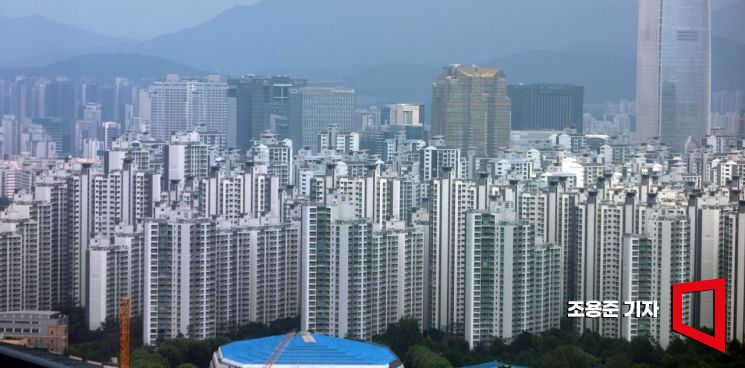
The report also analyzed that asset inequality, especially centered on real estate, is worsening future economic prospects. As housing prices have risen much faster than wage growth, the time required for a worker to save enough to purchase an apartment has continued to increase. The researchers noted, "In 2016, it would have taken a first-quintile household about 68 years to buy an apartment in the Seoul metropolitan area, but by 2023, this had increased to 124 years," adding, "It is becoming increasingly difficult to own housing assets, which is exacerbating inequality."
As of 2022, the top 10% of households by net assets owned up to 200 times more real estate assets than the bottom 10%. In 2023, only 8% of households in the first quintile owned real estate assets, a decrease from 11% in 2013. In contrast, the real estate ownership rate among the top 10% reached 98%, and more than 75% of these households owned real estate assets beyond their primary residence.
In particular, for middle-income households without assets (the middle class), even if their income level is maintained, the asset gap causes a strong sense of relative deprivation, which significantly influences their perception of distribution. The report pointed out, "Whereas labor market compensation used to determine social status in the past, the possibility of owning assets has now taken its place."
Customized Measures Needed for Low- and Middle-Income Groups
The research team suggested that to improve perceived equity in distribution, policy targets should be divided into "low-income/low-asset groups" and "middle-income groups," with tailored measures for each. For low-income groups, it is necessary to ensure basic living liquidity by raising and realistically adjusting the basic living security benefit, as well as expanding agricultural and food vouchers. For the middle class, alongside expanding the supply of housing, the team recommended financial support such as state-guaranteed low-interest loans or interest subsidies for first-time home buyers.
Hyejin Ko, Associate Research Fellow at the Korea Institute for Health and Social Affairs, stated, "In addition to improving income indicators, it is only through policy efforts to alleviate the burdens of everyday expenses and the asset gap that the benefits of distribution improvement can be truly felt by the public."
© The Asia Business Daily(www.asiae.co.kr). All rights reserved.












