Survey on Average Propensity to Consume in Q4 2025
Top Income Bracket Saw the Largest Gain
Spent More Than the Average, But Not in Line with Income Growth
In the fourth quarter of last year, the proportion of money actually spent by high-income households out of their earnings reached its lowest point in four years.
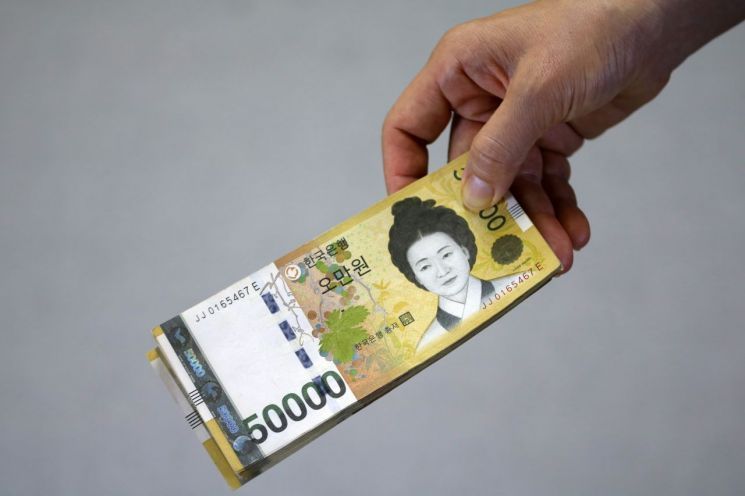
According to the "2025 Fourth Quarter Household Trend Survey" and the National Statistical Portal (KOSIS) released by the National Data Office on March 1, the average propensity to consume among households in the highest income quintile (top 20%) stood at 54.6% in the fourth quarter of last year. This figure is down by 0.4 percentage points compared to the same period of the previous year. It is also the lowest figure for a fourth quarter since 2021 (52.6%), marking a four-year low.
The average propensity to consume refers to the ratio of disposable income that households spend on consumption. Disposable income is the amount of money left after subtracting non-consumption expenditures such as taxes and interest from total income. In other words, it is money freely available for consumption or saving.
The average propensity to consume for households in the top quintile has declined for two consecutive years. In the fourth quarter of 2024, the figure dropped by 2.8 percentage points year-on-year, marking the steepest decline. Although income increased by 3.7% during this period, consumption expenditure slightly decreased by 0.3%, which contributed significantly to the overall decline.
The downward trend in the average propensity to consume last year appears to have occurred because households did not increase their spending in proportion to their higher earnings. The average monthly nominal disposable income of households in the highest income quintile last year was 9,361,000 won, up 5.0%. This was the highest growth rate among all income brackets. Labor income, boosted by factors such as bonuses from large corporations, surged by 8.7%-the largest increase since the relevant statistics were revised in 2019. This resulted in a significant 6.1% increase in nominal income overall.
In contrast, nominal consumption expenditure (5.11 million won) rose by only 4.3%. While this growth rate is higher than the average for all households (3.6%), it still fell short of the increase in income for the top quintile.
With nearly half of their disposable income unspent, the nominal surplus amount for high-income households also rose by 5.9% (to 4.25 million won). Surplus refers to disposable income minus consumption expenditure and is typically considered "extra money" that can be used for savings or investment. The surplus for households in the top quintile has increased for two consecutive years. This trend is interpreted as a result of one-off or temporary income increases not immediately translating into higher daily consumption, and the tendency for consumption to rise in line with rising income among high-income households has weakened.
© The Asia Business Daily(www.asiae.co.kr). All rights reserved.












