Household Trends Survey by KOSIS
Income Fails to Keep Up With Persistent Inflation
In the fourth quarter of last year, one out of every four households in South Korea was a deficit household, spending more than their disposable income. This is the highest figure in six years since 2019.
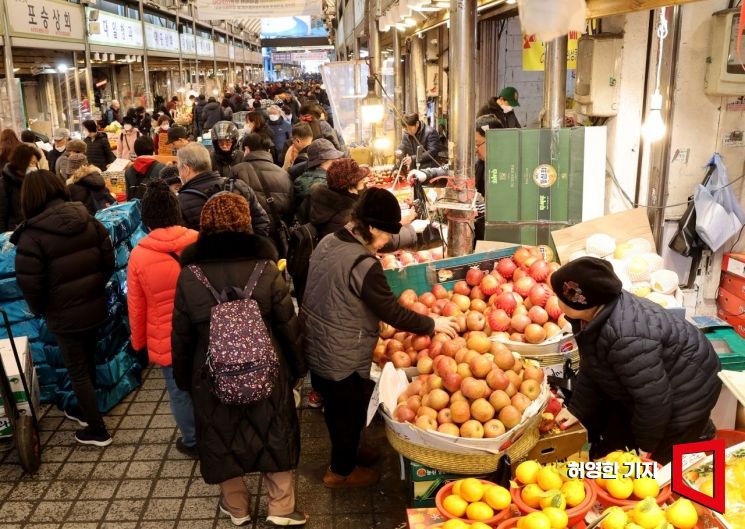 In the fourth quarter of last year, one in four households in Korea was a deficit household spending more than their disposable income (photo for illustrative purposes only and unrelated to the article content).
According to data released on March 2 by the KOSIS (Korean Statistical Information Service) and the Household Trends Survey, the proportion of deficit households in the fourth quarter of last year was 25.0%. Deficit households are defined as those whose consumer spending, such as living expenses, exceeds their disposable income - that is, income minus taxes, social insurance, and other deductions. This marks the highest level for a fourth quarter since 2019, when the figure was 26.2%.
The proportion of deficit households dropped to 23.3% in 2020 but remained in the 24% range from 2021 through 2023. In 2024, the figure slightly decreased to 23.9%, but last year it rose again by 1.1 percentage points. Experts attribute this to worsening household finances, as spending has outpaced income growth amid persistently high inflation.
The proportion of deficit households was particularly high among lower-income groups. In the fourth quarter of last year, more than half of households in the lowest 20% income bracket (the first quintile) were in deficit, with the rate rising by 1.8 percentage points year-on-year to 58.7%. The second quintile also saw an increase to 22.4%, while the third and fourth quintiles saw slight increases to 20.1% and 16.2%, respectively. In contrast, the top 20% income bracket (the fifth quintile) saw a decline, with the deficit household rate falling to 7.3%.
An increase in interest expenses has also constrained household spending capacity. In the fourth quarter of last year, the average monthly interest payment per household reached 134,000 won, up 11% from the previous year, marking the highest level since quarterly statistics began in 2019. For households in the lowest 20% income bracket, the average monthly interest expense surpassed 30,000 won for the first time, reaching 30,200 won. Concerns are rising that low-income households are feeling a heavier burden on their perceived economic situation due to increased interest payments.
Despite the recent stock market boom, deficit households may have lacked the financial resources to invest and thus missed out on asset value gains. However, a KOSIS official explained, "The proportion of deficit households can be affected by temporary factors such as durable goods purchases," adding that spending related to the Chuseok holiday in the fourth quarter of last year may have contributed to the higher figure.
© The Asia Business Daily(www.asiae.co.kr). All rights reserved.












