Gyeonggi Province will invest 42.7 billion won this year, including 11.3 billion won from the provincial budget, to create 375,000 square meters (37.5 hectares) of "urban forests."
The project will cover a total of 264 sites, including: ▲ five climate-responsive urban forests ▲ 21 roadside forest paths ▲ 37 pocket parks ▲ 14 school forests ▲ 13 urban forest remodeling sites ▲ and nine urban forest path maintenance sites.
Climate-responsive urban forests are being created to mitigate urban heatwaves and the heat island effect, as well as to enhance carbon absorption capabilities. In Yeoncheon County, a 105,000-square-meter urban forest is being established by utilizing sections of the abandoned Gyeongwon Line railway.
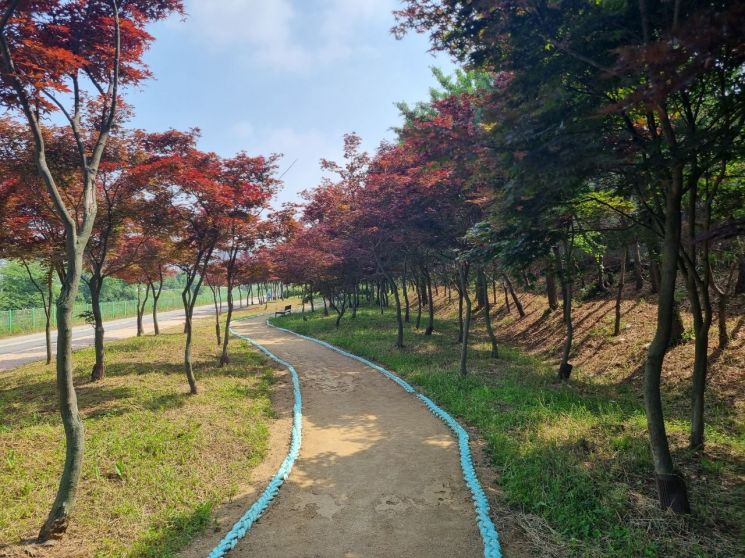
The roadside forest paths will be developed in 21 locations, such as a 2-kilometer section of National Route 75 in Gapyeong County, to improve pedestrian environments in city centers and reduce temperatures at the same time.
Pocket parks, which utilize idle or leftover spaces within residential areas, will be implemented in 37 locations, including a 1,500-square-meter site in Songu-ri, Soheul-eup, Pocheon City.
Projects to expand green spaces within schools (school forests), remodel urban forests, and maintain urban forest paths will also be pursued.
Lee Taeseon, Director of the Garden Industry Division of Gyeonggi Province, said, "Urban forests are environmental facilities that respond to the climate crisis, as well as daily life infrastructure that is closest to residents. We will carefully manage every stage from creation to ongoing maintenance so that urban forests can function as spaces for walking, relaxing, and gathering."
© The Asia Business Daily(www.asiae.co.kr). All rights reserved.












