The Mirror Reports on US Flight Attendant’s Video
"Leftover Coffee Sometimes Disposed of in Toilet"
Experts Warn Against Excessive Worry… Bottled Drinks Recommended
A warning has been issued to think twice before drinking coffee on an airplane. The safety of in-flight beverages has once again become a topic of controversy after a recent whistleblower, an airline crew member, exposed the reality of cabin hygiene management.
The British media outlet The Mirror recently reported that @ichbinvin, a flight attendant working in the United States, uploaded a video on TikTok highlighting hygiene issues on airplanes. In the video, he advised passengers to consume beverages at the airport before boarding, emphasizing the need for caution, especially when ordering hot drinks like coffee on board.
In the video, the flight attendant pointed out that in-flight hot water tanks are often not cleaned thoroughly. He went further to reveal that some crew members are instructed to dispose of leftover coffee in the aircraft lavatory toilet, rather than in the sink. He warned that, in the process, the coffee pot comes into close proximity with the toilet, which could allow bacteria or contaminants to backflow, and that the same pot may then be reused for making coffee. He added, "Unless there is a separate espresso machine on board, it is better not to drink coffee."
The video quickly drew significant attention online. Some viewers expressed discomfort, while others shared stories from friends who are pilots or flight attendants, confirming that they avoid drinking coffee on the plane.
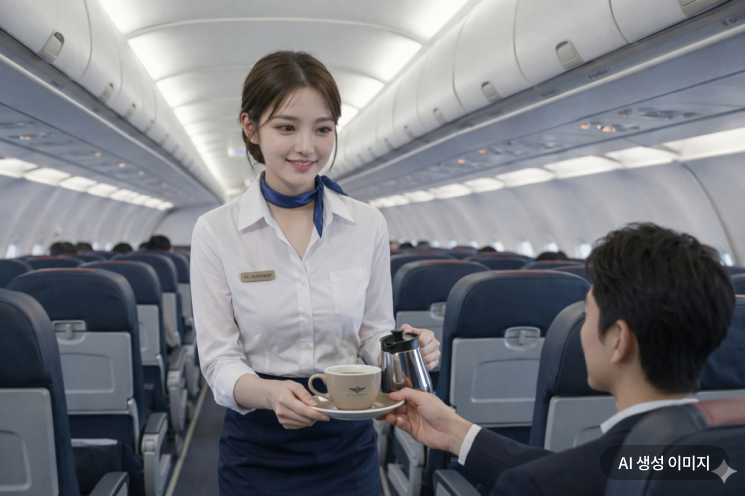
 A warning has been issued to think twice before drinking coffee on an airplane (photo is for illustrative purposes and unrelated to the article content). Pixabay
However, experts caution against excessive concern, stating that "actual cases of illness are rare." While they acknowledge that aircraft lavatories can harbor pathogens such as norovirus or E. coli, they explained that modern airplanes comply with strict hygiene regulations and that management of drinking water and beverages is rigorous. The Center for Food Policy at Hunter College, City University of New York, evaluated the in-flight water quality of some airlines as 'medium risk' in a 2019 report, but also noted that hygiene standards are generally being maintained.
This is not the first time that in-flight hygiene has become an issue. According to previous EPA investigations, about 12% of commercial aircraft in the United States tested positive for E. coli. In Korea, the issue of cabin air management was raised again after it was revealed that air vents on some Air Premia flights were contaminated with dust.
Experts recommend minimizing hygiene risks on airplanes by choosing bottled beverages, using hand sanitizer, and ensuring adequate hydration.
© The Asia Business Daily(www.asiae.co.kr). All rights reserved.













