Special Act for the Establishment of Jeonnam-Gwangju Metropolitan City Passes National Assembly
Integration Preparation System Activated: Organization, Finance, and Administration to be Unified
Four Major Regions: Gwangju, Western, Eastern, and Southern Areas
Accelerating Efforts to Realize the "Y4-nomics" Vision
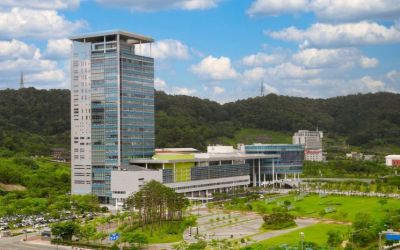
On March 1, Jeollanam-do announced that it welcomes, together with the 3.2 million residents of Jeollanam-do and Gwangju, the passage of the "Special Act for the Establishment of the Jeonnam-Gwangju Integrated Metropolitan City" at the National Assembly plenary session. The province has now begun preparations for the integration framework aimed at balanced development and fostering future industries across 27 cities, counties, and districts.
With the passage of the special act, the path to Korea’s first metropolitan integration has opened, marking a historic turning point for Jeollanam-do and Gwangju as they seek to overcome the challenges of overpopulation in the Seoul metropolitan area and the risk of regional extinction.
This achievement was made just 59 days after the official proposal for administrative integration was put forward on December 28 last year. It is especially meaningful as it represents the combined result of President Lee Jaemyung’s strong support and the passionate wishes of local residents.
Jeollanam-do plans to mobilize all administrative resources to prepare for the launch of the Jeonnam-Gwangju Metropolitan City, Korea’s first metropolitan integration model, scheduled for July this year.
First, to ensure a stable implementation of administrative integration, the existing "Administrative Integration Promotion Planning Team" will be reorganized into the "Administrative Integration Working Preparation Team." Together with Gwangju Metropolitan City, the province will begin drawing up detailed implementation plans for the integration of organization, finance, and administrative affairs. Beginning this month, the related organization will be expanded and reorganized into an official bureau-level body to systematically prepare for the transfer of authority from the central government, as well as the takeover of related work and institutional improvement.
The province will also focus on drafting the enforcement decree required for the implementation of the special act. It will establish concrete measures for the provisions and special cases included in the law, and build the institutional foundation needed for the launch of the integrated metropolitan city step by step by enacting ordinances in each sector and improving the administrative system. For additional powers and special cases not specified in the law, the province plans to continue discussions with the central government to explore supplementary measures.
After the launch of the integrated metropolitan city, industrial strategies to revitalize the region will also be pursued. To this end, on February 23, the "Special Task Force for Attracting 4 Million-Metropolitan City Enterprises" was formed and put into operation. The task force will develop customized attraction strategies reflecting the industrial environment of each region and will push forward with step-by-step action plans to expand the industrial base of the integrated metropolitan city.
In particular, the "Y4-nomics" vision will be concretized around the four major regions (the Gwangju area, western area, eastern area, and southern area-also referred to as the 3+1 axis). The province will simultaneously work to strengthen the competitiveness of future high-tech industries such as semiconductors, artificial intelligence (AI), robotics, energy, and secondary batteries, as well as traditional local industries like agriculture, fisheries, livestock, and culture and tourism.
In addition, the possibility of relocating or attracting major public institutions, such as the National Agricultural Cooperative Federation (Nonghyup), the Korea District Heating Corporation, and the Korea Racing Authority, will be reviewed to further expand the industrial base and vitalize the regional economy.
After the launch of the integrated metropolitan city, efforts will be made to strengthen external competitiveness by hosting international events and expanding cultural infrastructure. The province will systematically support the preparation for the 2026 Yeosu World Island Expo, which will be the first international event after integration, to promote the value and sustainability of marine resources such as islands, seas, and tidal flats both domestically and internationally.
Step-by-step preparations will also be made to host the G20 Summit in 2028, with a plan to consider a distributed operation model linking the entire regions of Gwangju and Jeollanam-do, thereby expanding participation across the region.
In the cultural sector, the province will push for the creation of a cultural and artistic cluster centered on the Asia Culture Center in the Geumnam-ro area of Gwangju. Measures to expand artistic infrastructure will also be reviewed, including attracting a branch of the National Museum of Modern and Contemporary Art to Gwangju, building a Peace Art Museum, and establishing creative residencies.
Furthermore, the province plans to develop cultural content based on the May 18 Democratic Movement and to seek ways to link existing international events such as the Gwangju Biennale and the Jeonnam International Ink Biennale, thereby expanding the cultural industry and strengthening the city's brand competitiveness.
Jeollanam-do also plans to establish an institutional foundation for balanced development and social safety nets throughout the integrated metropolitan city. This will include developing specific operational plans for the balanced development fund and establishing a financial management system that prevents concentration in specific areas, thereby promoting mutually beneficial growth among regions.
Policies previously discussed, such as basic income for rural residents, energy basic income, and birth basic income, will also be comprehensively reviewed in terms of financial feasibility and institutional validity, with plans to gradually implement them.
An official from Jeollanam-do stated, "We will do our utmost to ensure that follow-up procedures after the passage of the special act are carried out without delay, so that the launch of the integrated metropolitan city proceeds smoothly and stably."
© The Asia Business Daily(www.asiae.co.kr). All rights reserved.












