Joint Situation Review Meeting on the Iran Crisis
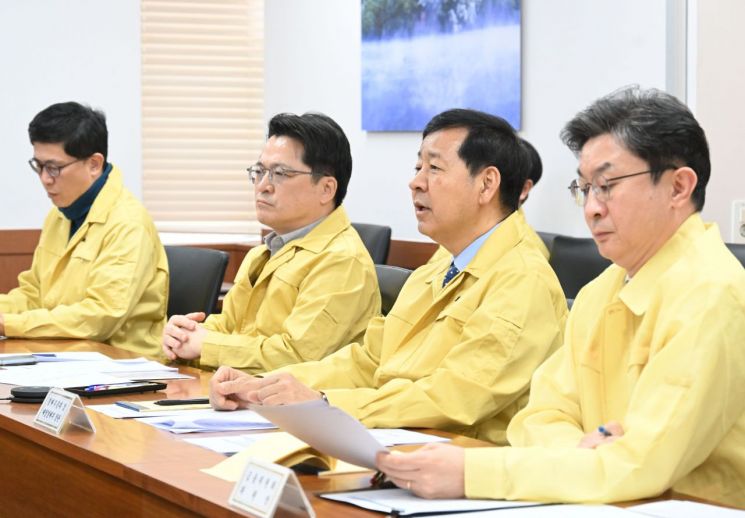 Koo Yoonchul, Deputy Prime Minister and Minister of Strategy and Finance, is speaking at the 'Joint Situation Review Meeting on Iran' held at the Government Seoul Office in Jongno-gu, Seoul on the 1st. Ministry of Strategy and Finance
As uncertainty over the political situation in Iran has intensified following airstrikes by the United States and Israel and the death of Iran's Supreme Leader, the government has activated a joint emergency response team with relevant agencies. The plan is to monitor both domestic and international financial markets and the real economy around the clock, and to respond swiftly in accordance with the scenario-based contingency plan if any abnormal signs are detected.
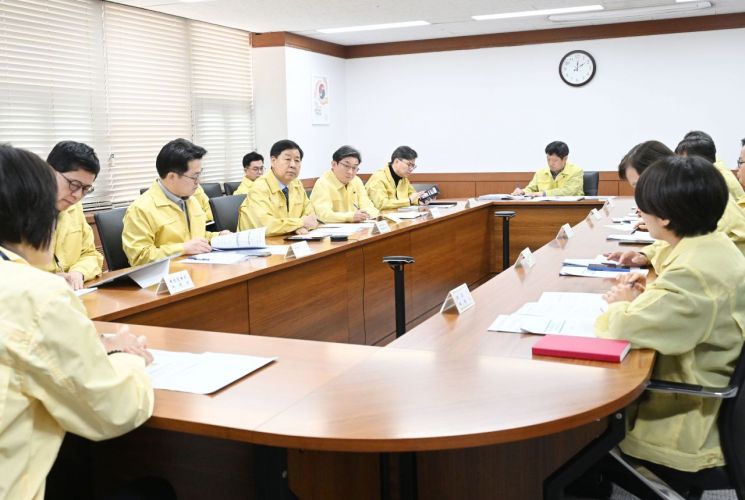
On March 1, Koo Yoonchul, Deputy Prime Minister and Minister of Strategy and Finance, convened a joint situation review meeting on Iran with relevant agencies to discuss the impact on domestic and international financial markets and the real economy, as well as future response directions. The meeting was attended by the Ministry of Foreign Affairs, the Ministry of Trade, Industry and Energy, the Ministry of Oceans and Fisheries, the Financial Services Commission, the Bank of Korea, the Financial Supervisory Service, and the Korea Center for International Finance, among others.
The participants assessed that, at present, the country is equipped with adequate domestic crude oil reserves and has the capacity to respond to supply and demand crises. However, they noted that the possibility of continued military tensions in the Middle East could further increase volatility in international financial and energy markets in the near term.
Deputy Prime Minister Koo urged, "Given the considerable uncertainty surrounding future developments in the Middle East, all relevant institutions should exercise heightened vigilance in their response." He emphasized, in particular, "Since the Middle East is a region on which we are highly dependent for energy, we need to respond swiftly to volatility in international energy prices stemming from potential instability in the Strait of Hormuz."
The Strait of Hormuz serves as a major import route for Middle Eastern crude oil to Korea, with approximately 20% of the world’s crude oil and about 40% of seaborne oil shipments passing through this chokepoint. Korea imports 70.7% of its crude oil and 20.4% of its liquefied natural gas (LNG) from the Middle East, meaning that any blockade of the strait would inevitably lead to instability in the country’s energy supply.
He also called for "close monitoring of the operations of Korean vessels, such as oil tankers and LNG carriers, currently navigating near the Middle East, and taking every measure to ensure there is no disruption in the country’s energy supply."
The government views that, should the Strait of Hormuz be effectively blockaded, securing alternative routes would be difficult. Some shipments could be rerouted via pipelines to the Red Sea, but given the limited effective capacity, this would not be easy. During the armed conflict between Iran and Israel in June of last year, the Iranian parliament passed a resolution to close the Strait of Hormuz, which led to a sharp spike in international oil prices.
Led by Deputy Prime Minister Koo, the government has activated a joint emergency response team with relevant agencies to address issues related to the real economy, energy, financial markets, and developments in the Middle East. The team will monitor local developments in the Middle East, as well as domestic and international financial markets, and impacts on the real economy-including energy, exports, shipping, aviation, and supply chains-24 hours a day. If any abnormal signs are detected, the government will respond swiftly and in coordination with relevant agencies under the pre-established scenario-based contingency plan.
© The Asia Business Daily(www.asiae.co.kr). All rights reserved.













