Disclosure of Statute of Limitations Completion Performance
and Provision of Tax Incentives
Going forward, if banks choose not to routinely extend the statute of limitations on long-term delinquent loans that have a low probability of recovery and instead allow the statute of limitations to expire, they will receive incentives during supervisory and evaluation processes.
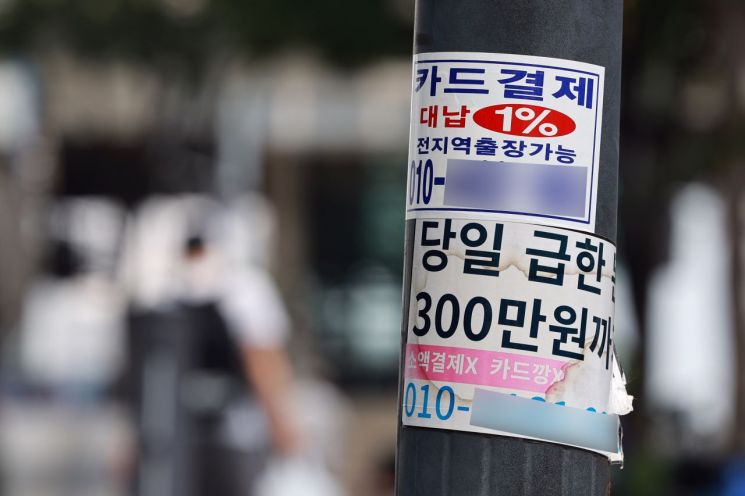
According to financial authorities on March 1, under the "Measures to Strengthen the Management of Individual Delinquent Loans" recently announced by the Financial Services Commission, a system will be established to retrospectively evaluate each financial institution's performance in completing the statute of limitations on delinquent loans. This move is aimed at shifting away from the previous practice of maximizing delinquent loan recoveries and instead strengthening debtor protection and support for financial rehabilitation.
First, financial institutions will be required to let the statute of limitations expire for delinquent loans that are difficult to collect, and their performance in this regard will be disclosed on the websites of the Credit Counseling & Recovery Service and the relevant industry associations. In addition, the comprehensive inclusive finance evaluation system for banks, which is currently being prepared by the financial authorities, will also incorporate banks' performance in completing the statute of limitations on delinquent loans.
Tax incentives will also be provided. If the statute of limitations on a delinquent loan expires, the loss will be recognized as a deductible expense under the Corporate Tax Act. The eligible loans are those under 50 million won for banks and insurance companies, and under 30 million won for secondary financial institutions.
The procedures for extending the statute of limitations will also become stricter. When the statute of limitations for a delinquent loan is about to expire, a reasonable assessment of the likelihood of recovery must be conducted before deciding whether to extend it. Even if the statute is extended, a new process will require a reassessment of the recovery potential after three years. Once the statute of limitations has expired, financial institutions will be required to notify the debtor of this fact.
This initiative is based on the assessment that financial institutions have been routinely extending the statute of limitations without sufficiently considering the debtor's ability to repay, thereby increasing the number of long-term delinquents. Currently, financial institutions have been able to easily extend the statute of limitations by filing mass payment order applications before the expiration date.

In the financial sector, 300,000 new long-term delinquents arise each year. As of the end of last year, there were as many as 936,000 long-term delinquents who had been delinquent for more than 90 days. Among them, the number of new long-term delinquents decreased from 314,000 in 2020 to 181,000 in 2021 and 194,000 in 2022, but then increased again to 278,000 in 2023 and 288,000 in 2024.
Furthermore, as of the end of last year, ultra-long-term delinquent loans that have been overdue for more than five years totaled 2,858,000 cases. Despite the extremely low probability of recovery, the customary five-year statute of limitations is repeatedly extended, resulting in a growing number of ultra-long-term delinquents within the financial sector. In the private lending sector, the volume of delinquent loans overdue for more than five years amounts to 8.5 trillion won, but the annual amount of loans whose statute of limitations expires is less than 100 billion won.
© The Asia Business Daily(www.asiae.co.kr). All rights reserved.













