Premium Districts Like Haeundae Lead Price Gains
Jeonse Prices Climb Higher Than Last Year
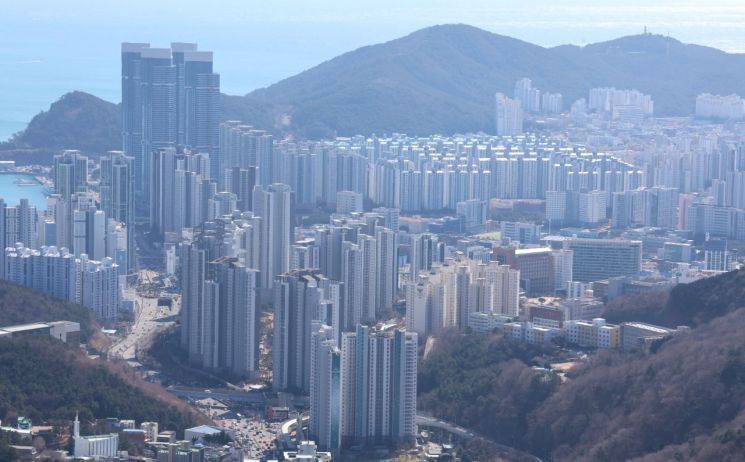
Apartment prices in Busan have been rising for 17 consecutive weeks. While major real estate markets in regional areas are stabilizing, it is explained that some demand is shifting due to regulatory measures in the Seoul metropolitan area.
According to weekly apartment price trend data released by the Korea Real Estate Board on February 28, apartment sale prices in Busan for the fourth week of February (as of the 23rd) increased by 0.03% compared to the previous week. Apartment prices in Busan have risen for 17 consecutive weeks since the fourth week of October last year. In contrast to a 0.43% decline up to the fourth week of February last year, this year, prices increased by 0.32% during the same period.
In Busan, premium districts, including Haeundae District, are leading the price rise. Haeundae District and Dongnae District both rose by 0.13%, while Suyeong District increased by 0.07%. The increase in Haeundae District was centered around major complexes in U-dong and Jung-dong, while Dongnae District saw increases mainly in large complexes in Sajik-dong and Anrak-dong. Suyeong District experienced rises mainly in Millak-dong and Suyeong-dong. However, Yeongdo District fell by 0.13%, and Sasang District and Nam District declined by 0.05% and 0.04%, respectively.
Jeonse (long-term lease deposit) apartment prices are also on the rise. As of the fourth week of February, they had increased by a cumulative 0.84%. This is a much larger increase compared to 0.20% during the same period last year. The upward rally has continued for 19 straight months since August 2024. Dongnae District rose by 0.25%, mainly in large complexes in Sajik-dong and Oncheon-dong. Geumjeong District (0.24%) saw increases mainly in small- and medium-sized complexes in Jangjeon-dong and Guseo-dong.
Transaction volume is also steadily increasing. According to the actual transaction price disclosure system of the Ministry of Land, Infrastructure and Transport, the number of apartment sales transactions in Busan last month was 3,537, more than double the 1,718 cases recorded during the same period last year.
Additionally, last year’s transaction volume reached 36,291 cases, marking a third consecutive year of increase since 19,205 cases in 2022. Haeundae District (4,521 cases) and Busanjin District (4,376 cases) each recorded more than 4,000 transactions, leading the market.
Youngsun Kwon, Team Leader at Shinhan Bank Real Estate Investment Advisory Center, said, “We are seeing signs that the regional apartment market is bottoming out, centered around Busan and Ulsan.” He added, “With supply having been limited and regulations continuing, especially in Seoul, some demand has shifted to regional areas, which also had an impact.”
He also noted, “However, since prices are rising mainly in promising areas such as Haeundae District, polarization is occurring even within the regional market.”
© The Asia Business Daily(www.asiae.co.kr). All rights reserved.












