The debate over the price ceiling system for new apartment sales has resurfaced in the real estate market. Although the system was introduced to protect genuine homebuyers and stabilize the market, it has failed to fully reflect rapidly changing market conditions, such as rising construction costs and increased labor expenses. As a result, various side effects are emerging at construction sites. In some redevelopment zones, a decline in profitability is leading to failed contractor bids or project delays, which in turn result in lower housing quality and growing consumer dissatisfaction.
As project profitability diminishes, construction companies are seeking indirect ways to offset insufficient returns. Notably, they have been setting excessively high prices for balcony extensions or paid options, or lowering the specifications for finishing materials, insulation, and equipment to meet the sales price cap.
Although the capped pre-sale price appears low, the final cost felt by consumers remains largely unchanged, and complaints about construction quality are increasing. In fact, during pre-inspections of some apartment complexes, tens of thousands of defects have been found, fueling criticism that the price ceiling system is causing a decline in quality.
Consequently, the intended effect of the price ceiling system-alleviating the burden of homeownership-has diminished, and, paradoxically, consumers are instead facing greater risks, including lower quality, construction defects, and project delays. A contraction in supply and overheated competition for new homes are further reinforcing these structural limitations.
As the limitations in product appeal of price-capped complexes become more pronounced, non-capped complexes are emerging as attractive alternatives. Freed from regulatory constraints, these projects can proceed more flexibly and allow for more proactive management of construction quality, drawing increased consumer attention.
Non-capped complexes benefit from greater design autonomy, enabling the adoption of differentiated features such as specialized layouts, premium community facilities, and enhanced landscaping, making it easier to secure product competitiveness. This environment is especially appealing to consumers who value brand reputation and residential quality, reflecting the recent market trend of prioritizing highly refined housing products over simply low-priced apartments.
According to a real estate expert, "While price-capped complexes are effective in restraining sales prices, they remove the incentive for construction companies to invest in product differentiation, leading to a widening gap in perceived quality for consumers. By contrast, non-capped complexes can freely incorporate a variety of elements such as design, landscaping, and community facilities, which tends to result in higher satisfaction among genuine homebuyers."
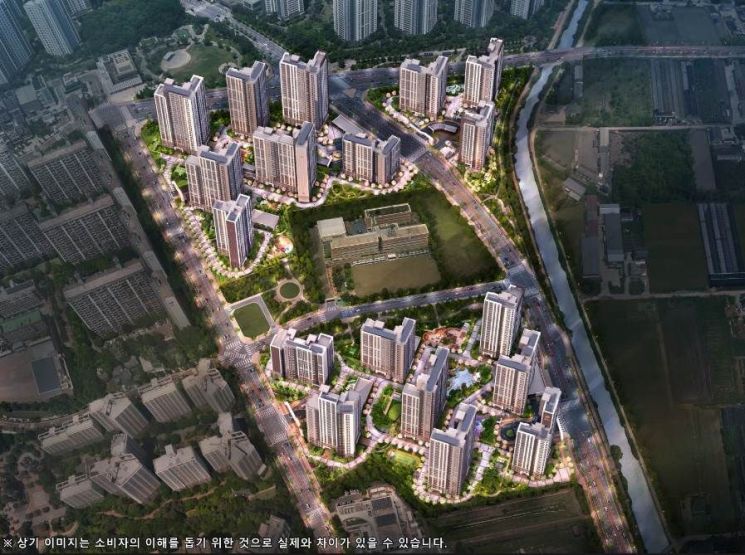
Against this backdrop, Harrington Place Pungmu is enjoying strong sales. Located in Blocks 1 to 3 of the Pungmu Yangdo District Urban Development Project in Gimpo, the complex consists of 18 buildings with a total of 1,769 units. It is not subject to regulatory constraints, and, unlike complexes with price caps in the Pungmu Station area, it offers greater design flexibility and strong product competitiveness.
Harrington Place Pungmu features a low building coverage ratio, ensuring a sense of openness and comfort. The landscaping throughout the complex was designed by the GSS team of the resort division of Samsung C&T Corporation, with distinctive landscaping elements distributed throughout. The complex includes themed gardens and walking paths such as a lounge with a sculptural pond and tea house, a large water feature and forest-centered garden, and a cottage area blending cherry trees and ornamental pines. The sunken community facilities house a fitness center, GX room, small library, kids’ ground, and a book cafe.
The complex offers special incentives by unit type, with the initial contract payment set at 5% and the first installment as low as 5 million won, reducing the initial financial burden. Units can also be resold after six months.
Harrington Place Pungmu, developed by Hyosung Heavy Industries Co., Ltd., features an exterior design with urban sensibilities, and practical interior layouts with premium finishes and specialized floor plans. With units mainly ranging from 59 to 84 square meters of exclusive area, the property is evaluated as a practical residential product that meets the needs of a wide range of buyers.
© The Asia Business Daily(www.asiae.co.kr). All rights reserved.












