U.S. USTR Invokes Section 301 of the Trade Act
Phase One U.S.-China Trade Agreement Investigation to Continue
China: "The United States Must Not Use This as an Opportunity to Stir Up Trouble"
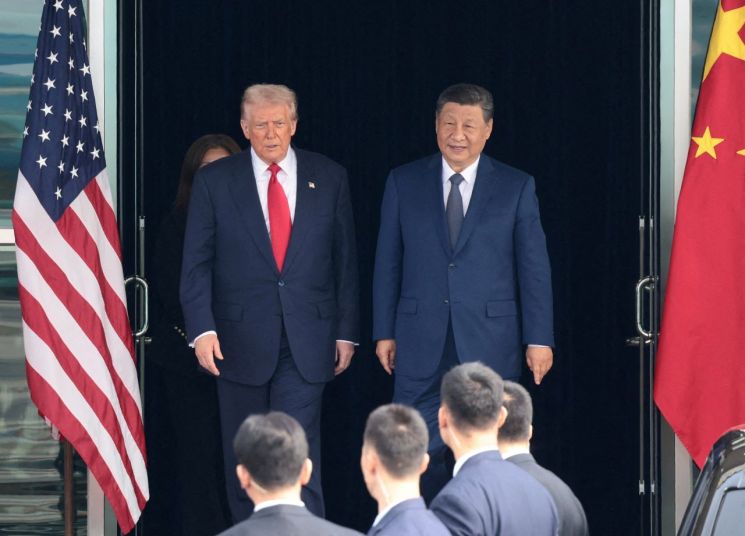
The United States has maintained its stance that it will continue an investigation based on Section 301 of the Trade Act in relation to the Phase One U.S.-China trade agreement, prompting China to once again warn that it will "take all necessary measures" to block it.
According to China's Ministry of Commerce, its spokesperson said in a statement posted on its website at around 5:30 p.m. on the 25th that "if the United States continues to push ahead with the investigation, or uses the investigation as a pretext to impose new tariffs based on it, China will take all necessary measures to safeguard its rights and interests."
In a statement the previous day, the Ministry of Commerce said, "China is closely following the U.S. remarks," and emphasized, "China hopes that the United States will view the implementation of the Phase One agreement in an objective and rational manner. The United States should not shift responsibility, and it should certainly not use this as an opportunity to stir up trouble."
Jamieson Greer of the Office of the United States Trade Representative (USTR) said on the 22nd that he had launched an investigation against China based on Section 301 of the Trade Act, making it clear that he would go on the offensive over issues related to the implementation of the Phase One trade agreement.
He said the core of the trade issue with China is "to ensure stability for soybean farmers, for those selling aircraft and medical devices to China, and for those seeking to import goods that cannot be obtained anywhere else but China."
Following last week's U.S. Supreme Court ruling that reciprocal tariff policies are illegal, countries such as China, Brazil, and India, which had previously been subject to high tariffs, have instead been cited as "beneficiary countries" whose burdens have eased compared with before. Major foreign media outlets, including Bloomberg, reported this by citing analysis from the trade-monitoring body Global Trade Alert.
However, despite China's repeated warning statements, the United States has not backed down from its existing position. On the 25th (local time), the day after the statement by the spokesperson for the Chinese Ministry of Commerce was released, Greer said in an interview with Fox Business that the United States plans to raise the current 10% global tariff, imposed under Section 122 of the Trade Act, to 15%, and that it could impose additional tariffs on certain countries based on Section 301 of the Trade Act.
Greer stressed that "Section 301 of the Trade Act allows the USTR to investigate unfair trade practices on a country-by-country basis." He added, "We have identified many such cases. These include instances where forced labor is used in supply chains, and cases involving countries with excess industrial production capacity which continue producing despite a lack of demand and ultimately flood our market with their products. We regard this as an unfair trade practice."
Greer also said that the United States intends to maintain tariffs of between 35% and 50% on Chinese products, depending on the item. He said, "We do not intend to expand beyond the current level," and added, "We will faithfully adhere to the existing agreement." President Trump is expected to visit China in the coming weeks to discuss an extension of the tariff truce with President Xi Jinping.
Meanwhile, the White House announced before the ruling that reciprocal tariffs were illegal that President Trump plans to visit China from March 31 to April 2 for a summit with Chinese President Xi Jinping. This will be the first visit to China by a sitting U.S. president in about 8 years and 5 months, since President Trump’s first term in office in November 2017.
© The Asia Business Daily(www.asiae.co.kr). All rights reserved.












