Spread of Mocking Content Created with Generative AI Tools
Citizens and Bereaved Families: "Outrageous Insult, Distorts Actual History"
Experts: "Urgent Need for Safeguards to Prevent AI-Fueled Historical Distortion"
As Independence Movement Day on March 1 approaches, a generative artificial intelligence (AI) video that mocks independence activist Yu Gwan-sun has been posted on social media, sparking controversy. Citizens and bereaved family members are strongly protesting, calling it "mockery that has crossed the line," and concerns are growing over the potential distortion of history.
On February 26, Yonhap News reported on three AI videos that a TikTok user has been posting at one-day intervals since February 22, all featuring Yu Gwan-sun as their subject. The cumulative number of views for these videos has exceeded 200,000.
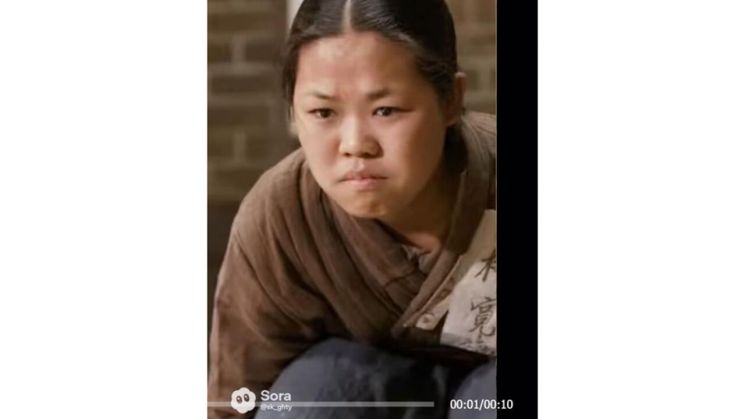
The videos were produced using generative AI technology. The model used in their production is known to be OpenAI's video-generation AI "Sora." The content includes scenes of the martyr passing gas, a setting in which she expresses affection toward the Rising Sun Flag, and a depiction where her upper body is shown as the martyr while her lower body is portrayed as a rocket. In particular, the final video shows a scene of her soaring into space with the caption "Yu Gwan-sun Fart Rocket." It is reported that the videos used an AI-restored image based on a photograph of Yu in prison garb taken when she was incarcerated at Seodaemun Prison after the March 1 Independence Movement. Her face, swollen from torture by the Japanese colonial authorities, was reconstructed using AI technology and then used for ridicule.
Yu Gwan-sun took part in the March 1 Independence Movement in 1919, was arrested, subjected to harsh torture, and died in prison at the age of 17. There is a strong backlash because a person regarded as a symbol of martyrdom has been turned into an object of ridicule. Citizens who saw the videos responded that "this has gone beyond what can be accepted as humor." One citizen expressed concern, saying, "If, in the future, images are created showing the martyr saluting the Rising Sun Flag, there could be people who mistake them for actual historical events."
Yu Hye-kyung, grandniece of Yu Gwan-sun and head of the Cheonan branch of the Yu Gwan-sun Martyr Commemoration Association, also said, "It feels as if my heart is being pierced by a knife or an awl," adding, "The descendants have lived carefully so that the achievements of our patriotic forebears would not be overshadowed, and this is not desirable at a national level either." Until now in Korea, AI technology has been used to restore the appearance of independence activists during their lifetimes, thereby enhancing public interest in historical figures and strengthening awareness of national merit. However, observers point out that when it is used, as in this case, to mock or denigrate great figures, questions about the social responsibility of the technology are bound to arise.
Similar controversies have already become a public issue overseas. In October last year, OpenAI blocked the creation of videos using the image of Reverend Martin Luther King Jr. in its video-generation AI. This was because some users had generated content that insulted the late civil rights leader. In fact, a fabricated video that manipulated footage of King’s 1963 "I Have a Dream" speech to make it appear as though he was engaging in racist behavior spread online and became a serious problem. Historians point not only to such "mocking restoration videos," but also to the structural limitations inherent in AI. Because AI services typically operate in a question-and-answer format, it is difficult for users to immediately filter out incorrect information even when it is provided.
Meanwhile, there was also a case related to the 1932 Shanghai Hongkou Park bombing, in which AI initially answered that the bomb thrown by independence fighter Yun Bong-gil was "lunchbox-shaped," but when asked to verify the information, it corrected itself to say it was "canteen-shaped." Concerns have been raised that even minor errors, if repeated, can cause confusion in historical understanding. Experts stress that "for AI technology to be used in a way that serves the public interest, guidelines and technical safeguards are needed for the use of images of great figures and historical persons," adding, "In particular, as national commemorative days such as Independence Movement Day on March 1 approach, society needs to be more vigilant about content that undermines the historical significance of such occasions."
© The Asia Business Daily(www.asiae.co.kr). All rights reserved.












