Gwangyang City in South Jeolla Province has proposed a "Gwangyang History Tour" for the upcoming 107th anniversary of the March 1st Independence Movement Day, inviting visitors to reflect on the noble spirit of patriotism and walk along the city’s historical resources that still bear traces of the Japanese colonial period and Korea’s modern and contemporary history.
In Gwangyang, places such as the Gwangyang History and Culture Center and the former staff housing of the Seoul National University Southern Experimental Forest, along with other modern cultural heritage sites that retain the scars of the Japanese colonial era and spaces that commemorate the spirit of resistance against Japanese rule, allow visitors to revisit the meaning of March 1st Independence Movement Day directly at historical sites.
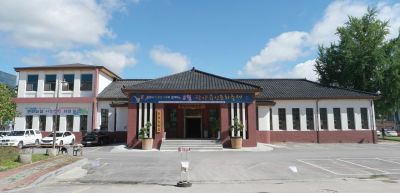
First, the Gwangyang History and Culture Center (Registered Cultural Heritage No. 444) is a repurposed space created from the former Gwangyang County Office building, which was constructed in 1943. After suffering a fire during the Korean War, it underwent repairs and renovation, and a second floor was added in 1968.
This building, which exemplifies the architectural style of government offices from the Japanese colonial period, stands on the former site of a Joseon Dynasty government office, thus possessing both historical significance and a strong sense of place. Here, visitors can gain an overview of Gwangyang’s history from the Paleolithic era to the present day, including its four major mountain fortresses, the activities of local militias (Uibyong), and key historical figures.
The nearby staff housing of the Seoul National University Southern Experimental Forest (Registered Cultural Heritage No. 223) was used during the Japanese colonial period as residential quarters for employees of the Gyeongseong Imperial University Southern Experimental Forest. With its brick and white wall finishes and a layout that arranges rooms along a central corridor, it presents a typical spatial composition of a Japanese-style house.
In Mangdeok Port in Jinwol-myeon stands the Jeong Byeonguk House, where the handwritten manuscript of the national poet Yun Dongju’s collection "The Sky, the Wind, the Stars and Poetry" is preserved (Registered Cultural Heritage No. 341). Yun Dongju compiled three handwritten copies of his poems to commemorate his graduation from Yeonhui College, but he was imprisoned in 1943 on charges related to the independence movement and died in 1945.
Of the three copies, the only manuscript preserved at the Jeong Byeonguk House was published in January 1948, bringing it to public attention and firmly establishing Yun Dongju as a leading poet in the history of Korean literature. Inside the house, the circumstances under which the manuscript was hidden and protected at the time are recreated, and in the nearby "Yun Dongju Poetry Garden," 31 poems from the collection are engraved.
In addition, around the Mangdeok Port area, there are sculptures that visualize lines from his poems and the "Star-Gazing Bridge," an overwater pedestrian bridge connecting to the Baaldo Island Garden, which spatially expands and brings to life the literary world of Yun Dongju.
Nearby, the Jinwol Joseon Naval Dockyard Memorial Hall commemorates the historical significance of the Jinwol dockyard, where warships of the Jeolla Left Naval Station were anchored during the Imjin War. The memorial hall offers insights into the activities of the Joseon navy and the course of the region’s maritime history, and when visited together with modern and contemporary heritage sites, it helps visitors gain a three-dimensional understanding of Gwangyang’s historical context.
An official from Gwangyang City said, "On the 107th anniversary of the March 1st Independence Movement Day, we hope people will plan a Gwangyang History Tour that brings together modern architectural structures reborn as complex cultural spaces after overcoming the scars of the Japanese colonial period, the national spirit of Yun Dongju, and the history of the Joseon navy."
© The Asia Business Daily(www.asiae.co.kr). All rights reserved.












