Operating rates in steel sector down by up to 23%
Deteriorating employment indicators, including continued decline in insured workers
On February 26, Incheon City announced that it plans to request the Ministry of Employment and Labor to designate Dong-gu, where major domestic steelmakers such as Hyundai Steel and Dongkuk Steel Mill are concentrated, as a "Preemptive Employment Crisis Response Area."
The city urgently convened the Employment Deliberation Committee the previous day and deliberated and resolved this plan. After comprehensively reviewing the designation requirements for a Preemptive Employment Crisis Response Area under the Framework Act on Employment Policy - including the presence of a main industry, concerns over deterioration in employment conditions, and whether the number of insured workers is declining - the city concluded that Dong-gu meets the relevant criteria.
Accordingly, the city plans to submit a request for designation as a Preemptive Employment Crisis Response Area to the Jungbu Regional Employment and Labor Office. The final decision on the designation is expected to be made after a review by the Jungbu Regional Employment and Labor Office and deliberation by the Employment Policy Deliberation Committee of the Ministry of Employment and Labor.
Companies and workers in areas designated as Preemptive Employment Crisis Response Areas can receive support for up to 12 months, including employment retention subsidies, vocational development support programs such as the National Tomorrow Learning Card, and livelihood stabilization loans.
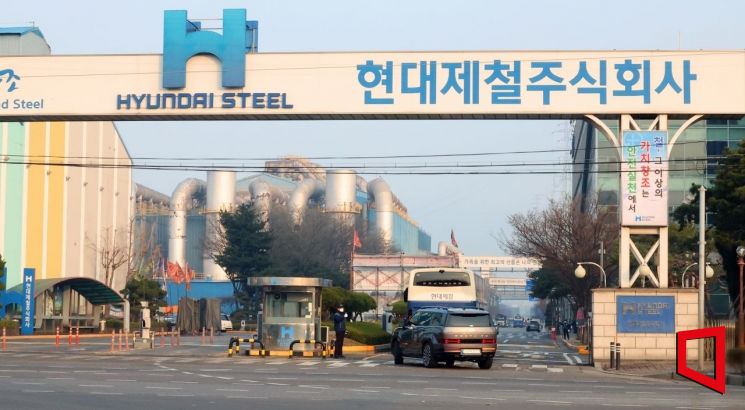
The operating rates and sales of domestic steelmakers are declining due to a combination of factors, including a slump in the construction market, an influx of low-priced steel from overseas, higher industrial electricity rates, and U.S. steel tariffs. As of the third quarter of last year, the operating rate of major steel products had fallen by up to 23% year-on-year, and employment indicators are also deteriorating, with the number of insured workers in the primary steel manufacturing industry in Dong-gu, Incheon, decreasing for six consecutive months.
Last month, Hyundai Steel responded to falling rebar demand by shutting down part of its rebar production facilities at the Incheon plant and deciding to cut production volume by half.
An official from Incheon City said, "The steel industry in Dong-gu is a core pillar of Incheon's manufacturing sector and a foundational industry for the local economy. The current crisis is not just a simple economic slowdown but a complex crisis arising from a period of structural industrial transition," adding, "Swift support from the central government is needed before the employment shock spreads across the entire region."
© The Asia Business Daily(www.asiae.co.kr). All rights reserved.












