"Hard-to-drug" target KRAS signaling dynamics precisely tracked...
Promising platform for evaluating efficacy and selectivity of new drugs
Pusan National University has developed next-generation biosensor technology that can observe, in real time within living cells, the activation of the KRAS protein and its signal transduction process, which are regarded as key causes of cancer onset.
By directly visualizing the previously "invisible moments" in KRAS-targeted research, which had long been considered a difficult task, this technology is expected to be used not only for studying the dynamics of cancer signaling, but also for evaluating the efficacy and selectivity of targeted drug candidates.
On the 24th, Pusan National University announced that a research team led by Professor Kim Taejin of the Department of Life Sciences and Professor Yoon Hwayoung of the Department of Pharmacy has established a hybrid genetically encoded biosensor platform that quantitatively tracks, over time, the interaction between the oncogene KRAS and its downstream signaling protein RAF.
The KRAS-RAF signaling pathway is the starting point of the MAPK pathway, which regulates cell proliferation and survival, and is a representative cancer signaling system that is abnormally activated in more than 30% of all solid tumors. In particular, KRAS mutations are frequently found in pancreatic, colorectal, and lung cancers, and technologies that precisely analyze and target these mutations are considered globally important research topics. However, there had been technical limitations in directly and in real time observing the interaction of these two proteins in living cells.
The research team developed a biosensor that integrates fluorescence-based FRET (Forster resonance energy transfer) and luminescence-based BRET (bioluminescence resonance energy transfer) into a single platform, successfully enabling quantitative, time-resolved tracking of the binding and dissociation between KRAS and RAF proteins.
In particular, they designed KRAS sensors that respond specifically to each of the three RAF isoforms, ARAF, BRAF, and CRAF, allowing real-time comparison and analysis of isoform-specific binding strength and signaling dynamics. By fusing NanoLuc luciferase and measuring FRET and BRET signals simultaneously, they reduced the phototoxicity and background signal limitations of conventional fluorescence imaging and expanded the platform so that it can be used even in high-sensitivity screening environments.
It is also noteworthy that they provided real-time imaging evidence that common cancer-associated KRAS mutations (such as G12C, G12D, and G12V) bind more strongly to RAF than the wild type and remain continuously activated even at basal state. Furthermore, when the KRAS-targeted inhibitors Sotorasib and MRTX1133, which are currently in clinical use or under development, were applied, the team quantitatively confirmed a decrease in signaling from the mutants, demonstrating that drug effects can be directly evaluated at the level of living cells. This suggests that the biosensor platform can be utilized to precisely verify the efficacy and selectivity of new drug candidates.
Professor Kim Taejin said, "KRAS has long been considered a 'difficult-to-drug' target, but with the recent emergence of targeted therapies, the importance of precision functional analysis technologies has grown even further," adding, "This technology will serve as a key platform for visualizing KRAS signaling in real time, understanding the dynamics of cancer signal transduction, and accelerating the development of mutation-specific therapeutics."
This study was conducted with Master's student Ko Jeongmin of the Department of Life Systems at Pusan National University as the first author, and was led by Dr. Seo Jeongsu of the Life Systems Research Institute, Professor Yoon Hwayoung, and Professor Kim Taejin as co-corresponding authors. The research was supported by the Bio-Medical Technology Development Program of the Ministry of Science and ICT and the National Research Foundation of Korea.
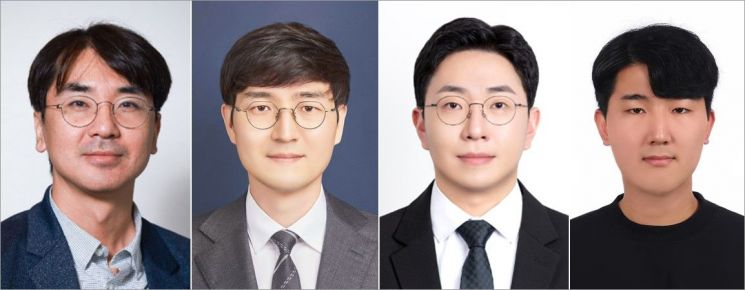 (From left) Professor Kim Taejin, Professor Yoon Hwayoung, Dr. Suh Jeongsu, and Ko Jeongmin, master's student.
© The Asia Business Daily(www.asiae.co.kr). All rights reserved.












