From February 19, Citywide Collection and Disposal of Accumulated Waste
Cleaning Situation Rooms Operated During Lunar New Year to Handle Complaints
Residents Must Check Collection Dates and Items by District and Neighborhood
To deal with the large volume of waste generated during the Lunar New Year holiday, the Seoul Metropolitan Government will fully mobilize personnel and equipment in cooperation with the district offices.
According to the Seoul Metropolitan Government on February 17, from February 19, when the holiday ends, the city and each district office will fully mobilize cleaning personnel and equipment to collect and dispose of the accumulated waste generated during the holiday all at once. In particular, depending on the circumstances of each district, they will also carry out year-end holiday cleanups together with local residents.
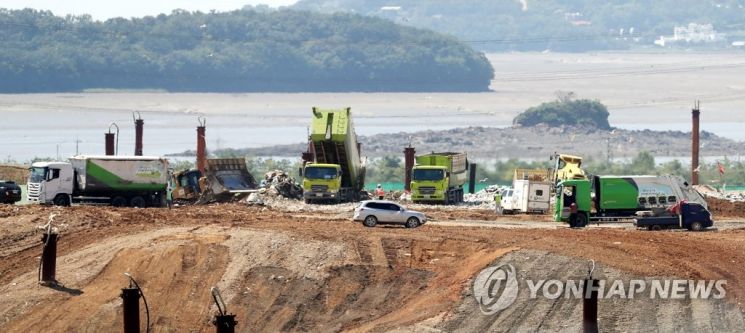
During this holiday period, the Seoul Metropolitan Government operated cleaning situation rooms and deployed mobile cleaning patrol teams and environmental officials to minimize inconvenience to citizens caused by waste. A total of 26 cleaning situation rooms were operated by the city and district offices, and a cumulative total of 731 personnel were deployed to the mobile cleaning patrol teams to promptly respond to sanitation-related civil complaints.
The mobile cleaning patrol teams focused on vulnerable areas every day to prevent inconvenience to citizens caused by piles of garbage in major downtown areas and along streets. A cumulative total of 15,137 environmental officials cleaned the streets and collected household waste, thereby reducing waste-related inconvenience for citizens.
Until the end of the holiday, the dates on which waste can be put out differ by district due to the intake schedule of the Seoul Metropolitan Government’s resource recovery facilities and days off for district environmental officials. As some districts have different household waste collection days by neighborhood, residents must check the waste disposal schedule during the holiday period through their district’s official website.
From after the holiday, the Seoul Metropolitan Government plans to accelerate efforts to reduce waste by the equivalent of "one standard volume-based waste bag per citizen per year." The goal is to reduce the amount of household waste by 2027 by an amount equivalent to the daily waste generation of one district (about 120 tons per day).
In the first half of the year, the city will focus on citizen participation programs. It will encourage proper waste separation in everyday life by promoting items such as: separate disposal of food waste; prohibition of mixing vinyl and plastic with volume-based waste bags; separate disposal of paper; priority use of reusable containers; and carrying reusable shopping bags and tumblers. Starting with Mayor Oh Sehoon, the city aims to secure "100,000 pledge participants," including the heads of the 25 district offices and local residents.
The city will also publicly recruit 354 citizens to participate in the "100-Day Household Waste Diet Challenge," a program in which participants diagnose and monitor their own household waste generation. The number "354" represents the per capita daily waste generation of Seoul citizens (354 grams). Participants will use a portable scale provided by the city to self-measure their household waste generation for 100 days and fill out a "waste reduction practice checklist" every day. Those selected as outstanding participants will receive citizen commendations and Eco-Mileage points. Recruitment will take place in February, and the top performers will be awarded the Mayor of Seoul’s Prize at the "Environmental Awards Ceremony" scheduled for June.
In addition, the city will publicly recruit 25 apartment complexes in Seoul to participate in the "Our Apartment 365-Day Waste Diet" program, under which the amount of recyclable resources discharged by each complex will be measured to encourage reductions in volume-based waste disposal. Outstanding complexes will receive Seoul Eco-Mileage points worth 10 million won and support for projects to improve conditions for separate collection. The city will also visit residential areas, traditional markets, and neighborhoods with high concentrations of foreign residents to provide tailored education on waste separation, and in areas vulnerable to improper separation it will open volume-based waste bags to check the actual status of mixed-in materials. Through these efforts, the city plans to encourage the use of reusable delivery containers in residential areas such as villas and apartments, distribute multilingual waste separation guides in neighborhoods with many foreign residents, and, in areas with dense clusters of commercial stores, work with merchants’ associations to promote separate disposal of waste vinyl and other materials in a site-specific manner.
Through this reduction project, the Seoul Metropolitan Government expects to cut approximately 44,000 tons of waste over two years. In addition, by building and modernizing large-scale resource recovery facilities, the city also plans to achieve a public waste treatment capacity of 2,700 tons per day by 2033.
© The Asia Business Daily(www.asiae.co.kr). All rights reserved.












