Launch Briefing of the 8th Committee
Focus on Institutional Innovation and Regulatory Reset
Jin Ae Kim, Chairperson of the National Architecture Policy Committee, stated, "We will work to innovate architecture-related systems and reset regulations so that various architectural types and new technologies can be utilized."
Chairperson Kim made these remarks at a New Year press briefing held in Jeong-dong, Jung-gu, Seoul on the 13th. The National Architecture Policy Committee presents the vision and goals of national architecture policy and deliberates and coordinates architecture policies of the relevant ministries. It was launched in 2008 in accordance with the Framework Act on Architecture.
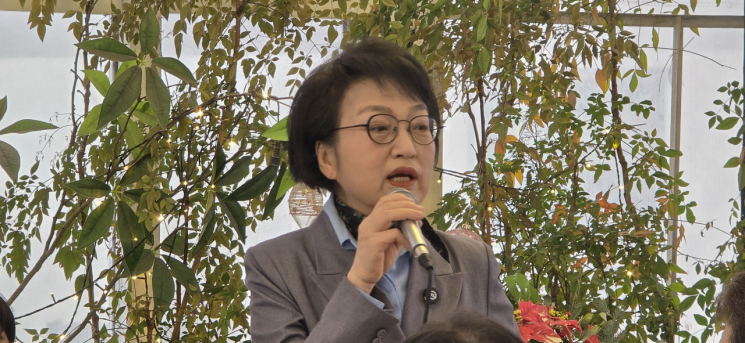
At the briefing, the chair of the Policy Coordination Subcommittee and others attended and presented the policy goals and key initiatives of the 8th Committee. After being launched in December last year, the Committee held its first joint meeting last month and approved three national architecture policy goals and nine key initiatives.
The Committee presented as this year’s key tasks: institutional innovation and regulatory reset, expansion of architectural spatial and cultural assets, and establishment of a new ecosystem for the architecture industry.
First, it plans to revise outdated building regulations in line with the introduction of new technologies and overhaul the overall structure of the architecture industry. Chairperson Kim stressed, "Most of the current building regulations were enacted in the 1970s and 1980s," adding, "At a time when new technologies, culture, and industries are emerging, there is a need to reset regulations."
She also plans to establish a Total Quality Management (TQM) system that integrates and manages everything from planning and design to construction and supervision. Chairperson Kim said, "Traditional architecture has handled design, construction, leasing, and sales separately," and added, "By introducing a TQM system, we must lead the architecture industry toward a model in which we create content from the planning stage and take responsibility in an integrated way through leasing and operation." Along with this, the Committee plans to focus on strengthening architecture R&D engineering capabilities, for example by integrating AI and smart technologies into construction sites.
To implement policies swiftly, the National Architecture Policy Committee has decided to operate task forces (TFs) for each key initiative. Currently, the National Architecture Policy Committee is operating a total of 10 TFs, including those on the architecture industry, regulatory reset, and urban housing. In addition, it plans to form an advisory group composed of private-sector experts and actively reflect their opinions in setting the direction of architecture policy.
Meanwhile, during the briefing, the use of "urban block-type housing" as an alternative for housing supply was also mentioned. Chairperson Kim said, "We have already reported this to the Presidential Office, and since it is a method that utilizes public land, it can be implemented as long as there is the will on the part of the public sector," adding, "If this plan is adopted, we expect it will serve as a policy proposal that aligns with the real estate agenda of the Lee Jaemyung administration."
© The Asia Business Daily(www.asiae.co.kr). All rights reserved.












