Eliminating Gaps Across Vacations, Late Nights, and Weekends
Institutionalizing a City Where It Is Easy to Raise Children
"Every school vacation, my first worry is where to leave my child."
Local governments are addressing the everyday concerns of dual-income families through administrative measures.
Yeongju City is building an "all-time public care system" that covers not only elementary school vacation care, but also nighttime, weekend, and emergency care, seeking solutions to low birth rates through everyday policies. A key feature is that care services have been reframed not as welfare, but as urban infrastructure.
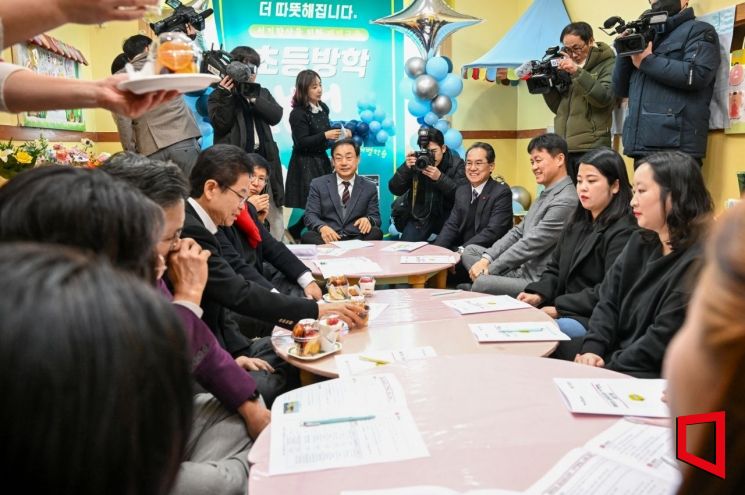 Lee Cheolwoo, Governor of North Gyeongsang Province, and Eom Taehyun, Acting Mayor of Yeongju, are inspecting the operation of local elementary school vacation care centers.
From this winter vacation, the city has been piloting an "elementary school vacation care" program for first to third graders. By utilizing unused space in daycare centers, it operates for extended hours on weekdays from 7:30 a.m. to 7:00 p.m., with dedicated care teachers on site providing lunch, snacks, learning, and experiential activities free of charge. By aligning its hours with commuting times, the program is increasing parents' satisfaction.
Instead of building new facilities, the city has reallocated existing resources to fill "gaps in time," a structural approach that is being recognized as a new model of public care.
Accessibility to care has also been strengthened. In cooperation with the Gyeongbuk Childcare Comprehensive Support Center, the mobile toy library "Nuri Ppangppang" visits local hubs directly to provide toy rental services. On site, Lee Cheolwoo, Governor of North Gyeongsang Province, and officials from the North Gyeongsang Provincial Council listened to parents' opinions and simultaneously reviewed the policies.
Starting this year, the Gyeongbuk-style integrated child care project "K-Bodeum6000" will fully implement a 24/7, 365-day care system. Daycare centers for infants and toddlers and community care centers for elementary school students will operate at night, late at night, on weekends, and on holidays, and will also handle emergency and short-gap care. This reflects a determination to institutionally resolve "time discontinuity," which has been the greatest vulnerability in care.
In addition, the city is organically connecting shared parenting spaces, holiday daycare centers, toy libraries, and local children's centers to expand the care paradigm from "facility-centered" to "community-centered."
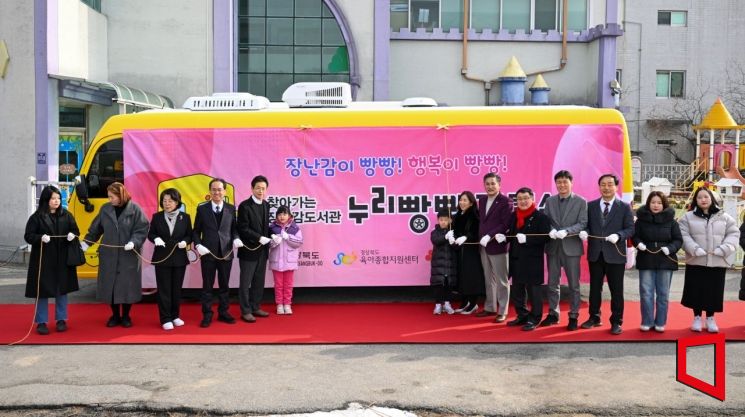
Eom Taehyun, Acting Mayor of Yeongju, said, "Care is no longer an issue for families alone, but a responsibility that the entire local community must share," stressing that "creating an environment where children can be raised with peace of mind is, in itself, urban competitiveness."
Low birth rate policies are not decided by grand declarations, but by the answer to the question, "Is there somewhere to leave my child tonight?" Yeongju City's experiment is an example of bringing care down from the realm of policy into everyday life. The survival strategy for regional cities is being written out in the field.
© The Asia Business Daily(www.asiae.co.kr). All rights reserved.













