"Error in Cell Origin Recognized After Manufacture and Sale"
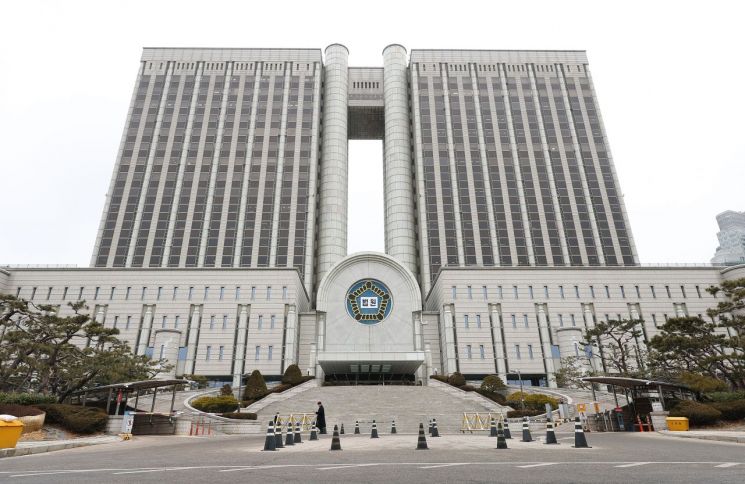
Honorary Chairman Lee Woongyeol of Kolon, who was brought to trial on charges including manipulating the ingredients of the osteoarthritis gene therapy Invossa-K Inj. (Invossa) and selling it, was acquitted again on appeal.
The 13th Criminal Division of the Seoul High Court (Presiding Judge Baek Kangjin) on the 5th found Honorary Chairman Lee not guilty, as in the first trial, of the charges including violations of the Pharmaceutical Affairs Act. Former Kolon Life Science CEO Lee Wooseok, who was indicted along with him, was also acquitted as in the first trial.
The court stated, "We do not accept any of the allegations that, despite recognizing the error regarding the origin of the cells in Invossa’s second component, the defendants omitted this from the documentation," and added, "We can agree with the lower court’s finding that the defendants became aware of this after around March 2019, which is later than the time of manufacture and sale."
Honorary Chairman Lee was indicted in July 2020 on charges of manufacturing and selling Invossa containing 'kidney-derived cells (GP2-293)' that differed from what had been approved by the Ministry of Food and Drug Safety (MFDS) from November 2017 to March 2019, and generating sales of about 16 billion won.
Invossa is an intra-articular gene therapy injection for arthritis, consisting of a first component containing human chondrocytes and a second component containing genetically modified cells into which the chondrocyte growth factor (TGF-β1) has been introduced. In 2017, it was approved by the Ministry of Food and Drug Safety (MFDS) as the first gene therapy in Korea.
However, in March 2019, while Kolon TissueGene, the original developer of Invossa, was conducting Phase 3 clinical trials in the United States, it was confirmed that the actual ingredients differed from those disclosed at the time of approval in Korea, and the issue erupted. It was revealed that the cells used to produce the second component were not the approved 'chondrocytes' but 'kidney-derived cells (GP2-293)', which are known to carry a risk of tumorigenesis. As a result, the Ministry of Food and Drug Safety (MFDS) revoked the approval in July 2019.
© The Asia Business Daily(www.asiae.co.kr). All rights reserved.












