Drinking hot coffee from paper cups
Tens of thousands of microplastics released after 15 minutes of high-temperature exposure
There is growing concern that the everyday habit of drinking hot coffee or tea from paper cups may lead to exposure to microplastics and nanoplastics. Contrary to the common perception that paper cups are relatively safer than plastic cups, experts point out that high-temperature beverages can damage the inner coating layer of the cup, allowing microplastics to leach into the drink.
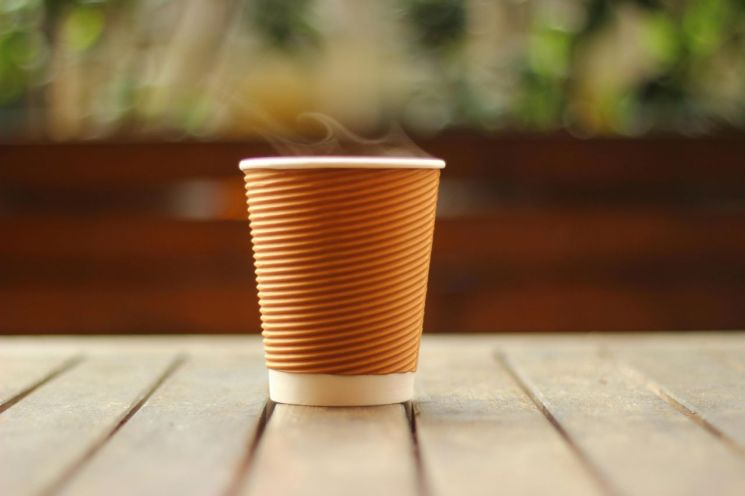
According to a study by a research team at the Indian Institute of Technology (IIT), published in the international environmental journal Journal of Hazardous Materials, when hot liquid at 85-90 degrees Celsius was poured into a paper cup and left for 15 minutes, the thin polyethylene (PE) film coating the inside of the cup was degraded by the heat and released microplastics.
The experiment found that an average of about 25,000 microplastic particles were detected per 100 ml of beverage. It was also estimated that approximately 10.2 billion plastic particles at the nano scale, which are difficult to detect with the naked eye, were mixed into the drink. This means that even a single cup of hot instant coffee can result in the intake of a considerable amount of microplastics and nanoplastics.
Looks like paper, but the inside is plastic-coated
Paper cups are lined with a plastic coating on the inside to prevent liquid from seeping through. Although they appear to be made entirely of paper, the researchers explained that this coating layer is relatively easily damaged when exposed to high-temperature liquids. In this process, not only microplastics but also certain ions, fluorine, sulfates, some other chemicals, and heavy metal components were detected.
Because the released microplastics and nanoplastics are extremely small in size, there is a high likelihood that they can be absorbed into the body. Some particles may travel through the bloodstream and reach deep into internal organs, and over the long term they are suspected of potentially disrupting the immune system or causing hormonal imbalances.
For hot drinks, reusable cups such as stainless steel or glass are recommended
The British outlet The Independent also recently reported that takeaway coffee cups, including paper cups, can be a source of microplastic exposure. According to the report, an experiment was conducted on 400 disposable cups collected in the Brisbane area of Australia. The results showed that although plastic-coated paper cups released fewer microplastics than cups made entirely of plastic, microplastics were detected in both types of cups.
Given that hundreds of billions of disposable paper cups are used worldwide every year, experts point out that it is difficult to say that paper cups are completely free from the risk of microplastic exposure. The very perception that paper cups are a safe alternative to plastic cups is therefore misguided.
Experts advise that the best option when drinking hot beverages is to use reusable cups made of stainless steel, glass, or ceramic. If it is unavoidable to use a disposable cup, they add that you can reduce exposure by either drinking the beverage within as short a time as possible, or by allowing boiling liquids to cool slightly before pouring them into the cup, thereby lowering the physical stress placed on the plastic coating layer.
© The Asia Business Daily(www.asiae.co.kr). All rights reserved.












