FKI Report on the Causes of Youth Withdrawal
9.83 Million Won in Annual Costs per Socially Withdrawn Youth
Need to Cut Off the "Taking a Break → Isolation → Withdrawal" Pathway
The annual socioeconomic cost of social isolation and withdrawal among young people in Korea has been estimated to reach 5.3 trillion won. Experts argue that customized measures to prevent social withdrawal are needed for young people who are in long-term unemployment.
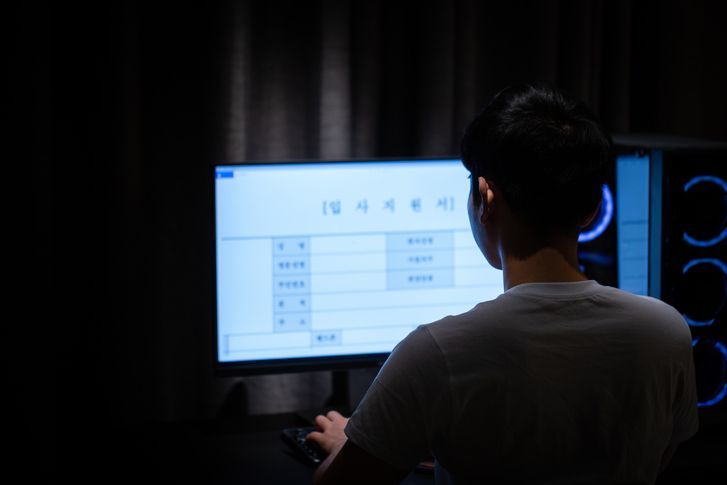
The Korea Economic Association announced on the 5th, through its report titled "Determinants of Youth Social Withdrawal and Estimation of Socioeconomic Costs," that as of 2024, each socially withdrawn young person generates an annual cost of approximately 9.83 million won.
According to the report, the key factor that increases the risk of withdrawal among young people is difficulty in finding employment. When estimating the probability of withdrawal by economic activity status, the probability for young people who reported that they were "taking a break" was 17.8%, and for those in the early stage of unemployment (one month of job seeking) it was 15.1%, which is about 6 to 7 times higher than that of employed young people (2.7%).
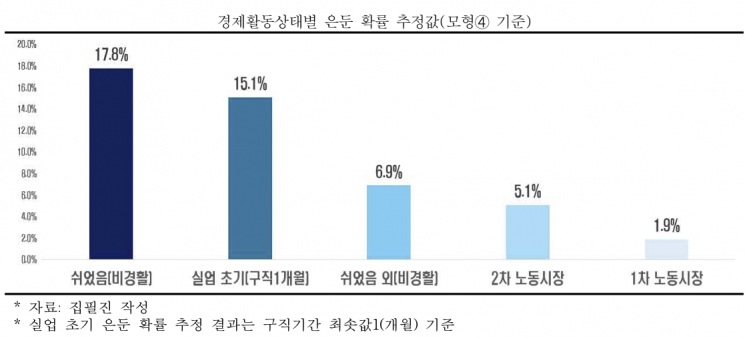 Report on the Determinants of Youth Social Withdrawal and Estimation of Socioeconomic Costs. Korea Business Association
In particular, the longer the job search period, the more rapidly the probability of withdrawal tended to rise. The probability of withdrawal for unemployed young people in their first month of job seeking was about 15.1%; when the job search period reached 14 months, it rose to about 24.1%, and after 42 months it exceeded 50%.
There are calls for policy design that can cut off at an early stage the crisis pathway that leads from a "taking a break" status to social isolation and withdrawal. The argument is that support policies for young people who are "taking a break" and for socially isolated or withdrawn young people should each secure their own expertise, while being designed so that support before and after the deepening of the crisis is smoothly connected from the youth perspective.
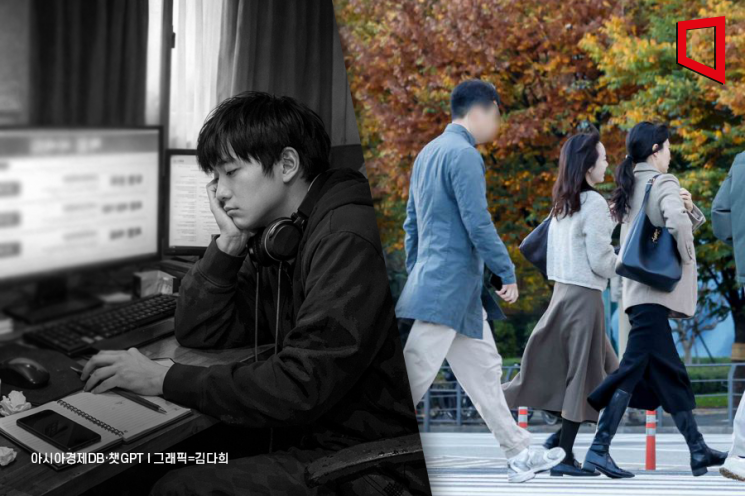
Lee Sangho, head of the Economic Headquarters at the Korea Economic Association, said, "There is growing concern that youth isolation and withdrawal will intensify as employment difficulties overlap with the severance of social relationships," adding, "Systematic policies are needed, such as expanding dedicated organizations like Youth Future Centers to strengthen close management, and expanding support for job seeking and work experience among young people."
© The Asia Business Daily(www.asiae.co.kr). All rights reserved.














