Cranial remodeling helmets for a "pretty head shape" are booming in popularity
Experts stress that daily habits matter more
Anxiety over the idea that "If we don't fix our baby's head shape now, it will be too late" is spreading rapidly among parents of infants and toddlers. As so-called "cranial reshaping helmets" that claim to correct head shape gain popularity on social networking services (SNS) and online communities, expensive helmets costing between 2 million and 3 million won are increasingly being perceived as an essential step in childcare. However, experts stress that there is no need to rush into treatment based solely on cosmetic concerns, and that lifestyle adjustments and accurate medical evaluation should come first.
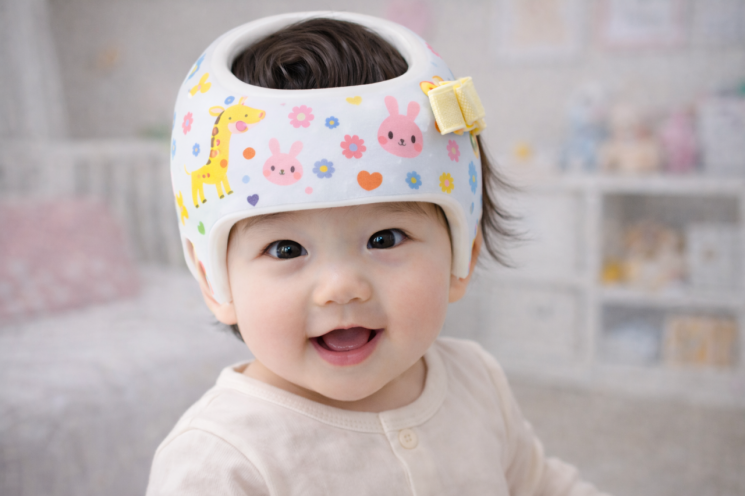
Recently, cranial reshaping helmets have tended to be consumed more like a form of cosmetic care than medical treatment. As photos and reviews of babies wearing helmets spread online, more infants are starting helmet therapy. Yet medical professionals generally agree that it is dangerous to make judgments based only on appearance, because the approach to treatment for skull deformities varies completely depending on the underlying cause.
Plagiocephaly: Treatment Varies by Cause
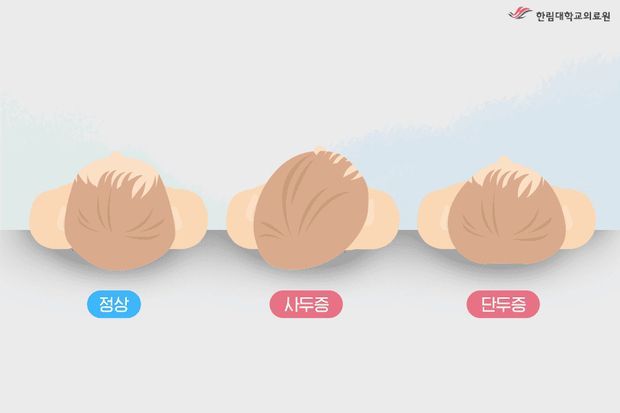
Skull deformities in infants are largely divided into "positional plagiocephaly" and "craniosynostosis." Positional plagiocephaly occurs when pressure is repeatedly applied in a particular direction during growth, and in these cases there is no structural problem with the skull itself. In contrast, craniosynostosis is a rare condition in which the sutures of the skull close earlier than normal, potentially affecting brain growth, and therefore requires imaging tests and surgical treatment.
Positional plagiocephaly can be managed through lifestyle adjustments alone
Kang Heejeong, Professor in the Department of Pediatrics and Adolescent Medicine at Hallym University Dongtan Sacred Heart Hospital, said, "As placing babies on their backs to sleep has been emphasized to prevent sudden infant death syndrome, many infants end up staying in the same position even while awake," adding, "Positional plagiocephaly that develops as a result can be sufficiently prevented and improved through simple lifestyle adjustments."
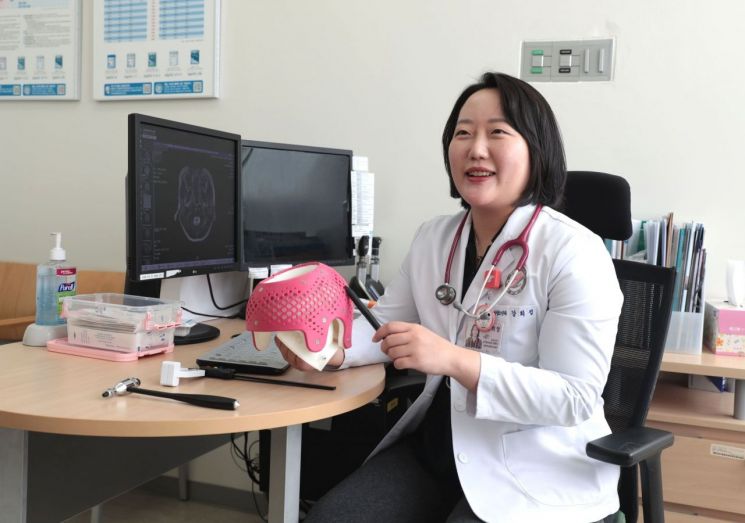 Kang Heejeong, Professor, Department of Pediatrics and Adolescent Medicine, Hallym University Dongtan Sacred Heart Hospital. Hallym University Dongtan Sacred Heart Hospital
The key is "Tummy Time." Tummy Time refers to the period when a baby is awake and placed on their stomach (tummy) on the floor to play (time). It promotes gross motor development and effectively prevents skull deformities by dispersing the pressure placed on the back of the head.
Tummy Time: "Short and Frequent"
For newborns, it is best to start Tummy Time 2 to 3 times a day, for about 3 to 5 minutes per session, and gradually increase the duration. A caregiver must always supervise during Tummy Time, and soft blankets or cushions should be avoided. It is also not appropriate immediately after feeding due to the risk of vomiting.
Professor Kang emphasized, "An infant's skull is very flexible, so simply changing their position frequently while they are awake, apart from sleeping time, can provide enough corrective effect," and added, "Rather than rushing into an expensive reshaping helmet, basic daily care should come first."
Infant health checkups come first
In cases where plagiocephaly is severe, helmet therapy may be considered. However, its effectiveness is highly dependent on timing: the earlier it is started before 6 months of age, the greater the effect, while after 12 months the corrective benefit drops significantly.
Professor Kang said, "In Korea, we have a well-established system of regular infant and child health checkups, so the first step should be to have a specialist examine the baby's head shape during these checkups," and added, "It is not too late to decide on helmet therapy after a specialist has assessed whether treatment is truly necessary."
© The Asia Business Daily(www.asiae.co.kr). All rights reserved.