Amid Global Trade Contraction,
Quarterly Exports Expected to Decline from Previous Quarter
The Korea Eximbank Overseas Economic Research Institute has forecast that exports in the first quarter of this year will reach around 180 billion dollars, an increase of 12-13% compared to the same period last year. This is attributed to robust semiconductor exports and a base effect resulting from weak exports in the first quarter of the previous year.
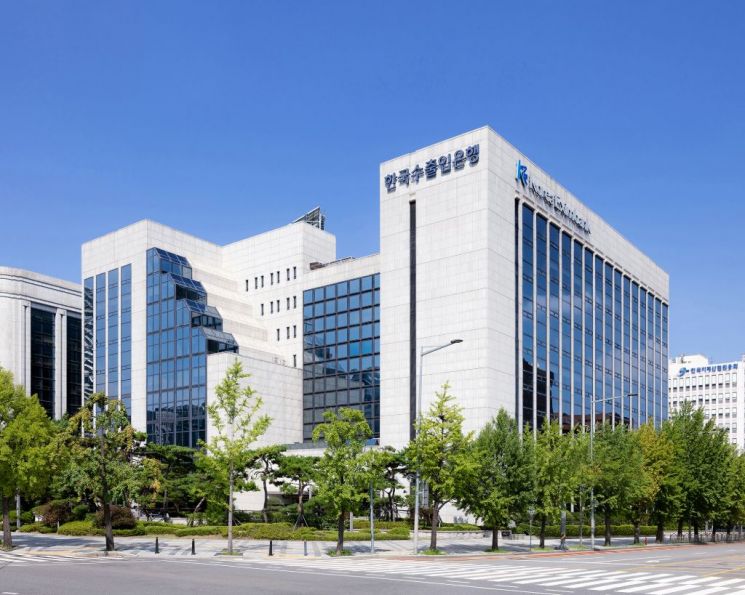
In its report, "Evaluation of Export Performance in Q4 2025 and Outlook for Q1 2026," released on February 3, the Korea Eximbank stated that, given the decline in the export leading index compared to the previous quarter, there is a possibility that quarterly export volumes may decrease slightly compared to the fourth quarter of 2025. The export leading index is an indicator that predicts future export trends by synthesizing the economic conditions of major export destinations, industry-specific orders, exchange rates, and other factors.
According to the report, the export leading index for the first quarter of 2026 stood at 121.7, up by 1.9 points year-on-year, but down by 3.9 points quarter-on-quarter. The report noted that machinery orders, import volumes for export production, and the US ISM Manufacturing New Orders Index have all been declining since the third quarter of 2025, signaling an overall contraction in the trade environment.
However, the semiconductor sector was cited as an exception. Driven by increased demand for high-performance memory for artificial intelligence (AI), DRAM prices have continued to rise, a trend expected to persist through the first half of 2026. The Korea Eximbank assessed that, given the significant share of semiconductors in total exports, the strength in this sector is offsetting much of the slowdown in other industries. In fact, export volumes in the fourth quarter of 2025 reached 189.8 billion dollars, up 8.4% year-on-year and 2.7% quarter-on-quarter. Although steel and auto parts exports declined due to US tariffs, exports of semiconductors, ships, and computers increased, driving overall export growth. As a result, annual exports in 2025 recorded 709.4 billion dollars, a 3.8% increase from the previous year.
From a price competitiveness perspective, the report analyzed that the weak Korean won could continue to benefit exports for the time being. The Korea Eximbank explained that the weak won was due to a combination of factors, including increased overseas securities investment by domestic investors, synchronized depreciation pressure with the persistently weak Japanese yen, and companies' accumulation of US dollars. Accordingly, the average quarterly won-dollar exchange rate in the fourth quarter of 2025 rose to 1,451 won, up from the third quarter, maintaining a high level of price competitiveness.
Export prices are expected to continue rising, driven by higher semiconductor unit prices. The export price index in dollar terms rose from 110.5 in the fourth quarter of 2024 to 112.5 in the fourth quarter of 2025. The Korea Eximbank analyzed that if the upward trend in semiconductor prices continues through the first half of 2026, the increase in export prices is also likely to persist.
© The Asia Business Daily(www.asiae.co.kr). All rights reserved.














![The Special Connection Between the Statue of Martyr Lee Jun in Jangchungdan Park and Mayor Oh Sehoon ③ [Current Affairs Show]](https://cwcontent.asiae.co.kr/asiaresize/319/2026012110001599450_1768957215.jpg)
