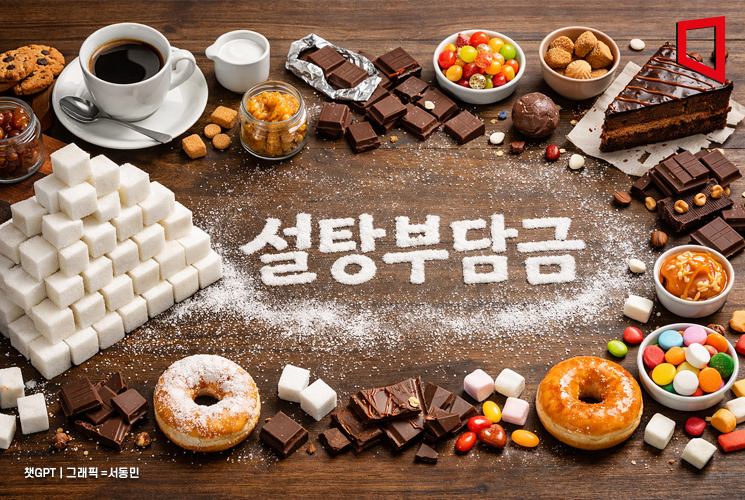
President Lee Jaemyung's repeated statements expressing his intention to initiate public discussions on the introduction of a sugar surcharge have reignited related controversies. In an effort to avoid the perception of a tax increase, the administration has opted for a surcharge instead of creating a new tax category. However, some argue that this approach may still face significant tax resistance, as it could lead to price increases and is seen as targeting specific industries.
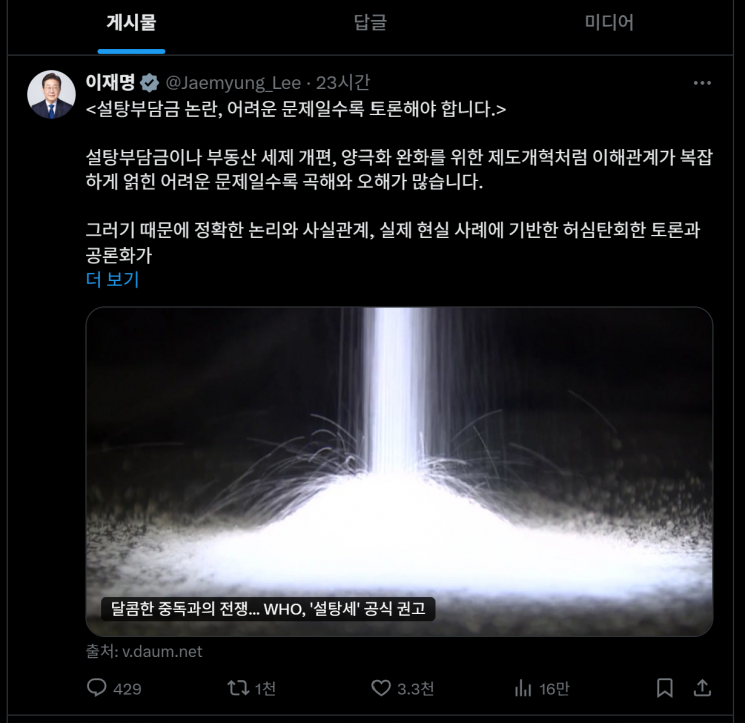
On February 1, President Lee wrote on his social media platform X (formerly Twitter), "I look forward to an in-depth and rational debate on whether to introduce a sugar surcharge." This marks his renewed commitment to the sugar tax following his initial mention of the idea on January 28. In response to criticism from the opposition, which claims this is essentially a tax hike, President Lee proposed a public debate, stating, "This is not a tax, but a way to reduce the burden of national health insurance premiums for the public." The presidential office added, "We plan to gather opinions from various sectors and review measures to address public health issues caused by sugar consumption, as well as ways to reinvest the funds to strengthen regional and public healthcare."
Choosing a Surcharge Instead of a New Tax Category...Aiming to Reduce Tax Resistance
President Lee's repeated emphasis that this is a surcharge, not a tax, appears to be an attempt to secure additional funding while avoiding the controversy of a tax increase. Surcharges, which are quasi-taxes, are limited to public interest purposes. A representative example is the National Health Promotion Surcharge imposed on cigarettes, which are known to increase the risk of lung cancer. The National Health Promotion Surcharge of 841 won per pack of cigarettes can only be used for anti-smoking health programs. The rationale for introducing a sugar surcharge is similar. As excessive sugar consumption has led to an increase in obesity and chronic diseases such as hypertension and diabetes, thereby straining the national health insurance budget, the proposal aims to reflect the social costs in sugar prices and reduce sugar consumption.
However, unlike tobacco, sugar is a key raw material that is widely used not only in beverages but also in processed foods such as bread and snacks, as well as in dining out and other general food products. This means it could drive up overall food prices. Although the surcharge would be imposed on manufacturers or importers and distributors rather than consumers, if the price increases by the same amount as the National Health Promotion Surcharge, the cost will ultimately be passed on to consumers. Given the prolonged period of high inflation over the past several years, experts point out that this will inevitably stimulate perceived price increases. Professor Ahn Changnam of the Department of Taxation at Kangnam University said, "Because the price elasticity of demand for sugar is low, if consumption does not decrease significantly, companies will pass the entire tax burden onto sales prices, which means the cost will inevitably be transferred to consumers."
Denmark introduced a "fat tax" in October 2012, imposing a surcharge of 16 kroner per kilogram of saturated fat in all foods containing butter, meat, and other fats. However, as production costs for companies rose and consumer prices surged, cross-border shopping in neighboring countries increased, leading Denmark to announce the abolition of the tax after just one year. In Korea, a similar proposal was made in 2021 through an amendment to the National Health Promotion Act, but it was scrapped due to concerns about the burden on low-income households. At that time, a National Assembly review report warned, "If a surcharge is imposed on sugar, which is a basic necessity, the cost will inevitably be passed on to consumers." The World Health Organization (WHO) also pointed out in its 2022 "Taxation Policy Manual for Promoting Healthy Diets through Sugar-Sweetened Beverage Taxes" that "price increases resulting from higher taxes have a greater impact on vulnerable groups such as young people and low-income households."
The Effectiveness of Corrective Taxation Should Be Evaluated First
The political sphere has begun to review legislative options. Jeong Taeho, a Democratic Party lawmaker and secretary of the National Assembly's Strategy and Finance Committee, plans to hold a "National Assembly Forum on Surcharges for Excessive Sugar Use" on February 12 to discuss the introduction of a sugar surcharge. Previously, on January 29, Kim Sunmin, a lawmaker from the National Innovation Party, sponsored an amendment to the National Health Promotion Act that would impose a surcharge of 225 to 300 won per liter on sugar-sweetened beverages.
Experts argue that rather than rushing legislation, it is essential to first reach a social consensus on the effectiveness and purpose of introducing a new surcharge. Professor Kim Woochul of the Department of Taxation at the University of Seoul stated, "Although the government has chosen the form of a surcharge to reduce tax resistance, a surcharge is still an indirect tax and has the same economic effect as a tax." He added, "From the perspective of expanding tax revenue, the effectiveness of all corrective taxes-including fuel and liquor taxes, which should play an even greater corrective role than a sugar tax-should be evaluated first, and excessive tax expenditures should be addressed as a priority."
© The Asia Business Daily(www.asiae.co.kr). All rights reserved.









![The Special Connection Between the Statue of Martyr Lee Jun in Jangchungdan Park and Mayor Oh Sehoon ③ [Current Affairs Show]](https://cwcontent.asiae.co.kr/asiaresize/319/2026012110001599450_1768957215.jpg)

