Premium Finishing Materials Gain Traction in Gangnam and Yongsan
Domestic Building Material Sales Decline Amid Construction Slump
As preferences for overseas high-end products rise in the housing construction market, domestic building material companies are facing increasingly challenging conditions. Due to the structural and prolonged downturn in the construction sector, the domestic industry, which is already struggling to find new opportunities, now faces yet another significant hurdle: consumers' growing desire for premium products.
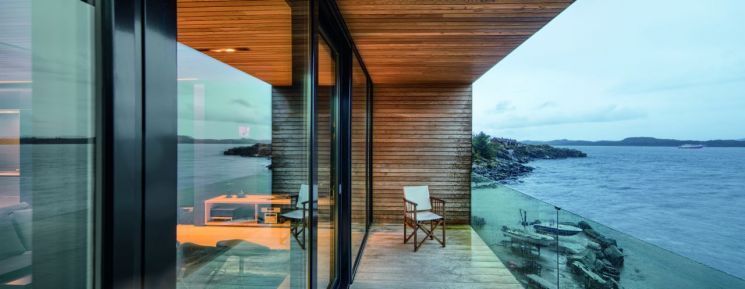
According to industry sources on February 2, there is a growing trend, especially at major housing construction sites in central Seoul, to maximize product appeal by using top-tier finishing materials. Recent notable examples include apartments and officetels being built by Hyundai Engineering & Construction in Apgujeong District 2 and on the site of the former United Nations Command in Yongsan, where German luxury window products are particularly in the spotlight. These sites are installing German Schuco windows. Previously, major reconstruction complexes in Gangnam, such as Cheongdam Le El, Raemian One Pentas, and Banpo Raemian Trinity One, adopted German VEKA windows. When Samsung C&T was selected as the contractor for Gaepo Woosung 7th Complex, it proposed using German Rehau windows to the union members.
In the Gangnam area, construction costs have soared to around 10 million won per pyeong (3.3 square meters), and construction companies competing for contracts with high-end brands are appealing to union members by upgrading finishing materials. As major reconstruction sites in Apgujeong, Mokdong, and Seongsu are set to select contractors this year, the number of projects adopting German windows and other premium finishing materials is expected to increase.
Due to the construction market downturn, both leading domestic building material companies saw a decline in sales last year. According to the securities industry, LX Hausys' building material sales last year are estimated at approximately 2.154 trillion won, a 15% decrease from the previous year's 2.543 trillion won. The proportion of building material sales per quarter also decreased to 67.4% in the third quarter of 2025, compared to 70.9% in 2024 and 72.8% in 2023.
Kim Giryong, a researcher at Mirae Asset Securities, said, "LX Hausys' B2B building material business continues to face declining operating rates and fixed cost burdens due to reduced housing-related volume," adding, "Due to the real estate and loan regulations announced consecutively in the second half of last year, significant improvement in leading indicators such as new housing supply and home sales transactions in 2026 is expected to be limited."
KCC's annual building material sales last year are estimated at 998 billion won, a 9% decrease from the previous year's 1.097 trillion won. KCC's share of interior and exterior building material sales was 9.9% in the third quarter, down from 11.6% in 2024 and 13.3% in 2023.
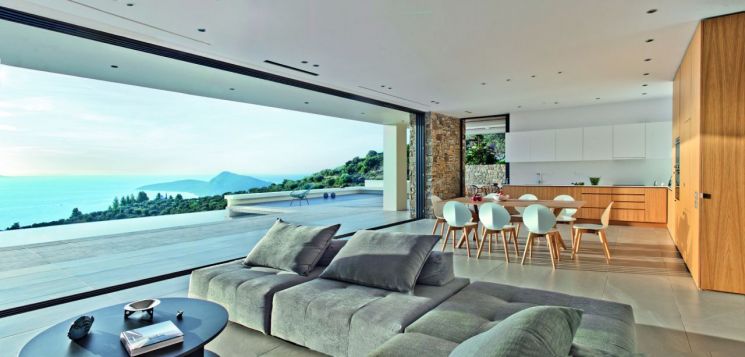
As the housing market shifts toward high-end products, the building material industry is responding by launching high-end aluminum windows or collaborating with European manufacturers. Windows used in luxury homes are made of aluminum, costing about twice as much to install as the PVC windows commonly used in residential settings, and the installation process is also more complex. However, these windows are increasingly preferred because they offer various opening mechanisms and design options suited to luxury home interiors that emphasize views and scenery, and they provide superior insulation and airtightness.
In 2024, LX Hausys launched the aluminum system window 'Fenest,' which can be opened from the center or corner. The company partnered with Belgium's Reynaers to develop windows optimized for the domestic market. Up to six windows can be linked for central opening, and it is possible to manufacture extra-large windows up to four meters in height. The aluminum and PVC composite 'Loncell' window, introduced in 2020, is estimated to have the highest market share in redevelopment and reconstruction projects and has been installed in complexes such as Olympic Park Foreon, Heliocity, Maple Xi, Mapo Prestige Xi, and The H Firstier I-Park.
To target the premium residential market, KCC introduced the high-end window brand 'Klenze' in 2021. Klenze is the first in Korea to offer models with up to quadruple glazing and has launched various models to harmonize with interior designs, including balconies and system windows. It has been installed in complexes such as Jamwon Noblesse and Hillstate Mediare (Daejo District 1).
Since 2017, Hyundai L&C has introduced Korean-style premium windows through a technical partnership with Germany's Rehau and has continued strategic collaboration since 2023. Rehau windows have also been adopted in complexes such as Jamsil Le El, Songpa Lotte Castle, and Daechi Prugio Summit.
An industry insider commented, "The premiumization strategy is becoming increasingly pronounced, especially at high-value reconstruction and remodeling sites in Seoul," adding, "For the domestic industry, which is already in a slump, responding to the demand for premiumization has become yet another difficult challenge."
© The Asia Business Daily(www.asiae.co.kr). All rights reserved.









![The Special Connection Between the Statue of Martyr Lee Jun in Jangchungdan Park and Mayor Oh Sehoon ③ [Current Affairs Show]](https://cwcontent.asiae.co.kr/asiaresize/319/2026012110001599450_1768957215.jpg)

