The Supreme Court has ruled that posting misogynistic expressions on online communities ahead of an election cannot be punished as a violation of election law if there is no direct connection to a political party candidate.
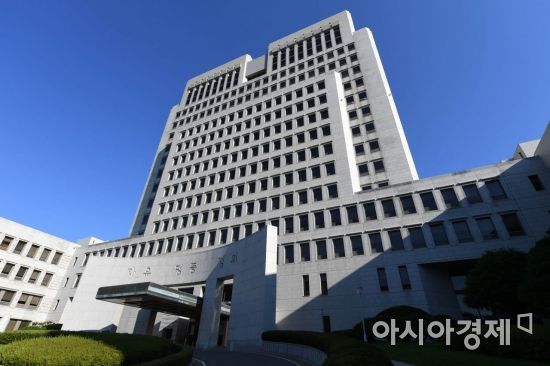
According to the legal community on January 21, the First Division of the Supreme Court (Presiding Justice Ma Yongjoo) recently overturned a lower court ruling that had dismissed Kang, the operator of Womad, in an appeal against the Daejeon Metropolitan Election Commission's order to delete information. The Supreme Court sent the case back to the Daejeon High Court for retrial.
The Daejeon Election Commission had requested Kang to delete three Womad posts two days before the 21st National Assembly election. The posts included content criticizing journalists or media outlets for highlighting the criminal records of two female candidates while reporting on the high number of candidates with criminal records from both major parties, as well as content condemning a man who threw a stone at a party member assisting the Women’s Party candidate’s campaign. Many of these posts contained expressions such as 'HannamXX' that disparaged or insulted a specific gender.
The Daejeon Election Commission argued that these posts violated Article 110, Paragraph 2 of the Public Official Election Act, which prohibits slander against candidates, and requested their deletion. Kang contested this order and filed an administrative lawsuit.
Both the first and second trials ruled against the plaintiff. The courts found that the content of the posts constituted information that 'publicly disparages or insults a specific gender in connection with electioneering for a political party, candidate, or candidate, as stipulated in Article 110, Paragraph 2 of the Election Act,' and deemed the Daejeon Election Commission's deletion order legitimate.
However, the Supreme Court reached a different conclusion. The Supreme Court stated, "For an act that disparages or insults a specific gender to be considered related to a political party or candidate, it is not enough that the act is merely associated with a party or candidate. The 'content' of the expression itself must be directly related to the party or candidate, and it must be capable of influencing a specific candidate's election." The case was remanded for retrial.
© The Asia Business Daily(www.asiae.co.kr). All rights reserved.












