Committee Analyzes Key Variables Such as Healthcare Utilization Using Time Series Models
Final Decision on Enrollment Increase to Be Made by Ministry of Health and Welfare After Deliberation Committee Discussions
Medical Community Protests “Rushed C
With the Medical Workforce Supply and Demand Forecasting Committee (hereinafter referred to as the Committee) projecting a shortage of approximately 5,700 to 11,100 doctors by 2040, debates and conflicts surrounding the expansion of medical school admissions have reignited. Based on the Committee's analysis, the government will finalize the number of medical school admissions for the 2027 academic year and beyond next month. However, as with previous administrations' attempts to increase medical school quotas, there is already criticism and opposition from the medical community regarding the forecasting methodology and results, suggesting that significant obstacles remain before any actual increase can be implemented.
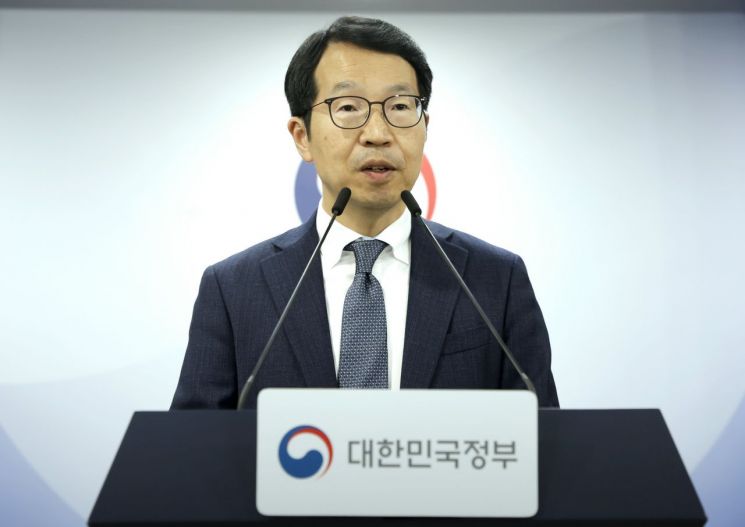 Kim Taehyun, Chairman of the Medical Workforce Supply and Demand Forecasting Committee, is announcing the results of the 12th Medical Workforce Supply and Demand Forecasting Committee meeting on the 30th at the Government Seoul Office in Jongno-gu, Seoul. Ministry of Health and Welfare
According to the government and the medical community on the 31st, the Committee held a meeting the previous day and reviewed and confirmed the results of the doctor supply and demand forecast for 2035 and 2040. This is the final result, derived from 12 meetings held over five months since the first meeting in August.
Reflecting current healthcare utilization and demographic structures, the Committee projected that by 2040, the demand for doctors would reach between 144,688 and 149,273, while the supply would be between 138,137 and 138,984. This translates to a shortage of at least 5,704 and up to 11,136 doctors. To address this shortfall over the next 15 years, it is calculated that an additional 380 to 742 doctors would need to be added each year.
For 2035, which is 10 years from now, the demand for doctors is estimated at 135,938 to 138,206, while the supply is projected at 133,283 to 134,403. In this scenario, the shortage of medical personnel would be between 1,535 and 4,923.
The Committee stated that it used two core models for this demand forecast: a time-series analysis model (ARIMA), which analyzes total healthcare utilization, and a composition method model, which is based on per capita healthcare utilization. For the supply forecast, the Committee used the most recent annual medical school admissions figure of 3,058, applying the national exam pass rate and clinical activity probability to estimate the influx of licensed doctors. Additionally, the Committee assumed that 89.6% of medical school graduates enter clinical practice and that 20% of doctors aged 65 or older retire, to forecast the future supply of clinical doctors.
The Committee emphasized, however, that both the demand and supply of doctors could change depending on future developments in the healthcare environment. While scenario analyses were presented to reflect factors such as productivity changes due to the introduction of artificial intelligence (AI), changes in the number of working days, and healthcare utilization optimization policies, the Committee explained that, given the limitations of available data and methodologies, it was not realistically possible to comprehensively incorporate all factors into a single model. Therefore, the forecasts had to be based on observable data and generally agreed-upon assumptions at this point in time.
Since the projected shortage of doctors is presented as a range rather than a single figure, the scale of medical school admissions increases for the 2027 academic year and beyond is expected to be finalized next month through discussions at the Health and Medical Policy Deliberation Committee, followed by agreement between the Ministry of Health and Welfare and the Ministry of Education. Considering the admissions schedule, the quota for each medical school for the 2027 academic year must be finalized by the end of April next year. Kim Taehyun, Chairman of the Medical Workforce Supply and Demand Forecasting Committee, stated, "These results were derived independently and professionally after in-depth discussions among the committee members," and added, "I hope that the results of the supply and demand forecast will be respected and that sufficient social discussion will take place at the Health and Medical Policy Deliberation Committee before the final decision on medical school quotas is made."
However, since there is still a significant gap between the minimum and maximum estimates for the number of doctors needed, and because representatives from the medical community, consumers, and the government participate in the Health and Medical Policy Deliberation Committee in nearly equal numbers, it is expected to be difficult to narrow the differences in opinion. The Korean Medical Association has immediately responded by claiming, "It is unreasonable for the Committee to focus solely on numbers without thoroughly considering educational conditions," while the Korean Intern and Resident Association is also opposing, stating, "Attempts to justify expanding medical school quotas based on insufficient data are no different from the unilateral policies of previous administrations."
© The Asia Business Daily(www.asiae.co.kr). All rights reserved.













