A Single Individual Preserved Almost Completely in Sedimentary Rock:
The Largest Whale Fossil Ever Discovered in Korea
Among the Largest Tubercles Found in Korea:
Exceptional Original Preservation Recognized for Its Value
A Leading Korean City for Neogene Geological Heritage:
Pohang's Status Reaffirmed
Before the Korean Peninsula even existed, a whale that once roamed the seas off Pohang has returned as a "national treasure."
The "Whale Fossil from the Sinseongdae Duho Formation" and the "Tubercle from the Sinseongdae Duho Formation," both discovered in Pohang-a representative Neogene geological city in Korea rich in geological resources such as various fossils and columnar joints-have been designated as state-designated natural heritage monuments.
The National Heritage Administration announced on the 24th that it has designated and announced the Whale Fossil from the Sinseongdae Duho Formation in Pohang and the Tubercle from the Sinseongdae Duho Formation in Pohang as state-designated natural heritage monuments, recognizing their rarity and significant aesthetic and academic value.
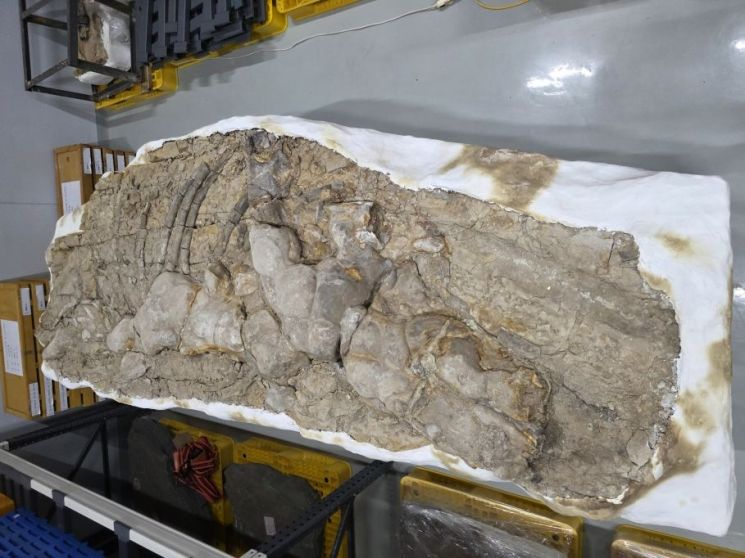
The "Whale Fossil from the Sinseongdae Duho Formation in Pohang" was discovered in the Duho Formation of the Neogene period, the third epoch of the Cenozoic era. It is an extremely rare case in which a single individual is preserved in an almost complete form within sedimentary rock.
After being excavated in September 2008 at the Jangnyang Housing Development District in Pohang, it has been kept in the storage facility of the National Heritage Administration's Natural Monument Center in Seo-gu, Daejeon.
This whale fossil is the largest Neogene whale fossil ever discovered in Korea, and it holds great academic value as the first fossil of the suborder Mysticeti (baleen whales) to be made public in Korea.
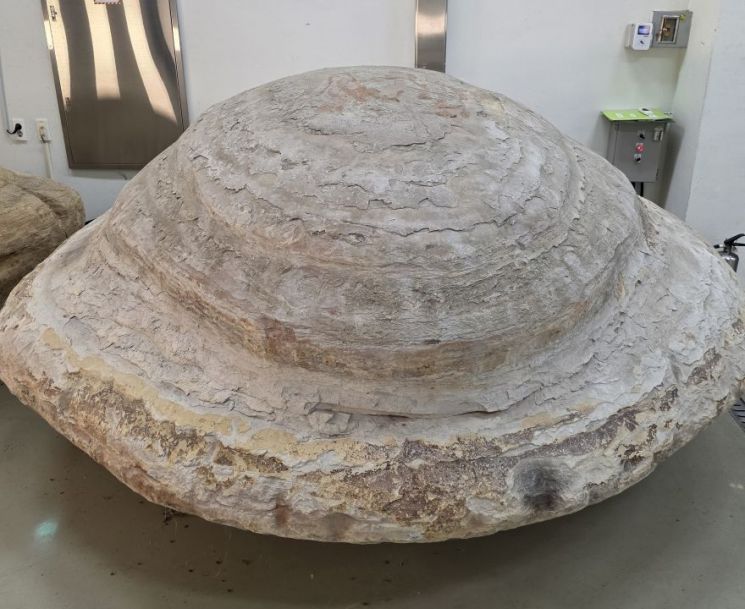
The "Tubercle from the Sinseongdae Duho Formation in Pohang" consists of two specimens, both discovered in September 2019 at an apartment construction site in Uhyun-dong, Pohang. After excavation, both tubercles have also been stored at the National Heritage Administration's Natural Monument Center alongside the whale fossil.
A tubercle is a hard mass formed when minerals precipitate in the empty spaces between sediment particles, serving as important research material for estimating the geological and environmental conditions at the time of formation.
The tubercles designated this time are among the largest ever found in Korea, and their excellent preservation and rarity have been recognized for their aesthetic value.
Mayor Lee Kangdeok stated, "This designation as a natural monument is a meaningful achievement that recognizes the academic and natural history value of Pohang's geological heritage at a national level." He emphasized, "In connection with the Pohang City Museum, which is scheduled to open in 2028, we will establish a systematic management foundation for Pohang's cultural heritage, including geological heritage unearthed in Pohang," and added, "We will continue to actively discover and preserve outstanding geological heritage with high academic value, so that it can serve as a core resource to strengthen Pohang's identity and competitiveness."
Meanwhile, with these two newly designated items, Pohang now has a total of six geological heritages designated as natural monuments: the Daljeon-ri columnar joint, the Odori columnar joint, the Geumgwang-dong Formation Neogene fossil site, and the Geumgwang-ri Neogene petrified wood site. Among them, the two newly designated items and the "Geumgwang-ri Neogene Petrified Wood"-a total of three natural monuments unearthed in Pohang-are housed at the National Heritage Administration's Natural Monument Center.
© The Asia Business Daily(www.asiae.co.kr). All rights reserved.













