Prospects for Joint Operation of Yeosu NCC Unit 2 by GS Caltex
Will the 1.2 Million-Ton Ethylene Facility Be Officially Shut Down?
Restructuring Begins in Yeosu as Well... Government Accepting Plans Until Year-End
The restructuring of naphtha crackers (NCC) has begun in earnest at the Yeosu petrochemical industrial complex. Following the integration of facilities by Lotte Chemical and HD Hyundai Chemical in Daesan, Seosan, South Chungcheong Province, the second case of domestic petrochemical industry restructuring has been submitted to the government.
On December 19, LG Chem announced that it had submitted materials related to its business restructuring plan to the Ministry of Trade, Industry and Energy, as part of the government-led "Implementation Plan for Enhancing the Competitiveness of the Petrochemical Industry." The company stated, "We submitted the materials to participate in the restructuring of the domestic petrochemical industry," and added, "Apart from the fact that we have submitted the materials, it is difficult to disclose further details." GS Caltex also completed the submission of its business restructuring plan on the same day.
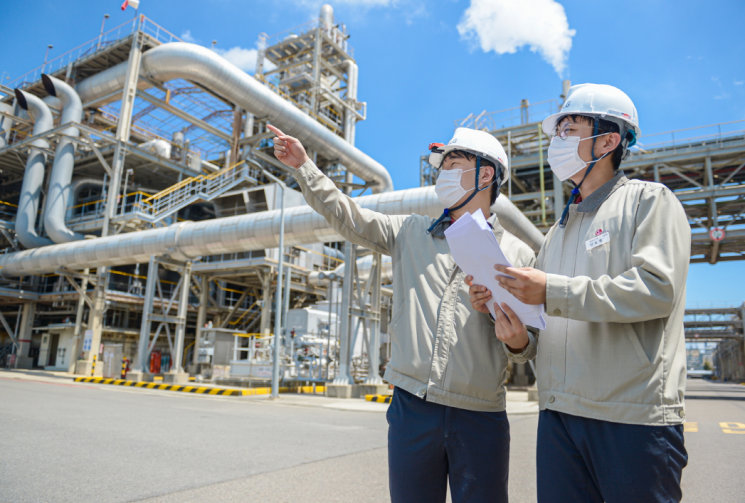
Industry insiders believe that LG Chem and GS Caltex have effectively reached a consensus on the direction of NCC facility restructuring within the Yeosu industrial complex. LG Chem operates two NCC units in Yeosu, with annual ethylene production capacities of 1.2 million tons and 800,000 tons, respectively. GS Caltex operates a 900,000-ton mixed feed cracker (MCC) that produces basic petrochemical feedstocks such as ethylene by cracking mixed feedstock. It is known that the two companies are discussing the shutdown of LG Chem's Plant 1, the oldest facility in the Yeosu complex.
There is speculation that GS Caltex has likely submitted a business restructuring plan with similar content to the government. Within the Yeosu complex, there has been an ongoing need to consolidate facilities between GS Caltex, which operates both refining and petrochemical businesses, and LG Chem, which produces downstream petrochemical products, in terms of facility efficiency and cost competitiveness.
This move is linked to the structural crisis facing the domestic NCC industry as a whole. The average operating rate of domestic NCCs fell from the low 80% range last year to the 70% range in the first half of this year. As the market for basic petrochemical feedstocks has entered a prolonged downturn due to large-scale capacity expansions and aggressive low-priced exports from China, there is a growing sense within the industry that "it is no longer possible to hold out."
The Ministry of Trade, Industry and Energy plans to finalize and announce the "Plan to Enhance the Competitiveness and Restructure the Petrochemical Industry" within the year. On November 26, Minister Kim Jeonggwan visited the Yeosu complex and warned, "Companies that do not present restructuring plans by the end of the year may be excluded from future government support."
© The Asia Business Daily(www.asiae.co.kr). All rights reserved.












