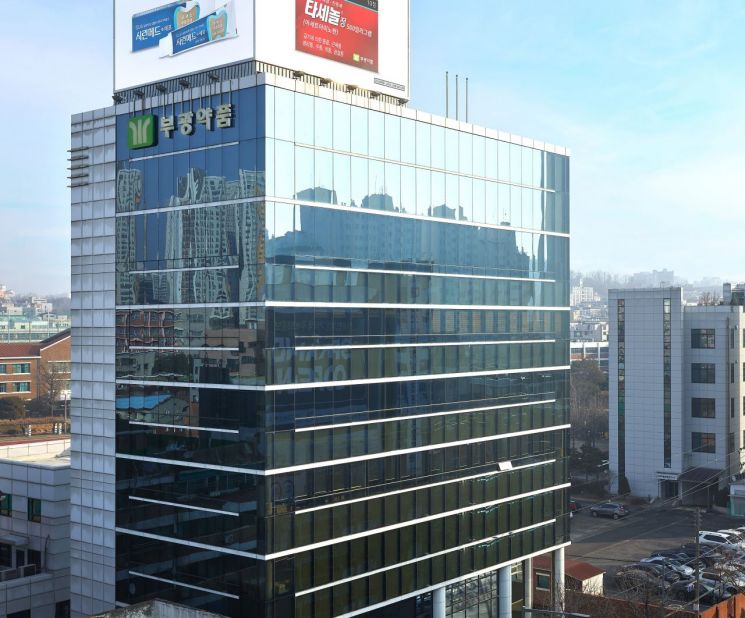
Bukwang Pharmaceutical announced on December 17 that it has been selected as the preferred bidder to acquire Korea United Pharm and has signed a conditional investment agreement.
This agreement is related to a pre-approval merger and acquisition (M&A) process being conducted at the Seoul Bankruptcy Court. The process will follow a "stalking horse" method, in which a preferred bidder is selected in advance and then an open competitive bidding is held.
If there are no additional bidders, or if no bidder makes an offer more favorable than the preferred bidder's terms, the existing preferred bidder will be confirmed as the final acquirer.
Bukwang Pharmaceutical stated that, upon completion of the acquisition, its pharmaceutical production capacity will increase by approximately 30 percent. The company also noted that Korea United Pharm possesses facilities capable of producing more than twice the amount of liquid injectable drugs compared to Bukwang Pharmaceutical, which is expected to further boost its liquid injectable production capacity.
The company plans to diversify its portfolio into antibiotics and injectable drugs and expand its range of pharmaceutical formulations through the acquisition of the United Pharm plant.
A Bukwang Pharmaceutical representative explained, "We focused on supplementing the insufficient production capacity of our existing Ansan plant. The Korea United Pharm plant is a state-of-the-art facility that received large-scale GMP (Good Manufacturing Practice) approval in March 2020, and it has a portfolio, including an antibiotics line, that can create synergies with Bukwang Pharmaceutical. This led us to decide on the acquisition."
The representative added, "We expect this contract to reduce outsourcing costs. By switching products currently manufactured under contract due to insufficient production capacity to in-house manufacturing, we also aim to improve profitability by creating synergies between the two companies."
They continued, "We are also considering an integrated production plan for injectable drugs. If integrated production becomes possible, we expect to improve facility utilization rates, reduce fixed costs, and enhance cost competitiveness."
© The Asia Business Daily(www.asiae.co.kr). All rights reserved.











