Gapyeong County Focuses on Flood Recovery and Welfare
Budget Increases by 4% Compared to This Year
The main budget for Gapyeong County in Gyeonggi Province for 2026 has been finalized at 589.9 billion won, a 4% increase compared to this year’s main budget. Despite the economic slowdown and uncertainties in tax revenue, the budget reflects a fiscal management policy that prioritizes disaster response and the stabilization of livelihoods.
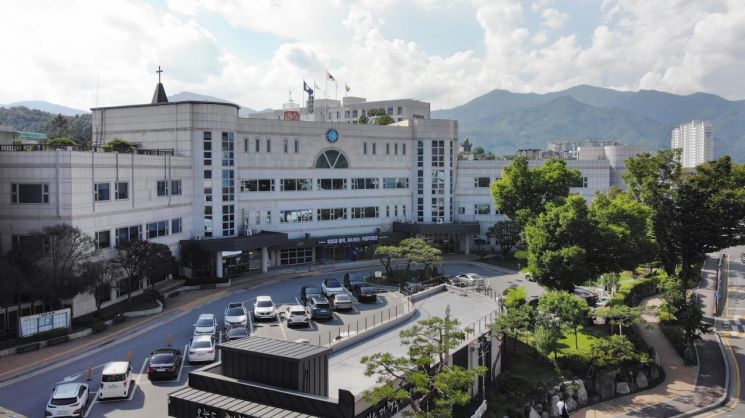
On December 17, Gapyeong County announced that it had finalized the 2026 main budget through the 334th regular session of the Gapyeong County Council. The finalized budget represents a 4% increase from this year, with both the general account and special accounts seeing an increase.
By account, the general account stands at 488 billion won, up 4.2% from this year, while the special accounts amount to 101.9 billion won, up 3.3%. The county explained that while maintaining a tight fiscal policy, it responded to the expansionary fiscal policies of the central and provincial governments, and focused resources on stabilizing livelihoods and revitalizing the local economy.
In particular, the county set flood damage restoration for areas severely affected by record-breaking heavy rains in July and ensuring the safety of residents as its top priorities. Accordingly, 7.5 billion won was allocated for flood restoration projects, 8 billion won for improvement projects in areas at risk of natural disasters, and 2 billion won for the installation of flood prevention systems.
Funds were also allocated to revitalize the local economy and tourism. Twelve billion won was assigned to support the management stability and competitiveness of small businesses, 3 billion won for supporting small and medium-sized enterprises, 3 billion won for the Gapyeong Stay-type Tourism Promotion Project (Accommodation Sale Festa), and 1 billion won for the Rural Creatour Project.
To expand rural and tourism infrastructure, the following allocations were made: 1.1 billion won for the construction of the Eco-friendly Forest Culture Promotion Center, 3.5 billion won for the Rural Center Revitalization Project, 1.5 billion won for the installation of a bridge at Yeoninsan Provincial Park, 1.5 billion won for the creation of the Sangpan-ri Dulle-gil Trail, and 1 billion won for the construction of a waterfront deck trail at Myeongji Mountain County Park. The city gas supply project received 2.4 billion won.
Investments to expand the transportation network will also continue. Twenty-two billion won was allocated for the connection of major arterial roads in Gapyeong-eup, 1.3 billion won each for the expansion and paving of the Jojeong 101 and Buk 101 rural roads, and 400 million won for the construction of the Hyunri Urban Planning Road, Minor Road 3-41. The budget also includes 2.9 billion won for hosting the Gyeonggi Province (Disabled) Sports Festival for All.
By function, the social welfare sector accounted for the largest share at 29.6% of the total budget. A total of 174.7 billion won was allocated, a 3.2% increase from 2025, including 66.9 billion won for basic pensions and livelihood benefits, 11 billion won for the operation of residential facilities for people with disabilities, and 8 billion won for senior employment and social activity support.
The environmental sector accounted for 22.2% of the budget, with 131 billion won allocated, up 10.1% from this year. This includes 5 billion won for the operation of basic environmental facilities, 4 billion won for resident support projects, 3.4 billion won for the renovation of aging water supply networks, and 12 billion won for the improvement of sewage pipelines in wastewater treatment areas.
Gapyeong County plans to use the finalized budget as a foundation to simultaneously pursue disaster recovery, local economic revitalization, and welfare enhancement, thereby establishing a fiscal base that protects the lives of its residents.
© The Asia Business Daily(www.asiae.co.kr). All rights reserved.












