Leveraging AI and Immersive Technologies, Targeting 7.5% Annual Growth
Discovering "Heritage of Our Time," Including Birthplaces of Independence Activists
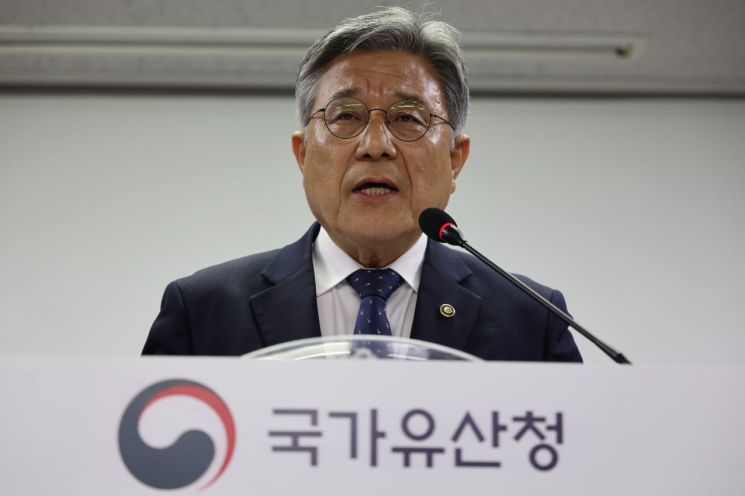
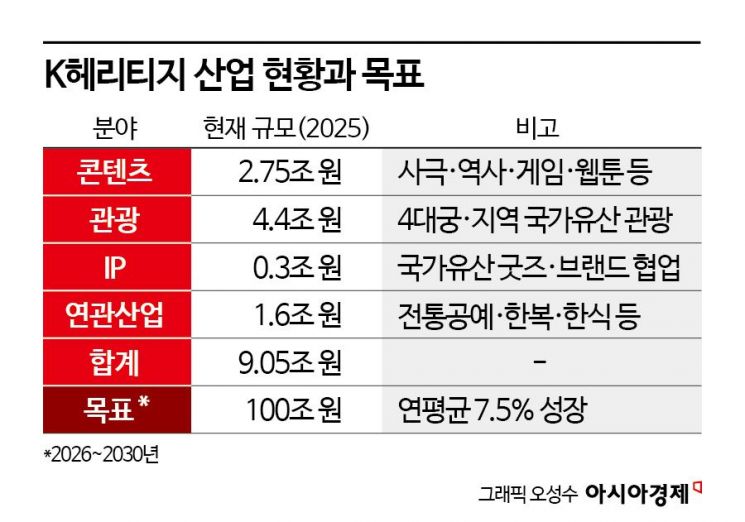
The National Heritage Administration plans to scale up the K-Heritage industry to a cumulative 100 trillion won by 2030. The agency aims to foster related industries such as gaming, film, and tourism by leveraging artificial intelligence (AI) and immersive technologies.
On December 17, the National Heritage Administration announced its "2026 Major Work Plan," which includes these goals. Currently, the K-Heritage industry market size stands at around 9 trillion won in sectors such as content and tourism. The agency aims for an average annual growth rate of 7.5% and will implement policies accordingly. It will build a digital heritage big data platform to secure intellectual property (IP) and produce three-dimensional (3D) original assets to support related industries including games, films, and dramas.
The agency will also develop a multilingual, customized AI interpretation service for the Four Grand Palaces and Jongmyo Shrine. With the number of foreign visitors to palaces and royal tombs surpassing 4 million this year, the plan is to further enhance accessibility for international tourists and boost tourism demand. To provide institutional support, the agency is working to enact the "Act on the Promotion and Support of the National Heritage Industry."
Support for research and development (R&D) to foster new industries will also be strengthened. The agency will develop national heritage damage diagnosis and restoration technologies using AI and digital twin technologies, and conduct research on climate change recovery technologies. It plans to create a technology export market by promoting technology transfer and commercialization of research outcomes.
While consolidating its domestic foundation, the agency will also work to expand globally. From July 19 to 29 next year, the 48th session of the UNESCO World Heritage Committee will be held at BEXCO in Busan, with approximately 3,000 participants from around 200 countries expected to attend. The National Heritage Administration will use this opportunity to promote Korean heritage, including World Heritage sites, and seek the adoption of an international declaration expressing commitment to peace and cooperation in the field of World Heritage.
The agency will also promote the globalization of the Royal Culture Festival. Efforts to enhance accessibility for international visitors include expanding outdoor advertising overseas and providing reservation services through global tourism platforms. A flagship store where visitors can purchase national heritage cultural products will be established at Gyeongbokgung Palace between 2026 and 2027.
Domestically, the agency will actively discover "heritage of our time," referring to assets created or formed less than 50 years ago. Key areas of focus include the birthplaces of independence activists, heritage related to forced mobilization during the Japanese occupation, modern and contemporary architectural and industrial heritage (such as railways, shipyards, and coal mines), popular culture heritage (including early materials from films, pop music, and dramas), and digital/information heritage (such as PC communication and Hangul word processors).
The agency will also implement regulatory reforms that are highly relevant to the public. In particular, it will ease the application of the "National Heritage Repair Act" when residents of traditional houses and folk villages renovate essential living facilities such as kitchens and heating/cooling systems. The operation of the "Joint Support Team for Excavation Sites" will also be expanded to swiftly address issues arising at excavation sites for large-scale national projects.
Measures to respond to climate change will be strengthened as well. Given that many national heritage sites were damaged by wildfires in the Yeongnam region in March, the agency will install automatic fire extinguishing systems and stockpile fire-resistant blankets. It also plans to establish a disaster safety management system by promoting the enactment of the "Act on Disaster and Safety Management of National Heritage."
Heo Min, Director of the National Heritage Administration, stated, "2026 will be the year when the new government's national heritage policies begin to yield tangible results. As the foundation of a culturally strong nation and the source of K-Culture, national heritage must reach into the future and the world. We will actively develop diverse policies and implement them swiftly so that the public can truly experience these changes."
© The Asia Business Daily(www.asiae.co.kr). All rights reserved.













