The process of designating the southern part of Ganghwa Island in Incheon as a free economic zone is gaining momentum.
The Incheon Free Economic Zone Authority announced on the 16th that it had reported the "Development Plan for the New Ganghwa South District of the Incheon Free Economic Zone" to the Free Economic Zone Committee under the Ministry of Trade, Industry and Energy. This report is an important step toward the designation of the zone, with the final designation targeted for the first half of next year after consultations with relevant ministries and a review by the evaluation panel.
Previously, in September, the Incheon Free Economic Zone Authority applied to the Ministry of Trade, Industry and Energy to designate Ganghwa South as a new free economic zone. The proposed district covers 6.32 square kilometers (approximately 1.9 million pyeong) in the areas of Gilsang-myeon and Hwado-myeon, Ganghwa-gun. By 2035, the plan is to complete infrastructure construction and land supply with a total project cost of 3.1 trillion won.
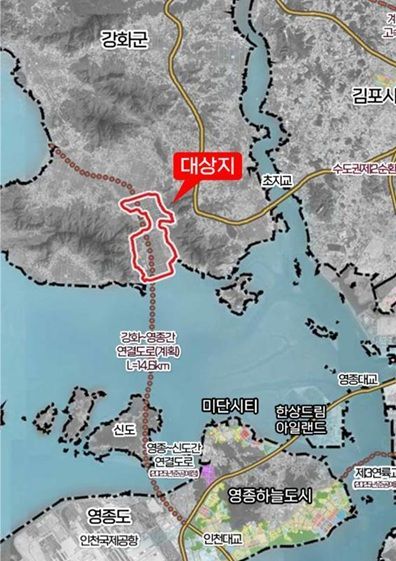 Location map of the newly designated area for Ganghwa South Economic Free Zone. Incheon Free Economic Zone Authority
The Incheon Free Economic Zone Authority plans to focus on fostering the green bio and smart agriculture sectors in Ganghwa South. Additionally, it aims to establish an artificial intelligence (AI)-based intelligent transportation and logistics system, while also creating a historical and cultural tourism district, a K-culture cluster, and an eco-friendly wellness residential complex.
Ganghwa is a region where the Goryeo Dynasty established its capital for 39 years and is home to various historical and cultural heritage sites such as temples and fortresses, as well as unique natural environments including Manisan Mountain and tidal flats. However, overlapping regulations such as military facility protection zones, restrictions in the Seoul metropolitan area, and designation as an agricultural promotion area have hindered its growth opportunities, leaving the region stagnant. According to the Incheon Free Economic Zone Authority, the promotion of the new Ganghwa South district is significant because it provides an opportunity to overcome these structural limitations and transform the area into a hub for future industries.
Ganghwa South is also evaluated as a new global supply chain hub, as its proximity to Incheon International Airport allows for the simultaneous securing of large-scale industrial space and global logistics accessibility. The advantages of the airport economic zone are considered essential for securing international competitiveness in future industries such as high-tech bio and physical artificial intelligence (AI). These characteristics are analyzed as factors that can contribute not only to regional development but also to strengthening technological competitiveness and expanding the industrial base at the national level.
The Incheon city government's development plan for Ganghwa South aims to foster advanced industries by linking the national core infrastructure of the airport with the Incheon Free Economic Zone. The city plans to gradually establish an industrial ecosystem based on green and blue bio and physical AI, transition to smart agriculture, and introduce a demonstration-centered urban platform, thereby laying the foundation necessary for the transition to future industries and enhancing national competitiveness.
An official from the Incheon Free Economic Zone Authority stated, "Ganghwa South can become a national testbed for the transition to future industries and serve as a new axis of growth," adding, "We will leverage Ganghwa's potential to create an innovative hub that contributes to the national economy."
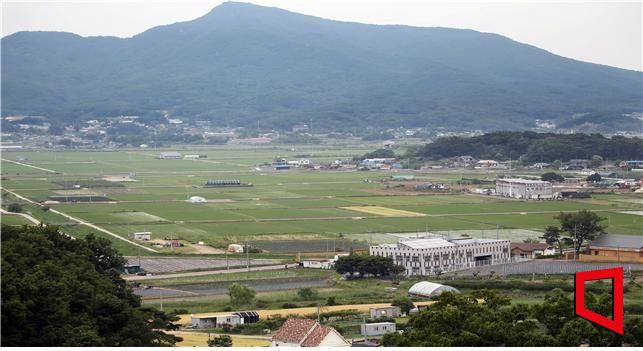 The area around Hwado-myeon, Ganghwa-gun, where a new economic free zone designation is being promoted. Photo by Incheon Free Economic Zone Authority
© The Asia Business Daily(www.asiae.co.kr). All rights reserved.













