Rising Dining-Out Costs Drive Up Lunch Expenses
More Employees Choose Lunch Boxes and Ready-to-Eat Meals
Increase in Solo and Quick Lunches
Changing Meaning of Lunch Breaks
Growing Demand for Corporate Welfare
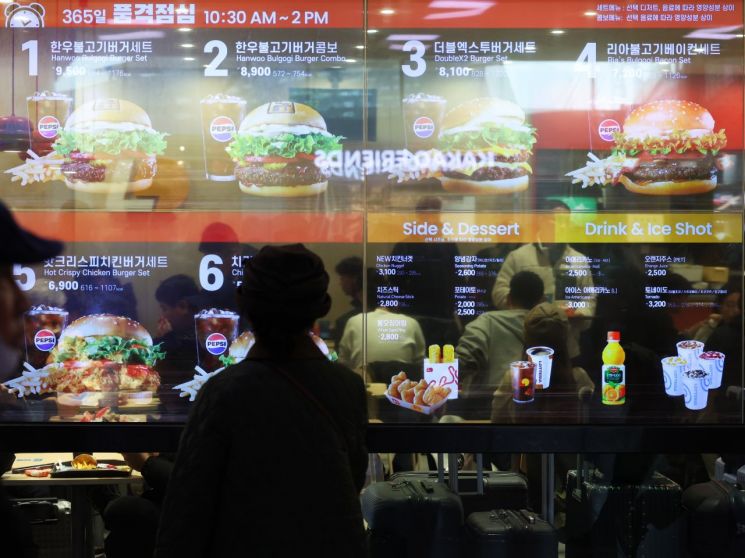
The burden of paying for lunch is rapidly increasing among office workers. As the cost of dining out has steadily risen, the price of a single lunch has effectively reached the 10,000 won era, leading to noticeable changes in both lunch choices and consumption patterns among employees. Experts point out that it is not just about higher spending-there has been a fundamental shift in how people spend their lunch breaks.
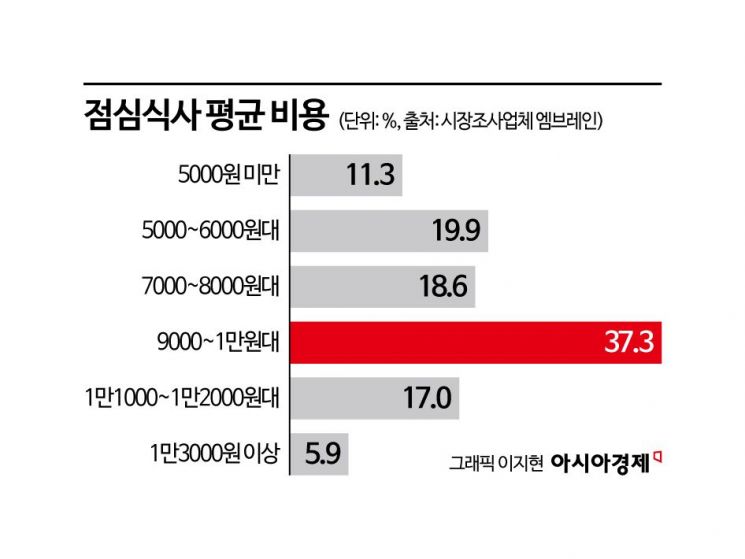
According to a recent survey conducted by market research firm Embrain on December 5, which targeted 1,000 male and female office workers nationwide between the ages of 19 and 59, employees are now spending an average of 9,000 to 10,000 won per lunch. This is a significant increase from the 4,000 to 6,000 won range that workers previously considered "reasonable," reflecting the prolonged impact of dining-out costs rising faster than the general inflation rate.
The rising costs have also led to changes in lunch choices. The survey found a steady increase in the proportion of office workers opting for alternatives to dining out, such as ready-to-eat meals, lunch boxes, and salads. In particular, there has been a rise in the selection of so-called "value-for-money menus" like convenience store lunch boxes, simple sandwiches, and cup noodles. Among younger employees who prioritize nutritional balance, salads and meal prep products are becoming more popular. While those who use company cafeterias have maintained relatively consistent eating patterns, employees at small and medium-sized enterprises without in-house cafeterias have shown greater sensitivity to price changes.
The way office workers spend their lunch breaks is also changing. While 59.1% of respondents said that lunchtime is a "precious break to relieve work stress," as many as 73.9% noted that "it is becoming increasingly difficult to enjoy a leisurely lunch due to time and budget constraints." In reality, there has been an increase in solo dining, especially among employees in their 20s and 30s and junior staff who have just joined the company. This indicates a growing trend toward "quick and efficient lunches," where workers avoid crowded restaurants and opt for fast meals at convenience stores or near the office.
The rise in lunch prices is affecting not only consumption patterns but also overall job satisfaction and organizational culture. If the cost of dining out continues to climb, there is a possibility of increased welfare spending, such as expanding lunch subsidies or improving the quality of company cafeterias. In fact, some companies have recently responded by raising lunch allowances or expanding meal voucher programs.
In this survey, office workers still viewed lunchtime as an important "midpoint in their daily routine." They responded that sufficient rest, reasonable costs, and balanced meals contribute to greater work efficiency. However, there are concerns that if the financial burden grows further, even the basic value of lunch could be undermined. With dining-out costs expected to remain high for the foreseeable future, the "10,000 won lunch era" is emerging as a turning point that shakes not only prices but also the overall lifestyle, consumption structure, and work culture of office workers.
© The Asia Business Daily(www.asiae.co.kr). All rights reserved.













