The Korea Automobile & Mobility Association (KAMA) has projected that domestic automobile production next year will see only modest growth compared to this year, emphasizing the need for government policies such as production support incentives to assist the domestic auto industry.
On December 5, KAMA forecasted that domestic automobile production next year will reach 4.13 million units, up 1.2% from the previous year. KAMA explained that although domestic production is expected to rebound from two consecutive years of decline and return to growth, next year will be a critical period for the industry to make a leap forward. Therefore, KAMA argued that production incentive policies, such as a 'domestic production promotion tax system,' are urgently needed.
Kang Namhoon, President of KAMA, stated, "The year 2026 will be a pivotal turning point for our industry, as the full-scale operation of new domestic electric vehicle plants and the expansion of eco-friendly vehicle exports will coincide, enabling our industry to advance to the next level."
He further emphasized, "To protect the domestic production base and enhance competitiveness, institutional measures are needed to respond to the changing trade environment and market structure. In particular, with the spread of Chinese brands, production incentive policies such as a 'domestic production promotion tax system' are urgently required to alleviate the price and cost burden on domestic vehicles."
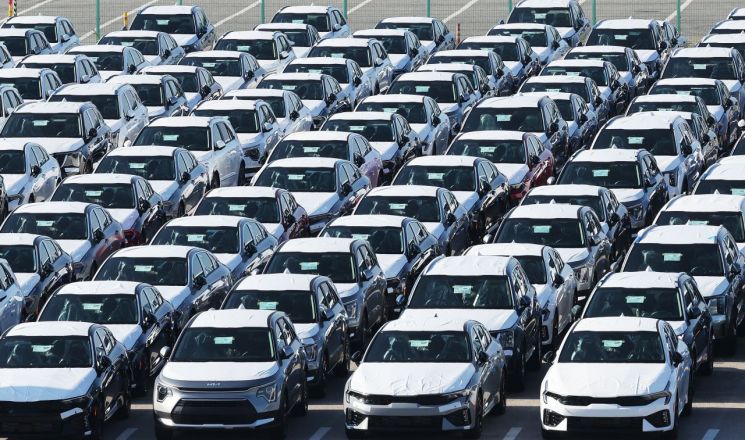
KAMA projected that next year’s domestic automobile sales market will grow by 0.8% year-on-year to 1.69 million units, driven by the expansion of electric vehicle subsidies, the launch of 16 new models, and increased replacement demand due to the rising number of aging vehicles.
Exports are expected to turn to growth as trade risks with the United States are eased due to the confirmation of a 15% U.S. tariff and the deferment of port entry fees. Other contributing factors include the global preference for hybrids, strengthened environmental regulations in Europe, and the full-scale operation of new domestic EV plants. Exports are forecasted to reach 2.75 million units, up 1.1% from the previous year.
In particular, the strengthening of domestic eco-friendly vehicle production capacity-such as Hyundai Motor’s new Ulsan electric vehicle plant and Kia’s EV plants in Gwangmyeong and Hwaseong-is expected to support the recovery of exports. Export value is projected to reach 72 billion dollars, a 0.3% increase from this year.
This year, automobile exports are expected to decrease in terms of volume, but are anticipated to reach an all-time high in terms of value. KAMA estimated that automobile exports in 2025 will total 2.72 million units, a 2.3% decrease from the previous year. This is due to the impact of high U.S. tariffs and the shift to local production of electric vehicles, which have shaken the largest export market. However, despite this decline in volume, a sharp increase in used car exports is expected to drive export value to a record high of 71.8 billion dollars, up 1.4% from the previous year.
© The Asia Business Daily(www.asiae.co.kr). All rights reserved.












